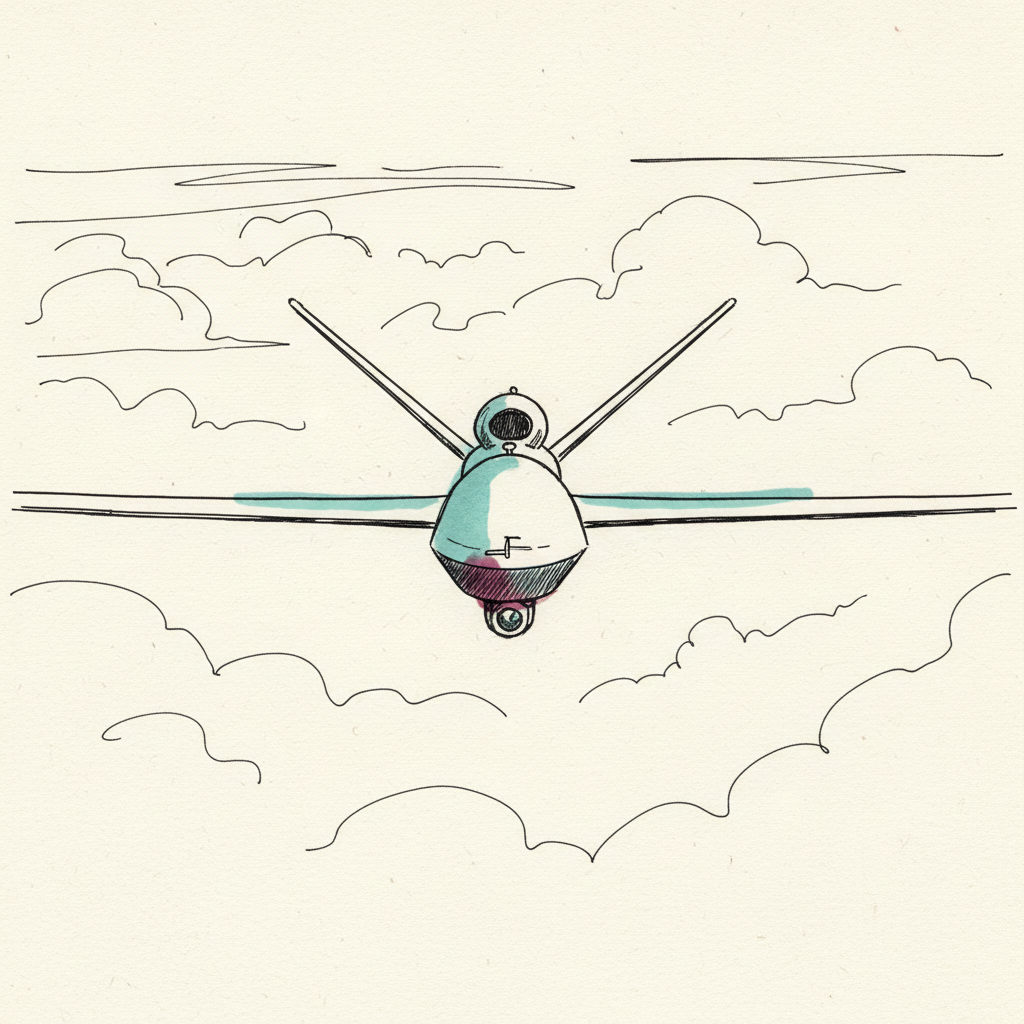
RQ-4
Northrop Grumman high-altitude long-endurance surveillance drone; Iran shot one down in June 2019.
Last refreshed: 20 November 2026 · Appears in 1 active topic
Why does the 2019 Global Hawk shootdown still frame every US-Iran drone clash?
Timeline for RQ-4
Mentioned in: US jets strike IRGC launch site on Qeshm
Iran Conflict 2026Mentioned in: CENTCOM hits Goruk and Qeshm Island
Iran Conflict 2026IRGC claims first US aircraft kill
Iran Conflict 2026Background
The RQ-4 Global Hawk appears in the 2026 war mostly as a precedent. When US jets struck an IRGC missile launch site on Qeshm Island on 17 November, the parallel was 20 June 2019, when Iran shot down a US Global Hawk over the strait of Hormuz and Donald Trump called off retaliatory strikes shortly before launch. The same comparison framed Iran's claims of MQ-9 and MQ-1 kills in early November: the Pentagon confirmed the 2019 loss the same day, but CENTCOM has not confirmed the 2026 claims. The one claim of contact with an RQ-4 in this war came on 26 May, when the IRGC said it fired on one and forced it from Iranian airspace. CENTCOM made no statement and no evidence was produced.
Built by Northrop Grumman, the RQ-4 first flew in February 1998 and entered service in 2001. It is unarmed and flies at up to 60,000 feet for more than 34 hours and can survey up to 100,000 km² of ground a day. NATO flies a variant, the RQ-4D Phoenix, for Alliance Ground Surveillance. In July 2022 the US Air Force said it plans to retire its Global Hawks in 2027.
The 2019 loss was a US Navy RQ-4A, downed by a 3rd Khordad surface-to-air missile fired from near Garuk. It showed that a high-altitude drone over The Gulf was within reach of Iranian air defences, the point Iran's 2026 claims set out to repeat.
What happened to the RQ-4 over Iran in June 2019?
Did Iran fire on a US RQ-4 on 26 May 2026?
What is the RQ-4 Global Hawk used for?
How does the RQ-4 Global Hawk differ from the MQ-9 Reaper?
Why is the 2019 Global Hawk shootdown cited in the Iran war?


Written with AI from Lowdown's published reporting. Not individually reviewed by an editor. Updated 20 November 2026. Editorial standards.