Skip to content
Briefings are running a touch slower this week while we rebuild the foundations.See roadmap
PAC-3 MSE
ProductUS

PAC-3 MSE

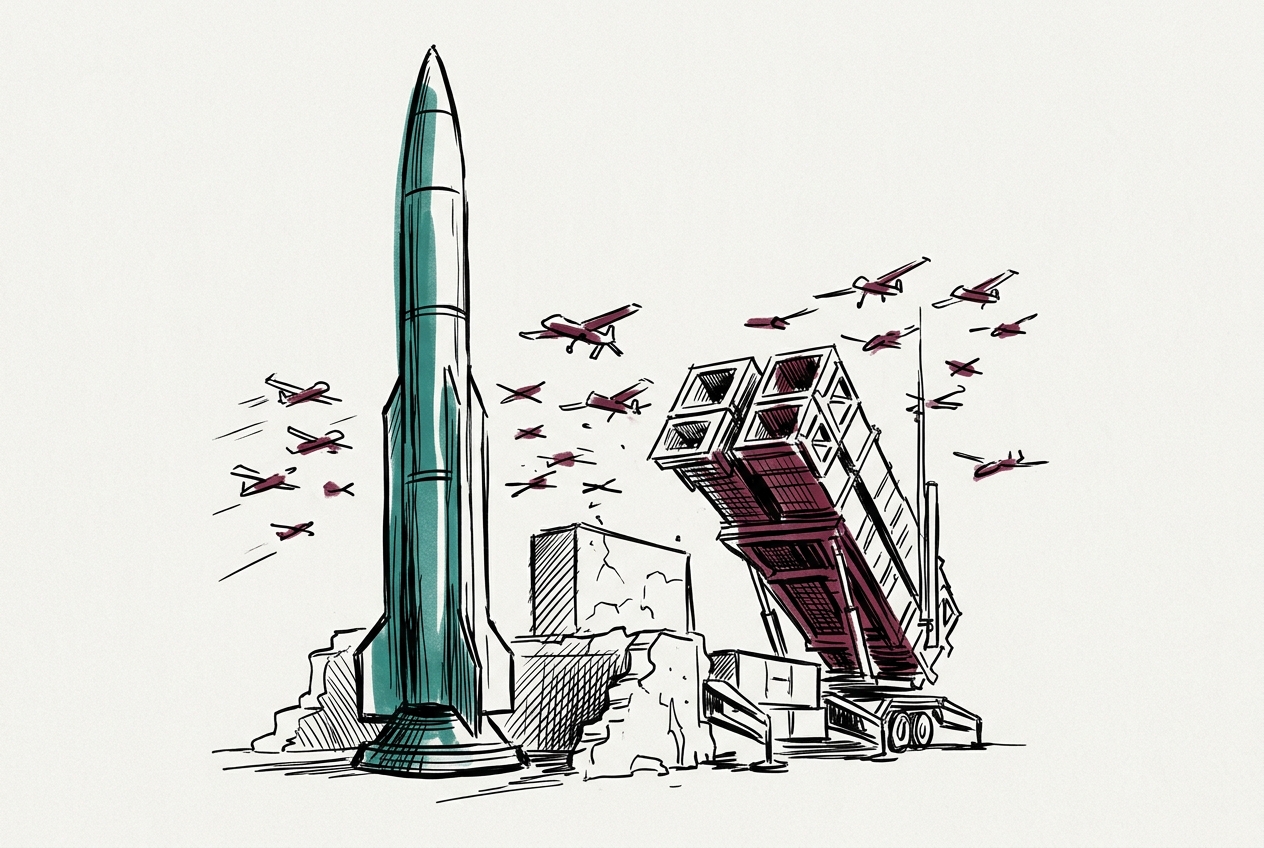
Hit-to-kill interceptor for the Patriot system; now strained by two simultaneous wars.

Last refreshed: 22 May 2026 · Appears in 3 active topics

Key Question

Why can't allies send Ukraine the Patriot interceptors it actually needs?

Timeline for PAC-3 MSE

View full timeline →
Common Questions
What is the PAC-3 MSE?
The PAC-3 MSE (Missile Segment Enhancement) is a hit-to-kill Ballistic missile interceptor made by Lockheed Martin. It is the latest variant for the Patriot missile system, using a larger booster than the original PAC-3 to extend range and altitude. Each round costs approximately .5 million.
What is the new Lockheed Patriot contract worth?
Lockheed Martin secured a .76 billion multi-year PAC-3 MSE production contract in April 2026. Ninety-four percent is designated for Foreign Military Sales to Allied Nations, reflecting allied stockpile depletion from simultaneous Iran and Ukraine conflicts.Source: event
Why did the White House freeze Patriot exports?
The White House froze all Patriot exports in April 2026 pending an inventory review, blocking new deliveries to allies even as stockpiles drained from simultaneous high-intensity conflicts in Iran and Ukraine.Source: event
Why are PAC-3 MSE stocks running low?
Two simultaneous high-intensity conflicts have drained stockpiles. Zelenskyy stated more Patriot interceptors were used in three days of the Iran conflict than Ukraine received in three years. The UAE alone absorbed 2,256 incoming drones by April 2026.
How does PAC-3 MSE compare to Ukrainian interceptor drones?
PAC-3 MSE rounds cost roughly .5 million each; Ukrainian interceptor drones cost ,000-,000 per unit. Gulf States requested thousands of Ukrainian drones as a cheaper complement after Iran's saturation campaigns exposed the cost asymmetry.Source: TAF Industries
What is the PAC-3 MSE and what does it intercept?
The PAC-3 MSE (Missile Segment Enhancement) is Patriot's highest-tier interceptor, designed to destroy short- and medium-range Ballistic Missiles by direct kinetic impact at high altitude. It is built by Lockheed Martin and differs from the GEM-T, which only engages aircraft, Cruise Missiles, and drones.Source: background
Why did the United States freeze Patriot exports in 2026?
The White House suspended new Patriot interceptor exports to all foreign operators in early 2026 pending a global inventory review, as simultaneous high-intensity conflicts in Ukraine and the Gulf were consuming stocks faster than US production could replenish them.Source: Lowdown Update #12
How is Germany getting Patriot interceptors to Ukraine without US approval?
Germany's April 2026 €4 billion Patriot package routes GEM-T interceptors through a direct Raytheon commercial sale at a new facility in Schrobenhausen, Bavaria, bypassing US government export approval timelines. This does not cover ballistic-missile-class threats, which require PAC-3 MSE.Source: Lowdown Update #13
What is the difference between PAC-3 MSE and GEM-T interceptors?
PAC-3 MSE destroys Ballistic Missiles by kinetic impact and costs around $13.5 million per round. GEM-T (Guidance Enhanced Missile-Tactical) costs $1-2 million and is effective against aircraft, Cruise Missiles, and drones but cannot intercept Ballistic Missiles. Ukraine needs both; the export freeze affects only the MSE.Source: background
How much is the new Lockheed Martin PAC-3 MSE production contract worth?
Lockheed Martin secured a $4.76 billion multi-year contract in April 2026 to produce PAC-3 MSE interceptors, with 94% of rounds designated for Foreign Military Sales. Deliveries are currently blocked by the White House export freeze.Source: Lowdown Update #12

Background

The PAC-3 MSE (Missile Segment Enhancement) is the primary ballistic-missile interceptor within the Patriot air defence system, produced by Lockheed Martin. Unlike the earlier PAC-2 and the lower-tier GEM-T, the PAC-3 MSE uses hit-to-kill kinetic impact rather than proximity detonation, making it effective against short- and medium-range Ballistic Missiles at high altitudes and speeds. First deployed operationally in 2002 as PAC-3; the MSE variant entered service around 2015 with a larger booster, extending engagement envelope in both altitude and range. At approximately $13.5 million per round, it is the most expensive interceptor in NATO Patriot batteries.

The US export suspension that took effect in early 2026 has frozen new PAC-3 MSE deliveries to all non-US operators pending a global inventory review. Ukraine, which depends on Patriot batteries for its highest-altitude ballistic-missile defence, is directly affected: Zelenskyy described the situation as one that 'could not be any worse'. Lockheed Martin secured a $4.76 billion multi-year production contract in April 2026, with 94% designated for Foreign Military Sales, but the export freeze means contracted rounds cannot be delivered under current White House policy. Two simultaneous high-intensity conflicts — Ukraine and the Gulf — are consuming MSE stocks at a rate that US production cannot replace in the short term.

The PAC-3 MSE export freeze has become a structural constraint on Ukraine's air defence architecture. Germany's April 2026 €4 billion Patriot package deliberately routed GEM-T interceptors — which engage aircraft, Cruise Missiles, and drones but not ballistics — through a direct Raytheon commercial sale in Bavaria, bypassing the US export approval chain. This is an explicit workaround: GEM-T does not substitute for PAC-3 MSE against the ballistic-class threats Russia fields, leaving Ukraine's highest-tier gap unaddressed while the lower-tier coverage is restored.
