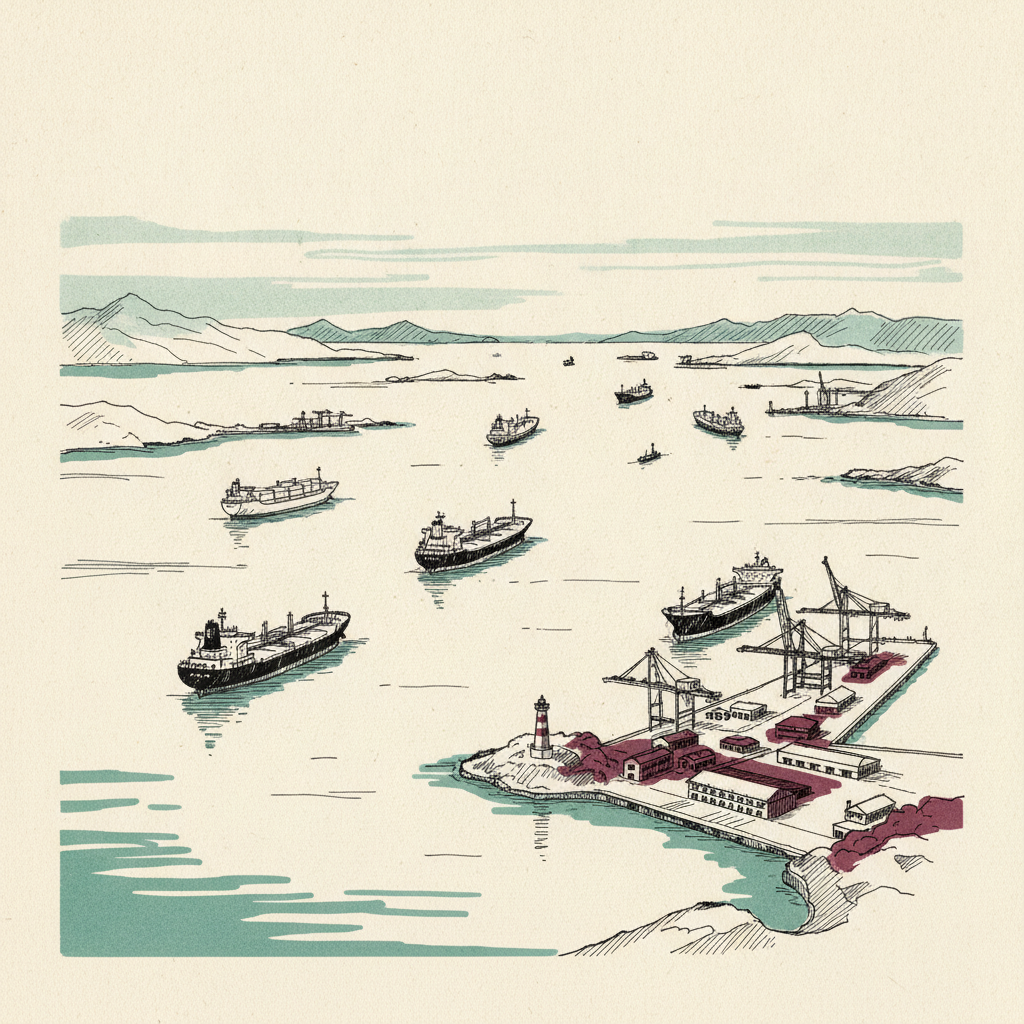
Malacca Strait
Narrow shipping channel between Malaysia, Indonesia and Singapore, cited as Oman's model for voluntary Hormuz transit fees.
the strait of Malacca's voluntary Cooperative Mechanism, launched with the Nippon Foundation in 2007, was the model Oman cited on 30 June 2026 for its proposed Strait of Hormuz service fee.
Last refreshed: 6 August 2026 · Appears in 1 active topic
Why is Oman citing the Malacca Strait's fee model for Hormuz tolls?
Timeline for Malacca Strait
Mentioned in: Two Hormuz accounts, no published text
Iran Conflict 2026Provided the voluntary-fee precedent Oman's proposal is modelled on
Iran Conflict 2026: Oman's Hormuz fee splits its authorsMentioned in: 55 ships cross the strait Iran shut
Iran Conflict 2026Mentioned in: EU rejects Trump's Hormuz toll venture
Iran Conflict 2026Background
the strait of Malacca is one of the world's busiest shipping lanes, a roughly 800km channel between the Malay Peninsula and the Indonesian island of Sumatra carrying an estimated quarter of global seaborne trade, including most oil moving from The Gulf to East Asia. At its narrowest point, the Phillips Channel near Singapore, the strait is only about 2.8km wide, making it one of the world's most consequential maritime chokepoints.
Rather than a mandatory toll, navigation and safety costs are met through the Cooperative Mechanism, a voluntary scheme the littoral states, Indonesia, Malaysia and Singapore, launched with the Nippon Foundation in 2007 to fund an Aids to Navigation Fund. Contributing governments, shipping associations and companies pay in on a cooperative-responsibility basis rather than a compulsory per-transit charge, and only contributors sit on the fund's oversight committee.
the strait's relevance to Lowdown's coverage is as a reference point rather than a participant: its voluntary funding model was invoked directly in the strait of Hormuz fee dispute, giving it a durable role as the comparison case for how a chokepoint can be funded without a compulsory toll.
How wide is the Strait of Malacca at its narrowest?
Does the Strait of Malacca charge ships a toll?
Why did Oman cite the Malacca Strait in its Hormuz fee proposal?



