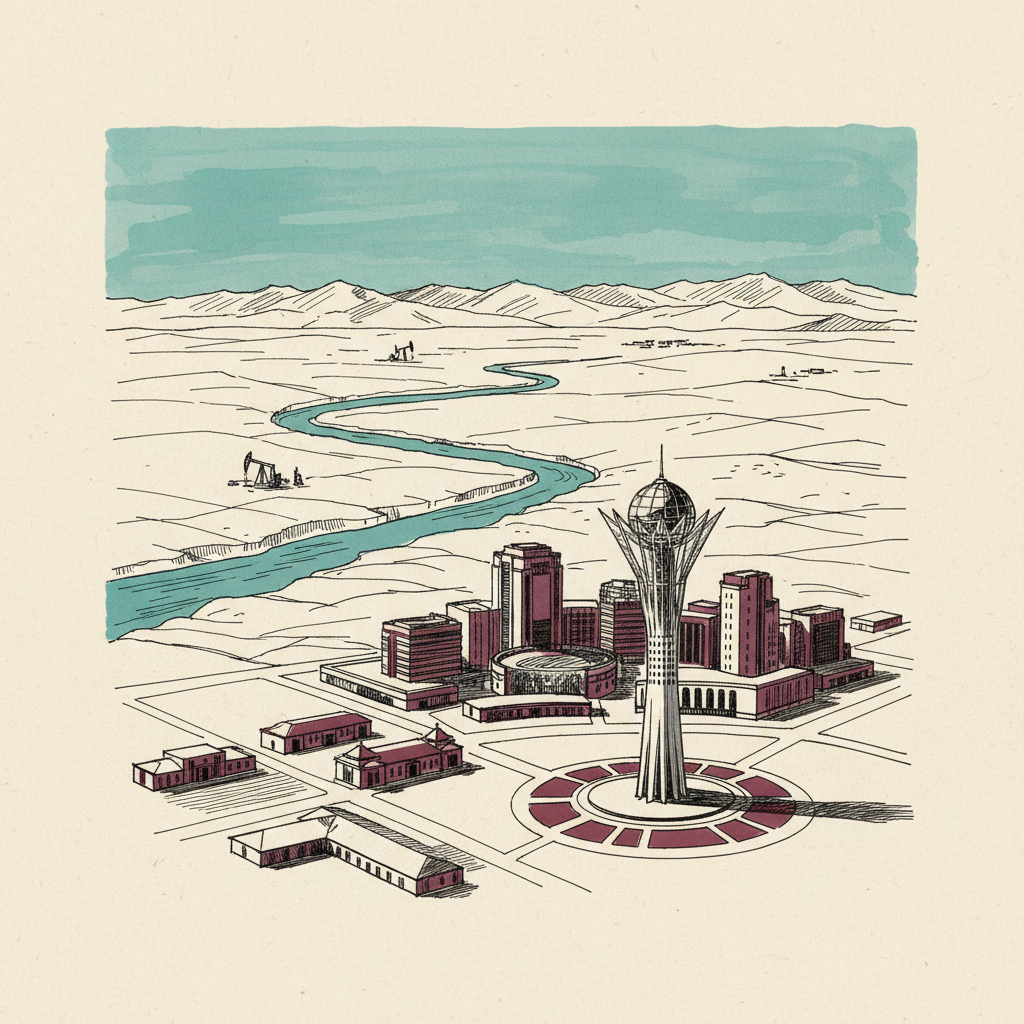
Kazakhstan
Central Asian oil state; OPEC+ over-quota producer running 322kbd long on Tengiz/CPC pipeline.
Russia halted Kazakh crude transit through the Druzhba pipeline to Germany from 1 May 2026, closing a route Berlin had used as a legal workaround for lost Russian-origin supply.
Last refreshed: 3 August 2026 · Appears in 3 active topics
Why is Kazakhstan defying its OPEC+ quota and what can Saudi Arabia do about it?
Timeline for Kazakhstan
Mentioned in: OPEC release never mentions a pause
European Oil MarketsMentioned in: OPEC+ adds barrels it won't pump
European Oil MarketsRan 322kbd above quota on Tengiz CPC pipeline production
European Oil Markets: OPEC+ to vote barrels it can't pumpMentioned in: Trump's pen demands Iran destroy HEU
Iran Conflict 2026Mentioned in: Trump vetoes Iran's only uranium exit
Iran Conflict 2026Background
Kazakhstan is a Central Asian oil state and a member of the Russia-led Collective Security Treaty Organisation, yet it has pursued a course of Strategic autonomy since 2022, declining to endorse Russia's war in Ukraine while maintaining deep economic ties to Moscow. President Kassym-Jomart Tokayev's government defends that balancing act partly on the strength of the country's oil wealth, and partly out of necessity given Russia's leverage over both pipeline access and Kazakhstan's ethnic-Russian minority in the north, roughly 15-17% of the population.
Within OPEC+, Kazakhstan is a chronic over-quota producer, running roughly 322,000 barrels a day above its allocation on the Tengiz field alone, a joint venture with Chevron, alongside the Kashagan field. Astana defends the overrun on technical reservoir grounds, a justification that has so far insulated it from the punitive treatment other over-quota members might expect. Its main export route, the Caspian Pipeline Consortium line to Novorossiysk on the Black Sea, gives European refiners a Brent-linked, non-Middle Eastern crude stream, though as the Druzhba halt showed, that independence has limits wherever Russian-controlled infrastructure is involved.
Russia shuts Kazakhstan out of Germany
Kazakhstan's crude is structurally separate from sanctioned Russian barrels, which is precisely why Germany had been buying it through the Druzhba pipeline as a legal route around lost Russian supply. Russian Deputy PM Alexander Novak confirmed on 1 May that Russia would halt that Kazakh transit to Germany, a decision Moscow could make unilaterally because it controls the pipeline route regardless of Kazakhstan's own sanctions-clean standing.
The closure exposes the limit of Kazakhstan's own strategic-autonomy posture: Astana's oil never touched a sanctions list, yet its access to a major European buyer still depends entirely on Russian goodwill over pipeline access, the same leverage point Moscow holds over Kazakhstan's northern Russian-minority regions.
Reference
What is the CPC pipeline and who controls it?
How large is the Russian minority in Kazakhstan?
What happened to Kazakhstani oil exports to Germany in 2026?
Is Kazakhstan at risk from Russia's extraterritorial deployment law?
Why is Kazakhstan over its OPEC+ oil quota in 2026?
Why does Kazakhstan's oil transit through Russia matter to the war?
What is Kazakhstan's position on the Russia-Ukraine war?

Written with AI from Lowdown's published reporting. Not individually reviewed by an editor. Updated 3 August 2026. Editorial standards.