Skip to content
You can now search across every topic, entity and event.What's new
Africa CDC
Organisation

Africa CDC

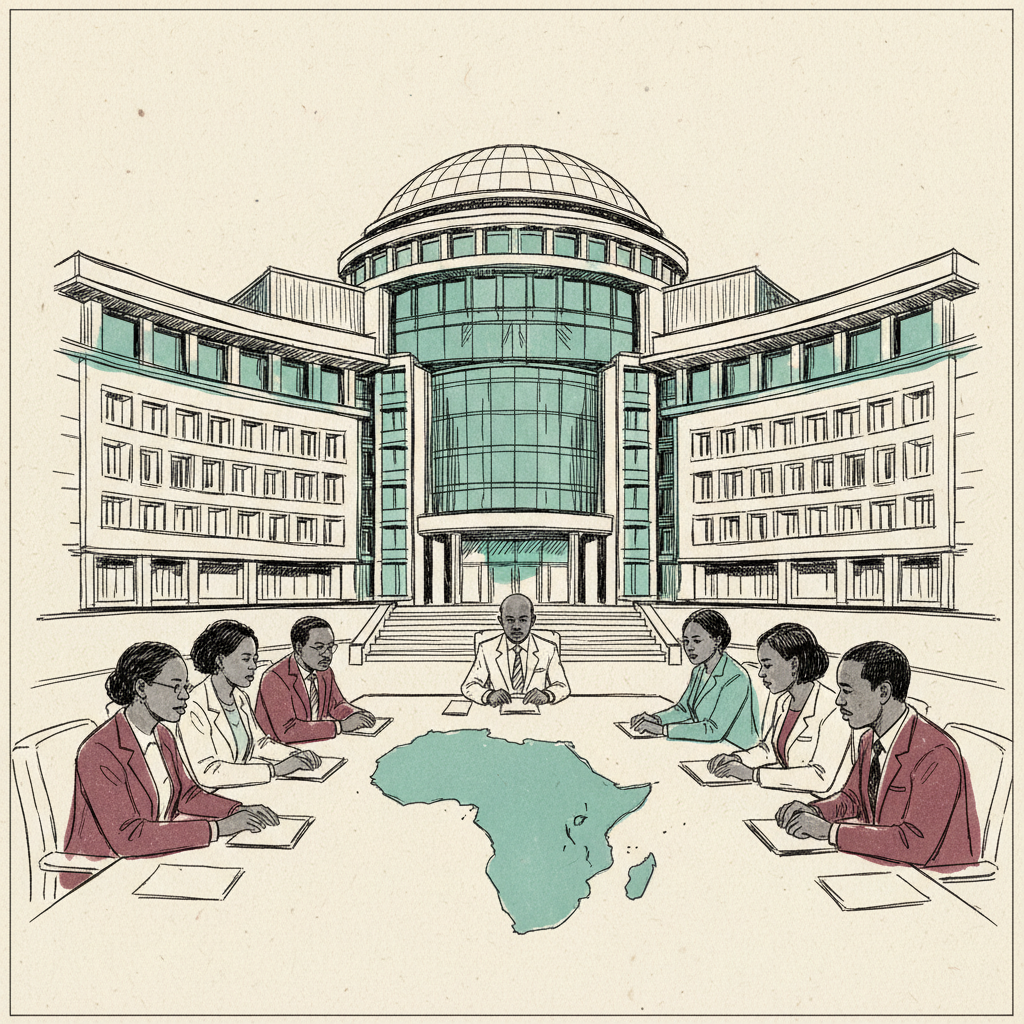
Africa's continental disease surveillance body; declared Ebola emergency 24 hours before WHO PHEIC.

Africa CDC issued a formal responder-protection appeal on 11 July after healthcare-worker infections in DR Congo's Bundibugyo Ebola outbreak tripled to 112 confirmed cases with 35 deaths, its latest move in a pattern of leading the continent's outbreak response ahead of WHO.

Last refreshed: 31 July 2026 · Appears in 1 active topic

Key Question

Can Africa CDC's $500m war chest outpace a 1,000-case outbreak with no vaccine?

Timeline for Africa CDC

#12 28 Jul

Described Uganda's closure as achieved by reclassifying the final case as imported

Pandemics and Biosecurity: Uganda calls its Ebola outbreak over
#12 27 Jul

Reported transmission spread to five provinces

Pandemics and Biosecurity: Ebola reaches two more DRC provinces
#12 27 Jul

Published the community-death finding in situation report 71

Pandemics and Biosecurity: Most Ebola deaths never reach a ward
#12 27 Jul

Reported that unconfirmed suspects occupy most isolation beds

Pandemics and Biosecurity: Slow labs are eating DRC's Ebola wards
View full timeline →

Background

Africa CDC (Africa Centres for Disease Control and Prevention) is the African Union's public health agency, headquartered in Addis Ababa and established in 2016. It coordinates disease surveillance, outbreak preparedness and laboratory capacity across the AU's 55 member states through a regional integrated surveillance and laboratory network, and gained prominence during the COVID-19 pandemic and the 2024 mpox Clade I response. Jean Kaseya has led the agency as Director-General since 2022.

Africa CDC has established itself as the continent's first institutional mover on health emergencies, declaring its own Bundibugyo Ebola emergency a day ahead of WHO's PHEIC and before DRC's own government had spoken , a sequencing that repeated its earlier lead on the 2024 mpox outbreak.

That institutional confidence now extends to financing: on 17 June 2026 the Pandemic Fund accredited Africa CDC as an Implementing Entity, the first African Union body to hold that status, letting it draw grants directly rather than through the World Bank or WHO .

Key Issues
Ebola outbreak

Africa CDC keeps moving ahead of WHO

Africa CDC Director-General Jean Kaseya declared a continental public health emergency on 16 May 2026, a day ahead of WHO's own PHEIC and before DRC's Ministry of Health had spoken, repeating the sequencing Africa CDC set during the 2024 mpox response . On 17 June, the Pandemic Fund accredited Africa CDC as an Implementing Entity, the first African institution to hold that status, letting it apply for grants directly rather than routing through the World Bank or WHO .

By 11 July, healthcare-worker infections had tripled to 112 confirmed cases with 35 dead, prompting Africa CDC's formal appeal for protective equipment and hazard compensation for front-line staff.

AMR laboratories

Africa CDC builds AMR laboratory capacity

Africa CDC, the African Society for Laboratory Medicine and the EU launched ARILAC in Addis Ababa on 6 May 2026, a four-year programme to build antimicrobial-resistance testing capacity across eight AU member states . The launch answered a finding that only 1.3% of more than 50,000 assessed medical laboratories across 14 African countries run routine AMR tests, leaving an estimated 261 million people with no local resistance data.

ARILAC sits alongside the World Health Assembly's own ten-year Global Action Plan on antimicrobial resistance, adopted later that month, but predates it and targets laboratory capacity directly rather than a non-binding global target .

Common Questions
What is Africa CDC and how is it different from the US CDC?
Africa CDC (Africa Centres for Disease Control and Prevention) is the African Union's continental public health agency, founded in 2016 and headquartered in Addis Ababa. It coordinates disease surveillance and outbreak response across 55 AU member states. Unlike the US CDC, it does not Conduct its own research labs at scale but acts as the continental coordination and standard-setting body, with a mandate covering both human and animal health under a One Health framework.Source: Africa CDC mandate documentation
What does Africa CDC do and who funds it?
Africa CDC coordinates disease surveillance and outbreak response across 55 African Union member states. It is funded by the AU and international partners including the EU.
Why does Africa CDC oppose Ebola travel bans?
Africa CDC's Emergency Consultative Group (ECG) concluded that travel bans are of 'little, if any, benefit': they delay rather than prevent importation, displace travel through unscreened routes, and deter surveillance cooperation. The ECG urged open borders with strengthened screening instead.Source: event
How much money has been raised for the Bundibugyo Ebola response?
As of June 2026, nearly $990 million has been mobilised: roughly $500 million pledged at the 26 May Africa CDC donor summit, $220.6 million from the Pandemic Fund behind the Continental Strategic Preparedness and Response Plan, and $270 million bilaterally from the US State Department.Source: event
What is the Africa CDC Advisory and Technical Council?
The Advisory and Technical Council (ATC) is Africa CDC's senior expert body that provides technical guidance on outbreak response. It convened an extraordinary session on 12 June 2026 on the Bundibugyo Ebola outbreak, setting five priority areas and reporting 34 healthcare workers infected.Source: event
Why did Africa CDC declare an Ebola emergency before the WHO?
Africa CDC Director-General Jean Kaseya declared a continental public health emergency for the Bundibugyo Ebola outbreak on 16 May 2026, twenty-four hours before WHO issued its PHEIC. The move repeated a pattern established in August 2024 during mpox, when Africa CDC declared two days before WHO's Emergency Committee met. Kaseya's strategy is to position Africa CDC as the primary continental first-responder rather than waiting for the global multilateral system to lead.Source: WHO and Africa CDC declarations, May 2026
What is ARILAC and why did Africa CDC launch it?
ARILAC is a four-year EU-backed programme launched on 6 May 2026 to build AMR laboratory capacity in 8 African countries, where only 1.3% of assessed labs currently Conduct routine AMR testing.Source: Africa CDC
How does Africa CDC's hantavirus statement differ from the WHO's?
Africa CDC gave MV Hondius's departure from Ushuaia as 20 March 2026; WHO DON 599 stated 1 April. The two-week difference changes whether the HCPS incubation timeline points to pre-boarding or at-sea exposure.Source: Africa CDC statement, 6 May 2026
Why does AMR surveillance matter so much in Africa?
Only 1.3% of assessed labs across 14 African countries Conduct routine AMR testing, meaning drug-resistant infections cannot be tracked across most of the continent, leaving outbreaks invisible until they are severe.Source: Africa CDC / ARILAC launch
Why did Africa CDC appeal for health-worker protection in July 2026?
Africa CDC issued a formal responder-protection appeal on 11 July 2026 after healthcare-worker infections in the Bundibugyo outbreak tripled to 112 confirmed cases, with 35 deaths, and isolation rates in Ituri slipped to 39 percent.Source: Africa CDC statement, 11 July 2026
Why did Africa CDC oppose the US Ebola travel ban?
Africa CDC publicly opposed the US entry ban on nationals of DRC, Uganda, and South Sudan on 19 May 2026, calling the restrictions punitive and counterproductive. WHO Temporary Recommendations issued on 22 May explicitly advised against travel and trade restrictions. Africa CDC argued that isolating affected countries discourages transparent reporting and impedes the international response.Source: Africa CDC statement, 19 May 2026
How many Bundibugyo Ebola deaths happened outside a treatment centre?
Africa CDC's situation report 71 found that 683 of 1,033 recorded Bundibugyo Ebola deaths, 66%, occurred in the community rather than under clinical observation, meaning most fatal cases were never traced before death and each is a probable transmission event, since the body is washed and buried by relatives at peak infectiousness.Source: Africa CDC situation report 71
Why does Africa CDC's Ebola situation report 71 carry two different dates?
Situation report 71 lists case tables running to 27 July but was re-issued with an appended flash update by 30 July under the same issue number, so the same document number describes two different points in the outbreak depending on when it was accessed.Source: Africa CDC situation report 71
Source Material