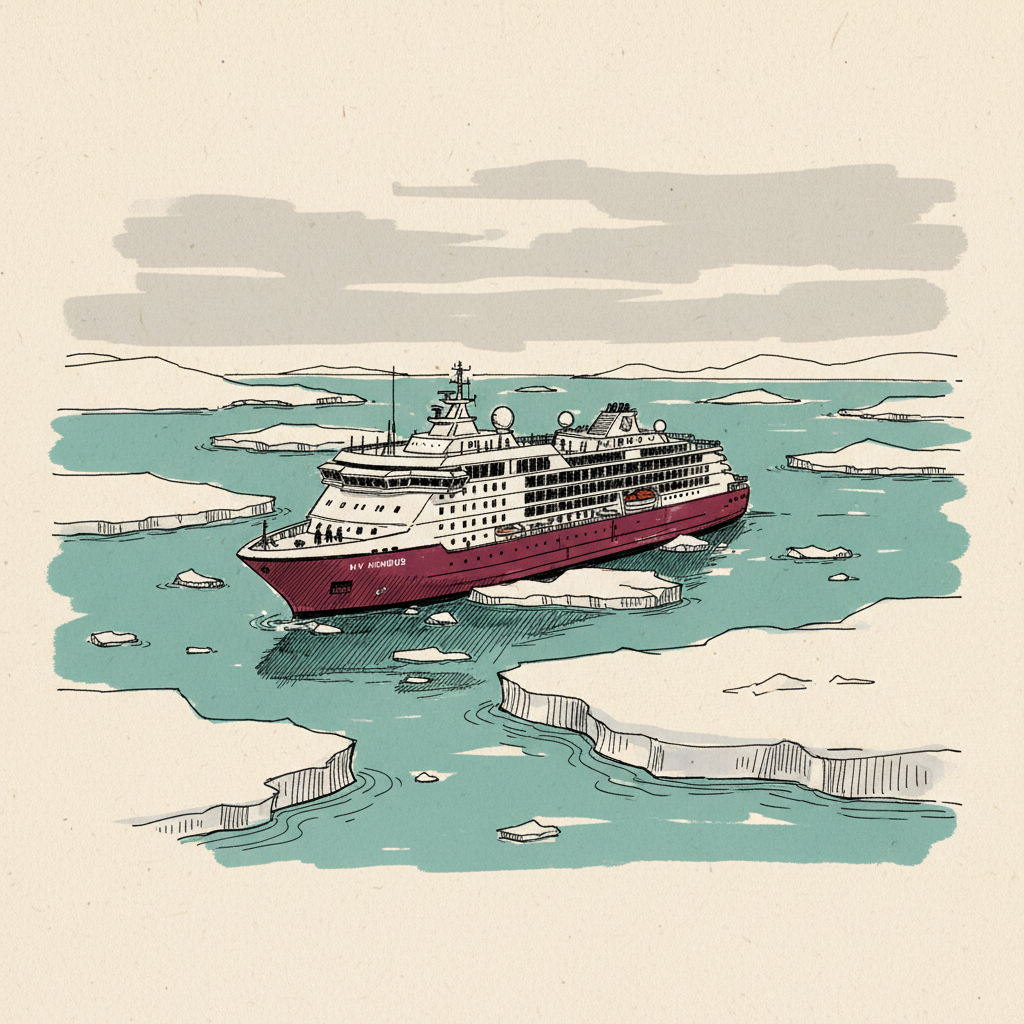
MV Hondius
Dutch-flagged Antarctic expedition cruise ship; site of the May 2026 Andes hantavirus cluster, 8 cases, 3 deaths.
Last refreshed: 7 May 2026 · Appears in 1 active topic
Will MV Hondius become the reference case for hantavirus biosecurity aboard Antarctic cruise ships?
Timeline for MV Hondius
Remained the focal point of the winding-down Andes-virus cluster
Pandemics and Biosecurity: Ship hantavirus cluster is winding downDocked at Rotterdam on 18 May with passengers traced across 12 countries after Andes hantavirus cluster reached 12 cases
Pandemics and Biosecurity: Hondius hantavirus cluster hits 12 casesMentioned in: ECDC counts 11 Andes cases, three more than WHO
Pandemics and BiosecurityMentioned in: CDC mandates airborne isolation for Andes patients
Pandemics and BiosecurityCompleted disembarkation at Tenerife on 11 May after its cluster was reclassified to MODERATE ship risk
Pandemics and Biosecurity: UK airdrops supplies to isolated island Andes caseBackground
MV Hondius is a Dutch-flagged expedition cruise ship operated by Oceanwide Expeditions, named after the Dutch cartographer Jodocus Hondius. Built in 2019, she has a passenger capacity of approximately 170 and specialises in Antarctic and Arctic expedition cruises departing primarily from Ushuaia, Argentina, for the Southern Ocean, and from Longyearbyen, Norway, for the Arctic. The vessel is rated for Polar Code operation and carries a scientific expedition programme alongside tourism. Berth prices typically range from €6,000 to €15,000 per passenger. MV Hondius is registered in the Netherlands; Oceanwide Expeditions is headquartered in Middelburg, Netherlands.
MV Hondius was the site of an Andes hantavirus cluster that surfaced in early 2026 after departing Ushuaia, Argentine Tierra del Fuego. By 7 May 2026 the cluster stood at 8 cases, 3 deaths, 1 critically ill across passengers and crew from 23 nationalities. A Swiss passenger WHO disembarked later tested positive for Andes virus, the only hantavirus capable of person-to-person transmission, triggering active European contact tracing. The departure date recorded by WHO DON 599 (1 April) and Africa CDC (20 March) conflict; the discrepancy determines whether HCPS incubation points to pre-boarding exposure in Ushuaia or at-sea transmission. The vessel was moored off Cabo Verde when WHO published DON 599 on 2 May.