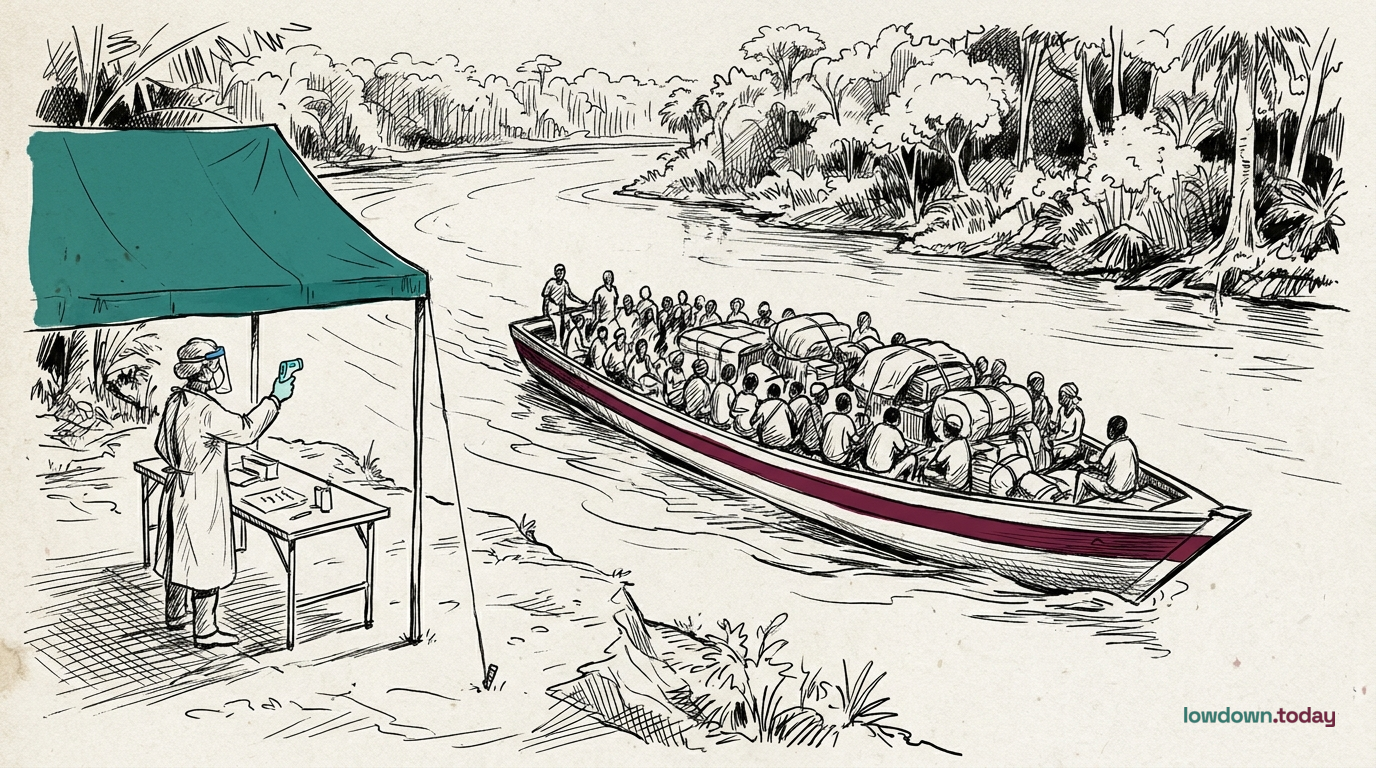
Interim governor Jean-René Galekwa Vundawe declared Ebola in Sud-Ubangi, a province in DR Congo's far north-west, on 10 September1. The index case, the first person identified in the province, had travelled on the river boat "Ville de Gbadolite" from Kisangani, capital of Tshopo province, about 1,000 km to the south-east. Two cases were confirmed by 1 October, while the province's doctors were on strike over pay, Radio Okapi reported.
The Bundibugyo Ebola outbreak began in Ituri, in the country's north-east, and Tshopo recorded its first confirmed cases in late July, when transmission covered 48 health zones in five provinces. The World Health Organization (WHO) now lists Sud-Ubangi as newly affected and reports renewed transmission in Tshopo2, where Al Jazeera reported a "complete shortage" of experimental vaccine3.
Sud-Ubangi borders the Central African Republic and the Republic of the Congo across the Ubangi river. In practice, the outbreak now sits on two international borders it did not reach in August, which means a new export risk for both neighbours. River boats carry passengers and traders for days between ports, so a traveller WHO falls ill on board can expose others long before any health post sees them. A doctors' strike removes the clinicians WHO would spot and isolate the next case.
Jean Kaseya, Director General of Africa CDC (the African Union's health agency), now names ten countries at risk, among them Kenya, Angola and South Sudan4.




