Skip to content
Welcome, thoughtbot's Giant Robots listeners!Start here
US Midterms 2026
24SEP

Paxton routs Cornyn despite nine-to-one spend

3 min read
11:45UTC

Ken Paxton won 63.8% of the Texas Republican Senate runoff on Tuesday 26 May, ousting John Cornyn by 28 points despite pro-Cornyn forces outspending the challenger nine to one across a combined $120 million race.

PoliticsDeveloping
Key takeaway

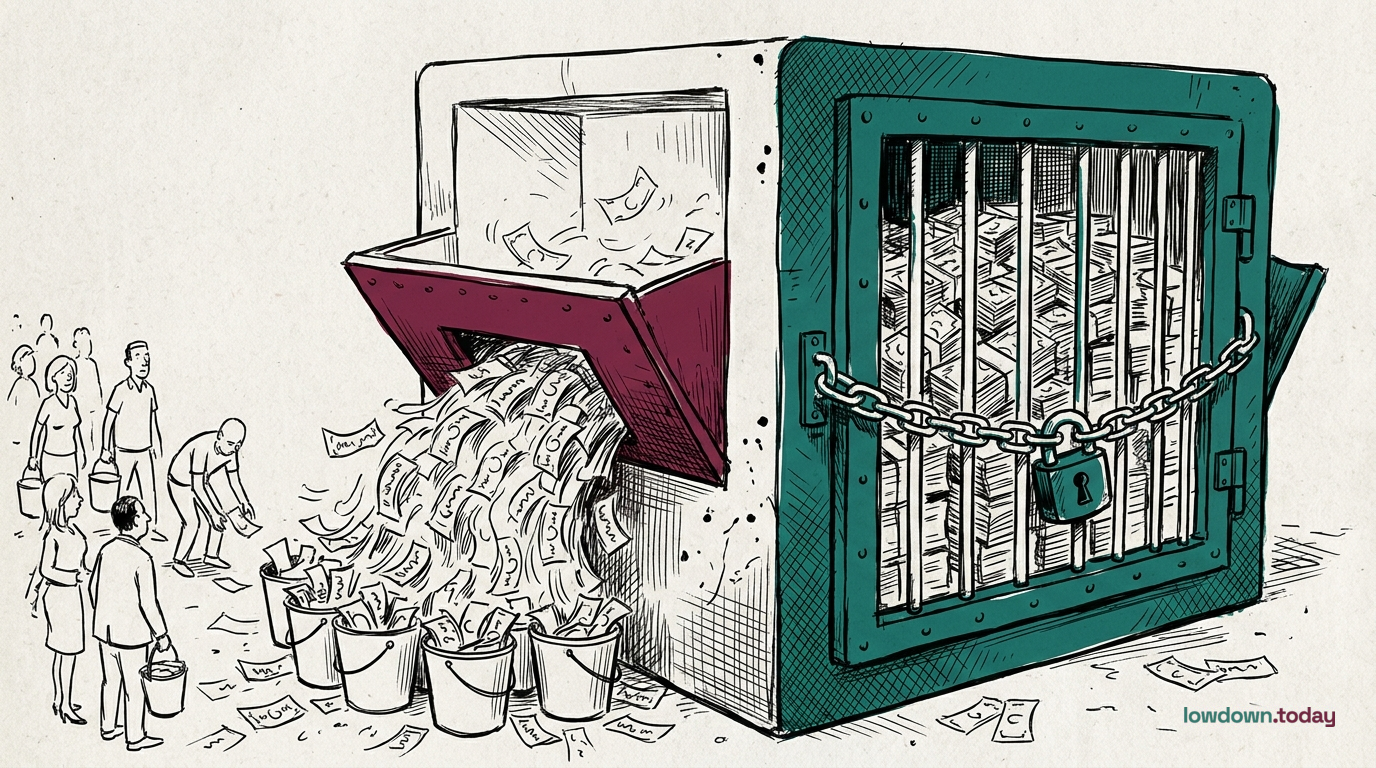
A nine-to-one spending advantage cannot protect a Senate seat against a late Trump endorsement in a low-turnout runoff.

Ken Paxton beat John Cornyn on Tuesday 26 May with 63.8% of roughly 1.38 million Republican runoff votes, becoming the nominee for the Texas Senate seat Cornyn has held since 2003⁠1⁠2. Donald Trump endorsed Paxton in the final week; pro-Cornyn forces had outspent the challenger roughly nine to one across a race both sides combined spent an estimated $120 million on, yet Paxton won by 28 points. Cornyn becomes the first Texas senator since 1970 to lose a primary to a fellow Republican⁠3.

The institutional paradox lands on the National Republican Senatorial Committee (NRSC), the body that recruits and funds Republican Senate candidates. During the primary, the NRSC called Paxton's conduct "repulsive and disgusting"⁠4. It must now fund and defend Paxton's November seat against Democratic state representative James Talarico, in a race both leading forecasters moved to Leans Republican by the following day. Republicans enter November defending a three-seat Senate margin, meaning Texas has converted a safe hold into a seat requiring active defence.

The result extends a pattern from Louisiana: Bill Cassidy, who voted to convict Trump at his impeachment trial, lost his primary renomination the fortnight before, becoming the first sitting senator to lose a primary in fourteen years. Two establishment Republican senators ousted in less than a fortnight, each backed by the NRSC, each outspent their opponents. A nine-to-one financial advantage does not protect an establishment incumbent against a late presidential endorsement in a low-turnout runoff electorate that skews toward Trump's most motivated supporters. Fellowship PAC, the crypto-aligned independent expenditure committee that had backed Paxton before its ad was scrubbed under Republican leadership pressure, saw this dynamic coming; Paxton needed no outside help to win the runoff decisively.

Deep Analysis

In plain English

Ken Paxton was Texas's Attorney General for four terms and became famous (or notorious, depending on your view) when the Texas House voted to impeach him in 2023 over bribery and abuse of office allegations. The Republican-controlled state Senate then acquitted him. He was running to replace Senator John Cornyn, who has been in the Senate since 2003 and serves as the Senate's second-ranking Republican leader. A primary runoff is a second-round election held when no candidate passes a threshold in the first round. These elections draw smaller, more partisan electorates than general elections. Trump endorsed Paxton in the final week, and the result was a landslide: Paxton won 63.8% despite Cornyn's side spending nine times as much. Why does this matter for November? Both major forecasting services immediately moved the Texas Senate seat from 'safe Republican' to 'leans Republican'. That means a state Republicans had not needed to worry about is now one where they may have to spend money to defend.

Deep Analysis
Root Causes

Cornyn's defeat rested on three structural conditions that the spending advantage could not overcome.

Texas Republican runoffs draw roughly 20% of registered Republicans, the highest-propensity primary voters who skew sharply toward Trump-aligned candidates. The 1.38 million participants on 26 May represented that filtered electorate; each dollar of Cornyn spending reached voters already committed to Paxton at a ratio that made the nine-to-one figure misleading about actual persuadable reach.

Paxton's 2021 impeachment by the Republican-controlled Texas House, followed by his 2022 Senate acquittal, had already sorted the Republican electorate. Voters who backed Paxton through impeachment were not reachable by NRSC attack ads; voters who turned against him in 2021 largely did not participate in the 2026 runoff.

Third, the NRSC's public condemnation of Paxton in 2023 created an institutional credibility gap that made pro-Cornyn super PAC spending read to base voters as establishment backlash rather than legitimate critique.

What could happen next?
  • Consequence

    The NRSC must fund Paxton's November campaign against Talarico despite having publicly called his conduct 'repulsive and disgusting', placing institutional Republicans in a defensive posture in a state they would ordinarily deploy resources offensively.

    Short term · Assessed
  • Risk

    Talarico's $27 million Q1 fundraising haul, if matched in Q2, gives Democrats a credible advertising budget in Texas for the first time in a Senate cycle since Beto O'Rourke's 2018 campaign, which lost by 2.6 points.

    Medium term · Reported
  • Precedent

    A Trump endorsement in a Republican runoff now functions as a structural override of a nine-to-one spending disadvantage, setting a precedent that will shape how Republican incumbents calculate their primary risk through the 2028 cycle.

    Long term · Assessed
First Reported In

Update #7 · Paxton wins; maps lock

Texas Tribune· 29 May 2026
Read original →
Different Perspectives
University of Florida Election Lab
The lab, run by Michael McDonald, estimates about 124.3 million ballots, a raw midterm record, and turnout of about 49.4% of eligible voters, second to 2018's 50.05%. The raw record reflects population growth more than a record rate, so the late count is working through a near-2018 electorate.
Thune's critics on the right, including Senator Ron Johnson
Ron Johnson backed the failed 31-15 motion to delay Thune's re-election, after activists such as Mike Cernovich blamed the leader for the defeat. Their complaint is that Republicans could have passed the SAVE Act; in January it meets a Democratic Senate instead.
Senator John Thune
Senator John Thune
Thune was re-elected Senate Republican leader by acclamation on 10 November after a motion to delay failed 31-15. He kept the filibuster that stopped the SAVE Act, the choice his critics on the right blame for the defeat.
House Republicans under Jim Jordan
House Republicans elected Jordan minority leader by 106 votes to 73 over Steve Scalise on 10 November, after Speaker Mike Johnson declined to run. They replaced the leadership that lost the majority, while Senate Republicans kept theirs.
Donald Trump
Donald Trump
Trump asked on Truth Social on 9 November whether anybody believed the election "was honest" and blamed the machines, having told The New York Times on polling night he would accept the results. No Republican campaign had sued over a 2026 result by 10 November, so the claim has no case behind it.
Judge David O. Carter
Carter closed the Justice Department's suit over about 20,000 California mail ballots on 10 November after the department withdrew it, writing that the suit "attempted to disrupt an ongoing election". The closure leaves the department with no court order touching a 2026 California ballot.

Written with AI from Lowdown's published reporting. Not individually reviewed by an editor. Editorial standards.
