Skip to content
Welcome, thoughtbot's Giant Robots listeners!Start here
US Midterms 2026
24SEP

Letlow's 15-point lead collapses to a tie

3 min read
11:45UTC

A Rigamer poll taken 15 to 16 June put Julia Letlow at 40.2% and John Fleming at 38.2%, inside the margin, collapsing a lead that ran 52 to 37 two weeks earlier. Fleming is surging on almost no outside money.

PoliticsDeveloping
Key takeaway

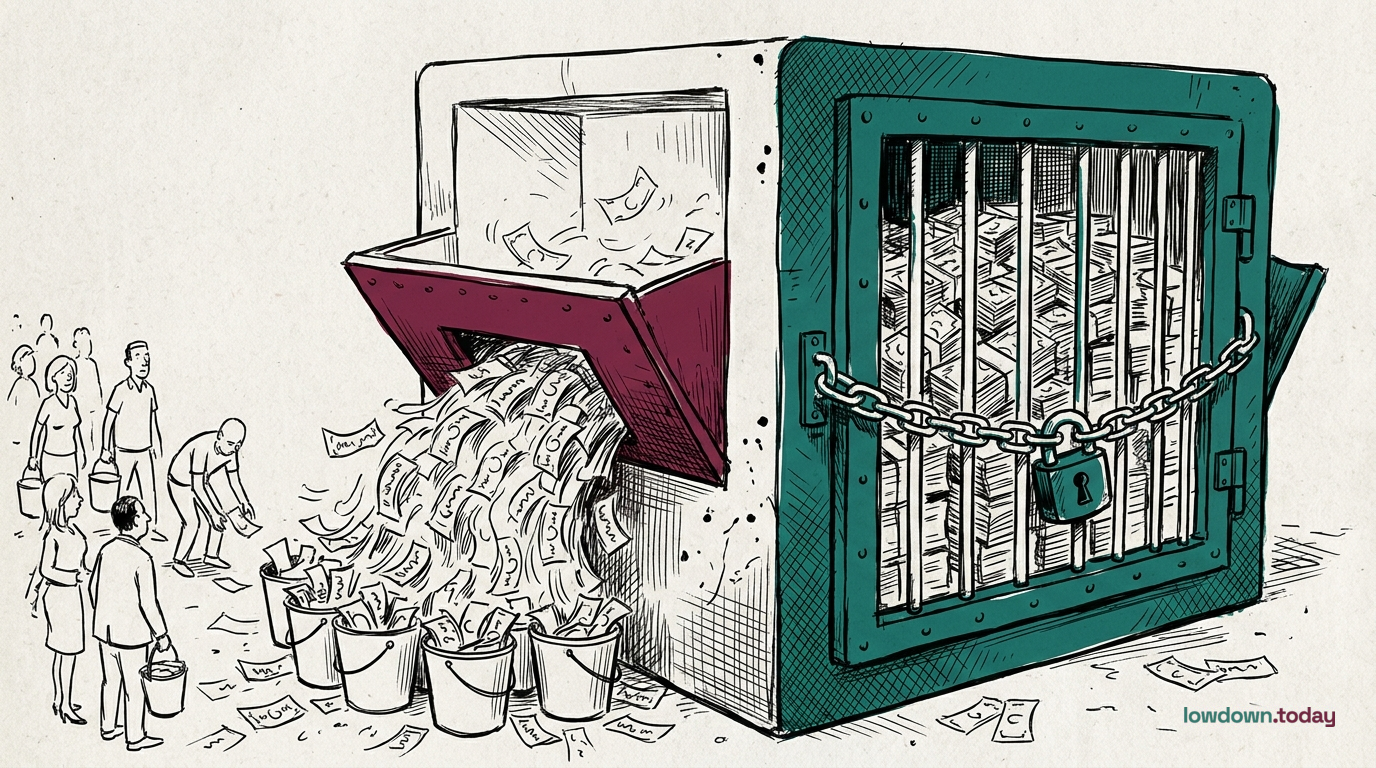
Louisiana is the second straight test of whether outside money can still buy a low-turnout Republican runoff.

A Rigamer poll taken 15 to 16 June put Julia Letlow at 40.2% against John Fleming's 38.2%, inside the margin of error, after a Kaplan survey in early June had her ahead 52 to 37⁠1. Letlow's double-digit lead in the Louisiana Senate runoff has evaporated in a fortnight. Letlow then declined Fleming's challenge to three debates, citing time with voters. The runoff falls on 27 June, after this briefing publishes, so what follows is a trajectory rather than a result.

Louisiana runs an all-party primary, in which the top two finishers advance regardless of party. Bill Cassidy came third, leaving two Republicans and no Democrat in the runoff, so the contest pits money against insurgency rather than red against blue. The Accountability Project, a pro-Letlow super PAC reported to be aligned with Governor Jeff Landry, has now committed more than $6 million in independent expenditures, outside spending that the law bars from coordinating with a campaign, after its first $1 million filing on 5 June. Fleming has closed to a tie on almost nothing.

Texas produced the same shape last month. Ken Paxton beat John Cornyn by 28 points in the Texas Senate runoff despite a nine-to-one spending disadvantage, a result that pushed Cook and Sabato to move Texas Senate to Leans Republican the next day. Runoff electorates are tiny and motivation-driven, the exact terrain where an insurgent with intensity can erase a lead built on name recognition and endorsements. A Letlow win on $6 million of outside money would reassure committees that the cheque still clears; a Fleming win would mark two straight runoffs where it did not.

Deep Analysis

In plain English

Louisiana held a primary election in May where the two top vote-getters advanced to a runoff, regardless of party. Julia Letlow, a Republican congresswoman backed by President Trump, got 45% of the vote. John Fleming, a former congressman and founding member of the House Freedom Caucus, got 28%. Incumbent Senator Bill Cassidy was eliminated with 25%. The 27 June runoff is now essentially a tie. Letlow had led by 15 points in early June. A Rigamer poll taken 15-16 June put Letlow at 40.2% and Fleming at 38.2%, which is within the survey's margin of error. Fleming achieved this despite a pro-Letlow super PAC committing over $6 million while Fleming had almost no outside money. Runoff elections in Louisiana attract very low turnout, typically under 15% of registered voters. That means a small, highly motivated base decides the outcome. Fleming's conservative movement credentials speak directly to that base.

Deep Analysis
Root Causes

Fleming's closing momentum traces to two structural factors the money cannot fix. First, Louisiana Republican runoff electorates self-select toward the most ideologically motivated voters; Fleming's House Freedom Caucus founding membership and his movement-conservative credentials appeal precisely to that slice. Second, Letlow's IE-saturation strategy assumes persuadable voters are responsive to paid media in a low-turnout environment where most remaining voters are already committed.

The Cassidy defeat reset the Louisiana Republican base's revealed preference: establishment incumbents with cross-partisan records lose to challengers who signal ideological purity, even from deep deficits. Letlow is the establishment candidate in an election cycle that has produced Paxton over Cornyn and Cassidy's elimination in less than 30 days.

What could happen next?
  • Consequence

    A Fleming win on 27 June would mark the third establishment-aligned Republican senator ousted or denied nomination by a movement-conservative challenger in four weeks, following Cassidy and Cornyn, signalling the Trump-era party purge is accelerating in primary runoffs.

    Immediate · Assessed
  • Risk

    A Letlow win despite money-disadvantage polling would create a contested precedent: whether the Trump endorsement alone overcomes freedom-caucus ideological gravity in Southern Republican runoffs.

    Immediate · Suggested
  • Precedent

    If Fleming closes and wins from 15 points down with almost no outside money, the Paxton-Cornyn and Fleming-Letlow results together establish that IE spending above 30-to-1 does not reliably hold in intra-party Senate runoffs when the challenger carries Freedom Caucus credentials.

    Long term · Suggested
First Reported In

Update #10 · Wave or grind: the measure splits

The Times-Picayune / nola.com· 21 Jun 2026
Read original →
Different Perspectives
University of Florida Election Lab
The lab, run by Michael McDonald, estimates about 124.3 million ballots, a raw midterm record, and turnout of about 49.4% of eligible voters, second to 2018's 50.05%. The raw record reflects population growth more than a record rate, so the late count is working through a near-2018 electorate.
Thune's critics on the right, including Senator Ron Johnson
Ron Johnson backed the failed 31-15 motion to delay Thune's re-election, after activists such as Mike Cernovich blamed the leader for the defeat. Their complaint is that Republicans could have passed the SAVE Act; in January it meets a Democratic Senate instead.
Senator John Thune
Senator John Thune
Thune was re-elected Senate Republican leader by acclamation on 10 November after a motion to delay failed 31-15. He kept the filibuster that stopped the SAVE Act, the choice his critics on the right blame for the defeat.
House Republicans under Jim Jordan
House Republicans elected Jordan minority leader by 106 votes to 73 over Steve Scalise on 10 November, after Speaker Mike Johnson declined to run. They replaced the leadership that lost the majority, while Senate Republicans kept theirs.
Donald Trump
Donald Trump
Trump asked on Truth Social on 9 November whether anybody believed the election "was honest" and blamed the machines, having told The New York Times on polling night he would accept the results. No Republican campaign had sued over a 2026 result by 10 November, so the claim has no case behind it.
Judge David O. Carter
Carter closed the Justice Department's suit over about 20,000 California mail ballots on 10 November after the department withdrew it, writing that the suit "attempted to disrupt an ongoing election". The closure leaves the department with no court order touching a 2026 California ballot.

Written with AI from Lowdown's published reporting. Not individually reviewed by an editor. Editorial standards.
