Skip to content
Welcome, thoughtbot's Giant Robots listeners!Start here
US Midterms 2026
24SEP

Crypto PAC pulls Paxton ad under GOP pressure

4 min read
11:45UTC

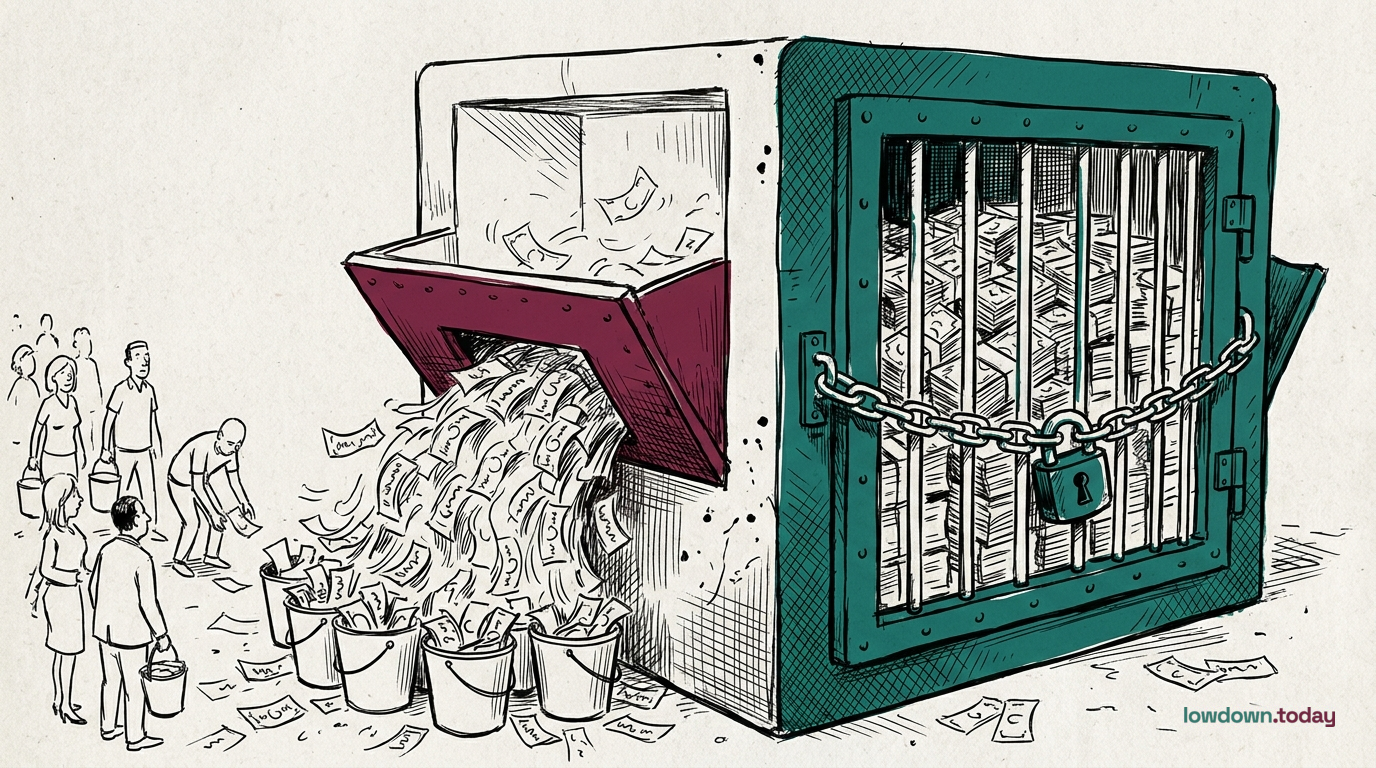
Fellowship PAC filed a $1.75 million Paxton independent expenditure and then amended it away after pressure from Trump adviser Chris LaCivita; the Texas Senate runoff is on Tuesday 26 May.

PoliticsDeveloping
Key takeaway

Republican leaders vetoed Fellowship PAC's $1.75M Paxton buy without counter-spending; the 26 May runoff tests the veto.

The Texas Republican Senate runoff between John Cornyn and Ken Paxton is on Tuesday 26 May, seven days from now. Combined spending across both runoff rounds has passed $120 million; pro-Cornyn forces are outspending pro-Paxton forces 4-to-1 inside the runoff itself⁠1. Fellowship PAC, the crypto super PAC backed by Tether and Cantor Fitzgerald, filed a $1.75 million independent expenditure supporting Paxton in late April as part of the larger $3 million-plus deployment plan. The PAC then amended the Federal Election Commission filing to remove the buy after pressure from Trump adviser Chris LaCivita and the National Republican Senatorial Committee. The ads never aired.

The sequence makes the scrub the news, not the spending. Fellowship PAC committed a candidate-specific buy on paper, was leant on by the establishment campaign apparatus that the NRSC inquiry under Howard Lutnick had already foreshadowed, and amended the filing within days. Brookings Institution election-law specialist Daniel Tokaji noted that an FEC amendment of this kind, while procedurally routine, is unusually rare on an active runoff buy. The Republican counter-view, advanced by Fellowship spokesman Eric Soufer, is that the amendment reflects an internal accounting move, not a withdrawal under pressure; the FEC paperwork supports both readings.

On a parallel track, Democratic state representative James Talarico raised $27 million in Q1 2026, the largest quarterly Senate haul on record in any state, with 97% of donations under $100 and 540,000-plus donors across 246 of 254 Texas counties⁠2. Talarico awaits the Cornyn-Paxton winner; the runoff tests the limit of crypto-PAC power inside the Republican establishment. The general election will test whether grassroots Democratic money buys Texas competitiveness for the first Senate cycle since 2018.

Fellowship's May FEC monthly report is due on or about Wednesday 20 May, which will confirm or narrow the $89 million gap between claimed and disclosed cash that has accompanied the PAC since formation. The Fairshake PAC overclaim has widened in parallel, with $134.6 million raised against $193 million claimed, a $58.4 million gap. Two crypto super PACs are running the same overclaim pattern in the cycle's first major federal test.

Deep Analysis

In plain English

Texas is choosing its Republican candidate for the US Senate in a runoff election on 26 May. The two candidates are John Cornyn, the current senator backed by the Republican Party's establishment, and Ken Paxton, the state's attorney general backed by Donald Trump supporters and cryptocurrency industry money. A super PAC called Fellowship, backed by people who run a major cryptocurrency company, had planned to spend $1.75 million on ads supporting Paxton. But after being pressured by a Trump adviser and the Republican Party's Senate campaign arm, the PAC cancelled the ads before they could run. This is the first time the party establishment has publicly pulled crypto-PAC money out of a Republican primary. On the Democratic side, state representative James Talarico raised $27 million in three months, mostly from small donations. Whoever wins the Republican runoff faces Talarico in November in what is expected to be an expensive but difficult race for Democrats in a state that has voted Republican in every Senate election since 1994.

What could happen next?
  • Precedent

    The NRSC-LaCivita pressure sequence demonstrates the Republican establishment can exercise soft-veto power over crypto-PAC primary deployments without controlling the underlying money, setting a coordination template for future cycles.

    Medium term · 0.7
  • Consequence

    Talarico's $27 million Q1 haul gives Democrats a credible general-election war chest regardless of which Republican wins the runoff, making the Texas Senate race the most expensive Democratic investment in the state since 2018.

    Short term · 0.82
  • Risk

    Fellowship PAC's $89 million disclosed-vs-claimed gap remains unresolved. If the May monthly report does not close the gap, FEC audit exposure grows for the PAC's entire deployment programme in the 2026 cycle.

    Short term · 0.62
First Reported In

Update #6 · A primary nullified mid-vote

Texas Tribune· 19 May 2026
Read original →
Different Perspectives
University of Florida Election Lab
The lab, run by Michael McDonald, estimates about 124.3 million ballots, a raw midterm record, and turnout of about 49.4% of eligible voters, second to 2018's 50.05%. The raw record reflects population growth more than a record rate, so the late count is working through a near-2018 electorate.
Thune's critics on the right, including Senator Ron Johnson
Ron Johnson backed the failed 31-15 motion to delay Thune's re-election, after activists such as Mike Cernovich blamed the leader for the defeat. Their complaint is that Republicans could have passed the SAVE Act; in January it meets a Democratic Senate instead.
Senator John Thune
Senator John Thune
Thune was re-elected Senate Republican leader by acclamation on 10 November after a motion to delay failed 31-15. He kept the filibuster that stopped the SAVE Act, the choice his critics on the right blame for the defeat.
House Republicans under Jim Jordan
House Republicans elected Jordan minority leader by 106 votes to 73 over Steve Scalise on 10 November, after Speaker Mike Johnson declined to run. They replaced the leadership that lost the majority, while Senate Republicans kept theirs.
Donald Trump
Donald Trump
Trump asked on Truth Social on 9 November whether anybody believed the election "was honest" and blamed the machines, having told The New York Times on polling night he would accept the results. No Republican campaign had sued over a 2026 result by 10 November, so the claim has no case behind it.
Judge David O. Carter
Carter closed the Justice Department's suit over about 20,000 California mail ballots on 10 November after the department withdrew it, writing that the suit "attempted to disrupt an ongoing election". The closure leaves the department with no court order touching a 2026 California ballot.

Written with AI from Lowdown's published reporting. Not individually reviewed by an editor. Editorial standards.
