Skip to content
You can now search across every topic, entity and event.What's new
Russia-Ukraine War 2026
27MAR

RAF Typhoons fire APKWS in Gulf combat

3 min read
20:48UTC

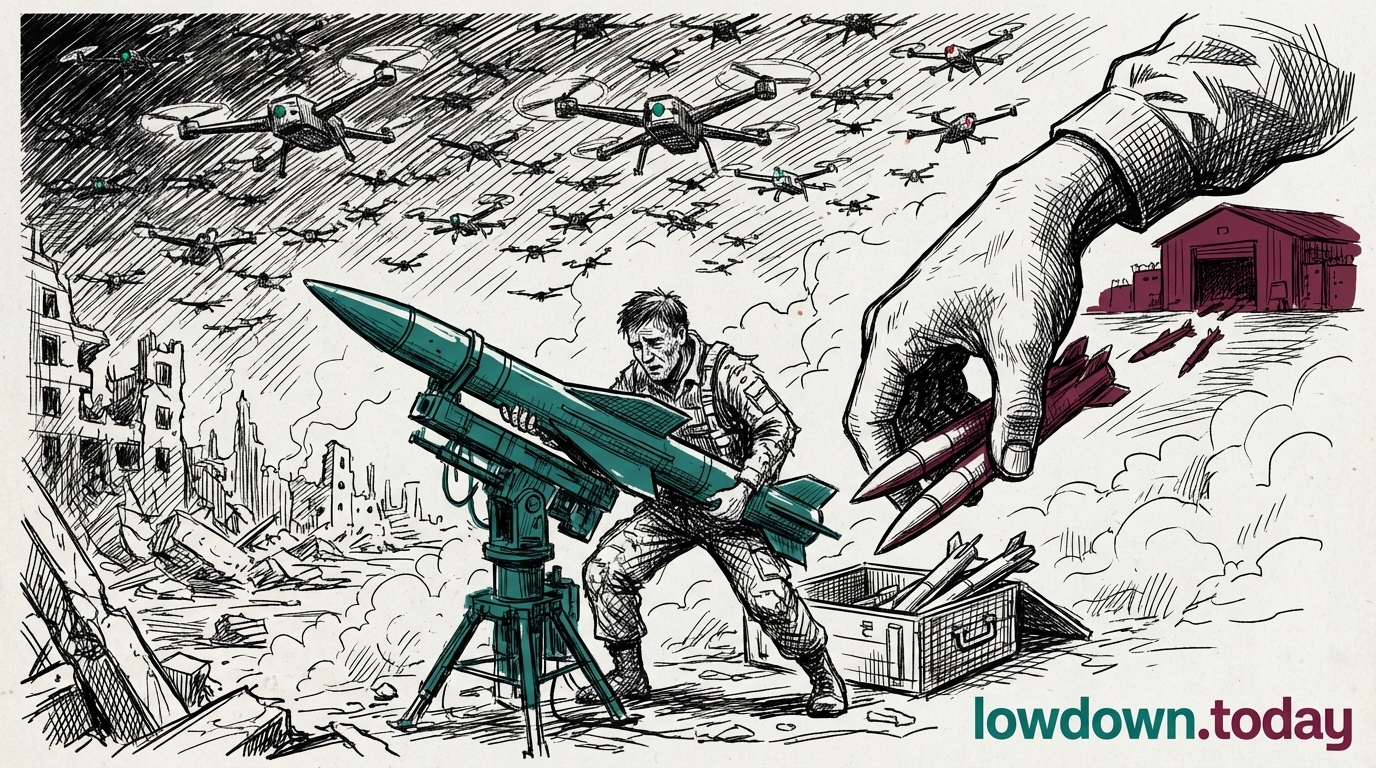
RAF 9 Squadron Typhoons deployed the APKWS laser-guided rocket in counter-drone operations in the Middle East from 17 May, going from first ground test in March to combat use in under two months at GBP 20,000 per shot.

ConflictDeveloping
Key takeaway

Britain deployed a counter-drone rocket from first test to combat in under two months.

RAF Typhoons of 9 Squadron deployed the APKWS laser-guided rocket system for counter-drone missions in the Middle East from approximately 17 May, flying from RAF Akrotiri in Cyprus and Al Udeid Airbase in Qatar. APKWS is a laser-guidance conversion kit that turns unguided rockets into precision counter-drone munitions at roughly GBP 20,000 per shot, a fraction of the millions a Patriot-class interceptor costs. Suppliers are BAE Systems and QinetiQ.

The system went from first ground-target test in March to air-to-air trial in April to combat deployment in May: less than two months from initial testing to operational use. That timeline is faster than any Western weapons integration since the Urgent Operational Requirement process during Iraq and Afghanistan, and signals a deliberate MoD decision to accept integration risk for speed.

At GBP 20,000 per shot, APKWS fills the cost gap between the LOCUST X3 laser (not yet fielded) and million-pound Patriot-class interceptors. The Pentagon's DAWG line at USD 54.6 billion reflects the same pressure to find affordable counter-drone solutions at scale. The Gulf counter-drone requirement driving this acceleration connects directly to the Hormuz mission and the broader UK commitment of GBP 752 million to the Ukraine drone package .

Deep Analysis

In plain English

British Typhoon fighter jets in the Middle East are now shooting down drones with laser-guided rockets called APKWS. Each rocket costs about GBP 20,000, which sounds expensive, but it is cheap compared to the Patriot missiles the US uses, which cost over a million pounds each. The RAF went from testing this weapon for the first time to using it in combat in less than two months, which is extraordinarily fast for military equipment. It works against Iranian-type drones in the Gulf. It would not work cost-effectively against cheap Ukrainian-style FPV drones in Europe.

Deep Analysis
Root Causes

The APKWS deployment reflects three pressures: the Gulf drone threat from Iranian-aligned groups grew faster than dedicated counter-drone systems could be procured.

The MoD's political commitment to show operational drone-defence capability as part of the GBP 4 billion autonomous-systems agenda; and BAE Systems' APKWS integration work (which already had RAF Typhoon compatibility in development) being available for acceleration.

What could happen next?
  • Consequence

    APKWS' combat debut will accelerate RAF allies' interest in the same integration on their own Typhoon fleets. Germany, Spain, and Kuwait all operate Typhoons; if the RAF shares its APKWS integration work through the Eurofighter consortium, the deployment multiplies across the alliance without additional development cost.

First Reported In

Update #10 · NATO shoots down drone over Estonia

FlightGlobal· 29 May 2026
Read original
Causes and effects
This Event
RAF Typhoons fire APKWS in Gulf combat
The two-month test-to-combat timeline is faster than any Western weapons integration in recent memory, and APKWS fills the cost gap between directed-energy prototypes and million-pound Patriot-class interceptors.
Different Perspectives
Belarus
Belarus
Minsk announced completion of its own 37th Separate Airborne Assault Brigade near Gomel, under plans dating to August 2025 rather than a response to any single frontline event this window, keeping its hedge of hosting the war without formally joining Russia's mobilisation drive.
European Union / Operation IRINI states
Italy, Greece and Poland boarded the sanctioned tanker Toa Payoh off Pantelleria under a standing EU mandate rather than a national decision, extending enforcement from the Channel and Baltic and the Black Sea and Azov into the Mediterranean. Italian Defence Minister Guido Crosetto praised the crew; the captain's refusal to produce documentation left detention unconfirmed.
Poland and the NATO eastern flank
Warsaw's Coordination Team said explicitly its forces tracked the 30 July missile incursion and were ready to shoot it down, then flew air cover for an EU tanker interdiction three days later. Poland is simultaneously the war's nearest spillover victim and a contributor to enforcing sanctions against the state causing that spillover.
Ukraine (government, defence establishment and civilians)
Kyiv runs its manpower crisis through acting Defence Minister Yevhen Khmara, whose formal appointment waits for parliament's 18 August return, and a fortnight-old Commander-in-Chief, Mykhailo Drapatyi. Reported attacks on enlistment officers rose from 5 cases in 2022 to 341 in 2025, reaching Odesa's Territorial Recruitment Centre staff directly on 2 August.
Kremlin and Russian domestic economic voices
Moscow has not addressed July's advance-rate collapse or Sberbank's OFZ warning; Novak's diary ran to OPEC+ quota diplomacy with no diesel item logged since 15 July. Economist Nikolai Korzhenevsky calls the Central Bank's RUB 2.3tn in bank lending effectively deficit monetisation, a framing Sberbank's Skvortsov, with his own institutional interest, has not disputed.
IAEA (Rafael Grossi)
IAEA inspectors logged Zaporizhzhia's 22nd loss of off-site power, ten of them in the last three months, after a thunderstorm knocked out the plant's sole surviving backup line. Grossi reads the accelerating frequency, not any single outage, as the safety signal now that the plant's redundancy is exhausted.
