Skip to content
You can now search across every topic, entity and event.What's new
Russia-Ukraine War 2026
3AUG

Greek Patriot battery fires at Yanbu

4 min read
10:16UTC

A Greek-operated Patriot battery scored its first combat intercepts at Yanbu — but a drone slipped through and hit the refinery that has become the Gulf's only crude export route since the Hormuz closure.

ConflictDeveloping
Key takeaway

Greece's first combat engagement in the Gulf makes NATO a direct participant in this conflict.

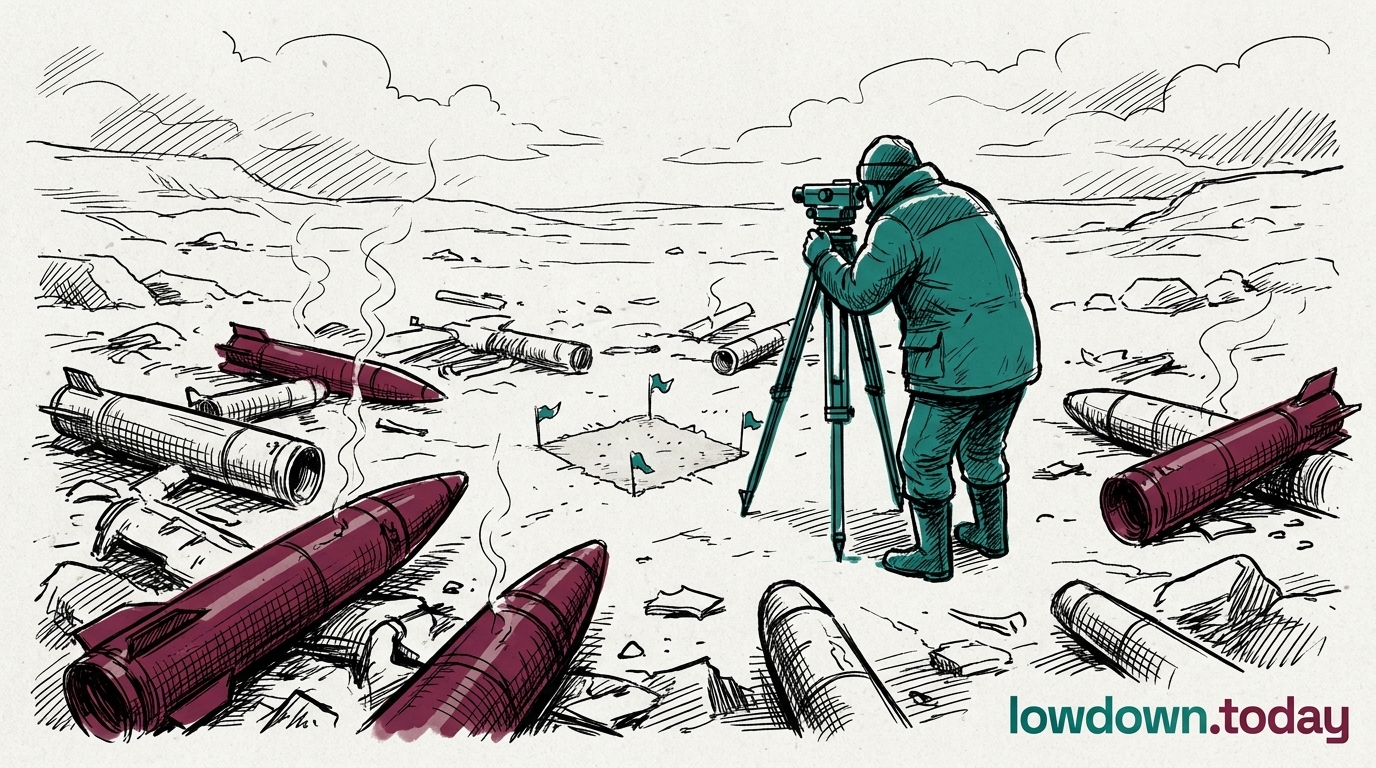
A Greek-operated Patriot PAC-3 battery intercepted two Iranian ballistic missiles targeting Yanbu, Saudi Arabia, on 19 March — the first combat engagement by Greece's ELDYSA air defence mission since its deployment in September 2021 1 2. A drone evaded the system and struck the SAMREF refinery, a Saudi Aramco-ExxonMobil joint venture with roughly 400,000 barrels per day of refining capacity 3. No casualties were reported. The strikes were part of the IRGC's simultaneous attack on Energy infrastructure across four countries — the war's broadest coordinated operation against hydrocarbon facilities.

Yanbu's exposure is the central fact. Since Iran mined and closed the strait of Hormuz — described by US Navy officials as an Iranian "Kill box" with more than 300 commercial ships stranded — the Red Sea port has become the only functioning crude export terminal for Gulf Arab producers. Oil from the Eastern Province reaches Yanbu via the East-West Pipeline, a 1,200-kilometre artery built in the 1980s precisely for this contingency: Saudi Arabia's insurance policy against a Hormuz closure. That insurance is now under direct fire. The IRGC had named SAMREF as a target two days earlier in its first-ever facility-specific warning to Gulf states . On 19 March, it followed through.

The Greek intercept introduces a new actor to the conflict's air defence architecture. Greece deployed the ELDYSA battery under a bilateral agreement following the September 2019 Abqaiq-Khurais drone and cruise missile attack, which temporarily halved Saudi oil output and exposed The Kingdom's vulnerability to low-altitude threats. The system proved its value against ballistic missiles — but the drone that reached SAMREF exposed the same layered-defence gap that has plagued Gulf air operations throughout this war. PAC-3 is optimised for high-altitude ballistic intercepts; slow, low-flying drones present a fundamentally different tracking problem. Saudi forces have been intercepting 60 or more drones daily , and cumulative UAE interceptions exceed 2,000 since 28 February , yet the seam between ballistic and drone defence layers remains exploitable.

The strike's economic logic is direct. If Yanbu is degraded, Gulf Arab crude has no exit route. Saudi Arabia's position as the world's swing producer — the spare capacity that global oil markets treat as a floor against supply shocks — depends on Yanbu remaining operational for as long as Hormuz stays closed. Brent had already touched $119 intraday on 19 March. Iran has identified the bottleneck and demonstrated it can reach it; whether it can sustain attacks at a tempo sufficient to shut Yanbu down is the next question. The SAMREF damage appears limited — but the principle has been established.


Deep Analysis

In plain English

Saudi Arabia's Yanbu port is the only route Gulf oil can take to reach the world right now — the Strait of Hormuz is closed. Greece deployed a missile defence team there to protect it. On 19 March, Iran fired two ballistic missiles and a drone at the port's refinery. The Greek team shot down the missiles, but the drone slipped through and struck the facility. Shooting down those missiles was the first time a NATO country had directly fired weapons in this war, which changes the conflict's character significantly — Greece is now a combatant, not merely an observer.

Deep Analysis
Synthesis

The ELDYSA mission was sized and tasked for Houthi-scale threats, not IRGC multi-vector salvos. A single Patriot battery defending a single facility against a committed adversary who accepts ballistic missile losses as the price of drone penetration will eventually exhaust its magazine. The structural problem is not the battery's performance — it worked — but the mismatch between point-defence capacity and the scale of the threat now targeting Yanbu.

Root Causes

Iran is applying a tested saturation doctrine: expend ballistic missiles to exhaust the finite interceptor magazine, then exploit the gap with cheaper, harder-to-track drones. Patriot PAC-3 batteries carry a limited number of interceptors; resupply under sustained combat conditions is logistically constrained, making each salvo a gradual depletion operation.

Escalation

Greece's kinetic engagement introduces a NATO member into the conflict's direct military chain. Athens must now manage domestic political exposure — Greece carries significant trade and diaspora ties to the Gulf — whilst its forces remain deployed under active Iranian fire.

What could happen next?
  • Precedent

    A NATO member has fired weapons in defence of Gulf Arab infrastructure, establishing direct allied military entanglement in this conflict.

    Immediate · Assessed
  • Risk

    If Iran designates the ELDYSA deployment a legitimate military target, Greece faces retaliatory exposure it has not publicly prepared for domestically or diplomatically.

    Short term · Suggested
  • Consequence

    Yanbu's status as the sole Gulf export chokepoint means any future successful strike on its core infrastructure would cause an immediate global oil supply shock.

    Short term · Assessed
  • Meaning

    The drone's successful penetration after missile intercept validates Iran's hybrid saturation doctrine against Western-supplied point defences.

    Immediate · Assessed
First Reported In

Update #42 · Iran hits four countries; Brent at $119

GreekReporter· 20 Mar 2026
Read original
Causes and effects
This Event
Greek Patriot battery fires at Yanbu
Yanbu is the sole functioning crude export terminal for Gulf Arab producers after Iran closed the Strait of Hormuz. The strike demonstrated Iran can reach this bottleneck, and exposed gaps between ballistic missile and drone defence layers even when interception systems perform correctly.
Different Perspectives
Belarus
Belarus
Minsk announced completion of its own 37th Separate Airborne Assault Brigade near Gomel, under plans dating to August 2025 rather than a response to any single frontline event this window, keeping its hedge of hosting the war without formally joining Russia's mobilisation drive.
European Union / Operation IRINI states
Italy, Greece and Poland boarded the sanctioned tanker Toa Payoh off Pantelleria under a standing EU mandate rather than a national decision, extending enforcement from the Channel and Baltic and the Black Sea and Azov into the Mediterranean. Italian Defence Minister Guido Crosetto praised the crew; the captain's refusal to produce documentation left detention unconfirmed.
Poland and the NATO eastern flank
Warsaw's Coordination Team said explicitly its forces tracked the 30 July missile incursion and were ready to shoot it down, then flew air cover for an EU tanker interdiction three days later. Poland is simultaneously the war's nearest spillover victim and a contributor to enforcing sanctions against the state causing that spillover.
Ukraine (government, defence establishment and civilians)
Kyiv runs its manpower crisis through acting Defence Minister Yevhen Khmara, whose formal appointment waits for parliament's 18 August return, and a fortnight-old Commander-in-Chief, Mykhailo Drapatyi. Reported attacks on enlistment officers rose from 5 cases in 2022 to 341 in 2025, reaching Odesa's Territorial Recruitment Centre staff directly on 2 August.
Kremlin and Russian domestic economic voices
Moscow has not addressed July's advance-rate collapse or Sberbank's OFZ warning; Novak's diary ran to OPEC+ quota diplomacy with no diesel item logged since 15 July. Economist Nikolai Korzhenevsky calls the Central Bank's RUB 2.3tn in bank lending effectively deficit monetisation, a framing Sberbank's Skvortsov, with his own institutional interest, has not disputed.
IAEA (Rafael Grossi)
IAEA inspectors logged Zaporizhzhia's 22nd loss of off-site power, ten of them in the last three months, after a thunderstorm knocked out the plant's sole surviving backup line. Grossi reads the accelerating frequency, not any single outage, as the safety signal now that the plant's redundancy is exhausted.


