Skip to content
You can now search across every topic, entity and event.What's new
Russia-Ukraine War 2026
23JUL

Iran names a Hormuz toll authority

4 min read
20:33UTC

Iran created the Persian Gulf Strait Authority on 5 May, requiring vessels to register, document and pay a transit toll before clearance; MARAD's advisory 2026-004 acknowledged the new regime in writing.

ConflictDeveloping
Key takeaway

Pay the toll, breach OFAC; refuse the toll, face Iranian fire. Third-flag vessels have no lawful route.

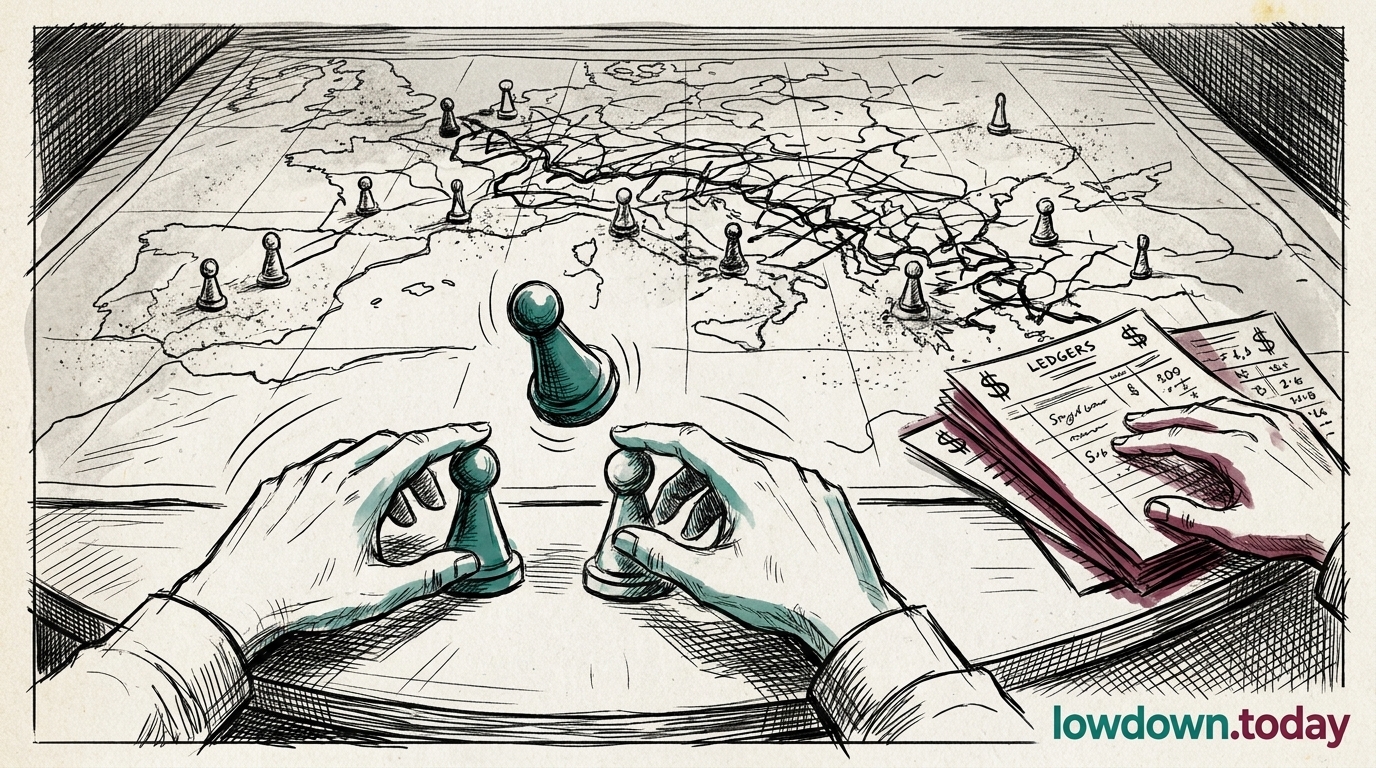
Iran created the Persian Gulf Strait Authority on Tuesday 5 May, a named state body that requires vessels to register, complete documentation and pay a transit toll before receiving clearance to enter a designated corridor through the strait 1. Deviation from the corridor, the authority states, triggers military intervention. MARAD (the US Maritime Administration) issued advisory 2026-004 acknowledging the new authority alongside the pre-existing 2026-001 advisory on Iranian seizures 2. The advisory is the first written US-government recognition that Iran has produced an institution Washington's own posture cannot reconcile with.

Iran named the new body the 'Persian Gulf Strait Authority', not the 'Strait of Hormuz Authority', refusing the international-waterway designation that UNCLOS (United Nations Convention on the Law of the Sea) Article 38 attaches to the strait. Article 38 guarantees transit passage 'without prior authorisation' for ships of all flags. The new authority requires exactly that: a registered email contact, formal documentation, a paid toll, and adherence to a designated corridor before clearance is granted. The institutional architecture rests on the Majlis 12-article sovereignty law and Mojtaba Khamenei's 'new management' written claim .

The legal squeeze runs in both directions. OFAC's General Licence W, issued 1 May , names the Iranian Red Crescent, Bonyad Mostazafan and Iranian embassy accounts as toll-payment channels that trigger US sanctions exposure. A non-US-flagged tanker that pays the new Iranian toll to clear the corridor exposes itself to OFAC secondary sanctions; a tanker that refuses to pay risks Iranian military intervention. There is no lawful path for a third-flag vessel to comply with both regimes at once. The Northwood mission template, drafted by British and French officers on 22-23 April under UNCLOS transit-passage doctrine, was designed for a permissive strait; it now confronts a counter-instrument with the force of Iranian domestic law and no written US answer to the toll-payment bind.


Deep Analysis

In plain English

On 5 May, Iran created a new government body called the Persian Gulf Strait Authority. Any ship that wants to sail through the Strait of Hormuz must now contact this authority, fill in paperwork, and pay a fee. If a ship enters the strait without permission, Iran says its military will intervene. The problem is that international law, specifically a treaty signed by 170 countries, says ships have the right to sail through international straits without asking anyone's permission. Iran never signed that treaty. The US government acknowledged the new authority in a written maritime warning, which is the first time Washington has formally recognised in writing that Iran has created an institution to control the strait.

Deep Analysis
Root Causes

UNCLOS lacks an enforcement mechanism for transit-passage violations. The International Tribunal for the Law of the Sea can adjudicate disputes, but Iran's non-ratification of UNCLOS means it has no compulsory jurisdiction over Tehran. Iran can violate Article 38's transit-passage guarantee without triggering any automatic legal consequence.

OFAC General License W creates a second structural trap for non-US-flagged vessels: complying with the PGSA by paying the toll violates US sanctions, because PGSA toll payments flow through Bonyad Mostazafan, a designated entity. Refusing to pay the toll exposes the vessel to IRGC interdiction. No lawful path exists for a non-US vessel to satisfy both frameworks simultaneously.

What could happen next?
  • Precedent

    The PGSA's codification of a toll-and-permit regime for an international strait sets a precedent other states (China over Taiwan Strait, Russia over Northern Sea Route) could cite to advance their own sovereign-access claims.

  • Consequence

    Any ceasefire agreement must now explicitly dissolve a named Iranian regulatory body; dissolving the PGSA requires Iranian parliamentary action, raising the domestic political cost of any deal.

First Reported In

Update #89 · Truxtun gets through; Trump pulls back

Maritime Executive· 6 May 2026
Read original
Different Perspectives
IAEA (Rafael Grossi)
IAEA inspectors logged Zaporizhzhia's 22nd loss of off-site power, ten of them in the last three months, after a thunderstorm knocked out the plant's sole surviving backup line. Grossi reads the accelerating frequency, not any single outage, as the safety signal now that the plant's redundancy is exhausted.
United States (Treasury/OFAC)
Washington has let general licence 134C, its Russian crude waiver, lapse for 36 days with no successor, the longest gap of the war. Treasury has not said whether the non-renewal reflects deliberate policy or administrative delay, leaving buyers to price in compliance risk rather than wait for clarity.
Slovakia
Slovakia
Slovakia dropped its hold-out on the EU's 21st sanctions package only after winning a 2028 guarantee phasing out Russian gas, the exact pipeline dependency, roughly 80% of its crude supply, that gave it leverage. Bratislava's climbdown clears the package but leaves the same single-veto mechanism intact for the next round.
Russia (Kremlin and general staff)
General staff chief Gerasimov claimed Donetsk captures on 18 July that ISW says it cannot corroborate, extending a pattern ISW clocked at a 5:1 exaggeration ratio earlier this year. Moscow is conditioning its public for a possible autumn mobilisation after September's Duma elections rather than acknowledging the front has stalled.
Ukraine (Zelenskyy government)
Zelenskyy dismissed his commander-in-chief, defence minister and chief of general staff within eight days, replacing Syrskyi with Drapatyi and Hnatov with Skybiuk as protesters demanded Syrskyi go and Fedorov return. Kyiv frames the sweep as a bet on manoeuvre capacity ahead of a feared Russian autumn surge, not the disarray critics read into three changes in a week.
The United Kingdom
The United Kingdom
Starmer pledged £300 million in Kyiv on 16 July toward Ukraine's Gripen E squadron, adding to the PURL expansion Trump and Rutte had announced two days earlier. London is paying into a scheme built around a shortfall NATO's own published $4bn-plus pledge does not close against Zelenskyy's roughly $15bn stated need.



