Three drones crossed the UAE western border late on Sunday 17 May. One hit a generator on the perimeter of the Barakah Nuclear Power Plant, the Arab world's first operational nuclear station, according to The National and South China Morning Post. UAE air defences intercepted the other two before impact. The UAE Ministry of Defence confirmed no radiation leak and no injuries. Barakah sits on the UAE coast at Al Dhafra and generates roughly a quarter of the country's electricity. The IAEA (International Atomic Energy Agency) issued a statement of 'grave concern' without naming a perpetrator. The agency's careful phrasing reflects its own constraint: it has had no inspector access to Iranian declared sites since the eight-month blackout that began in September, which is why every cross-border incident now lands inside an attribution vacuum. The strike fits the UAE drone arc that has run since the Ghasha offshore gas-field fire and the Hui Chuan seizure off Fujairah . Both earlier events targeted hydrocarbon infrastructure; Barakah is the first nuclear target in the same operational picture. The escalation is geographic rather than military: the same arc, expanded to a higher-value class of facility, against a Gulf state that has positioned itself as a planning hub for the 26-nation Hormuz coalition. IAEA Director General Rafael Grossi's 'grave concern' statement is the standard idiom for incidents where the agency cannot attribute, cannot inspect, and cannot rule out repetition. Iran has not claimed the strike; nor has any other actor. Whoever launched the drones has forced one question onto Gulf governments: whether coalition membership now carries nuclear-facility exposure. That calculation runs against the diplomatic track Iran is opening with Beijing this week and against the silent paper trail in Washington across Day 80.
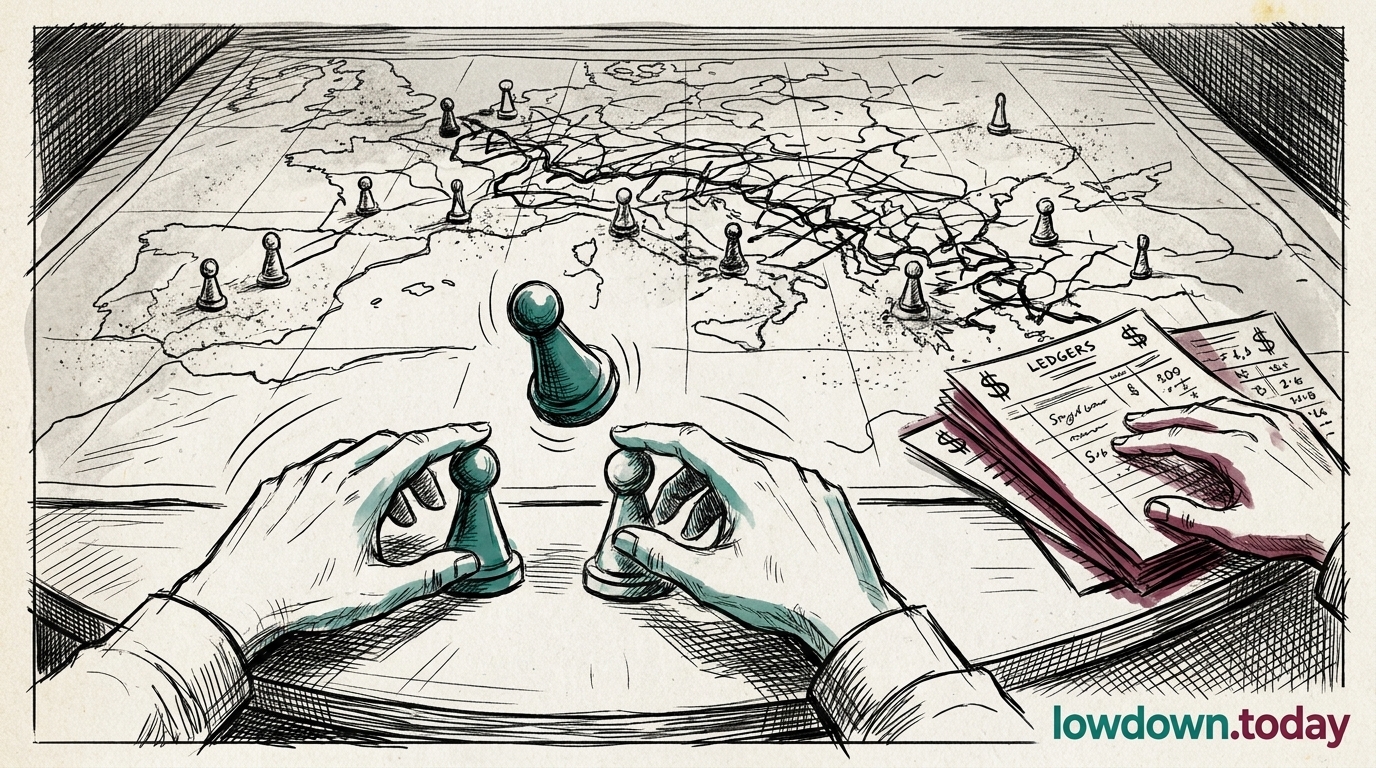
Drone hits perimeter of Barakah nuclear plant
Three drones crossed the UAE western border on Sunday night; one struck a generator on the perimeter of the Barakah Nuclear Power Plant, the Arab world's first operational nuclear station.
A drone hit Barakah's perimeter; the UAE drone arc now includes the Arab world's only operating nuclear station.
Deep Analysis
The Barakah plant is the Arab world's first nuclear power station, built by South Korea's KEPCO for the UAE. It generates electricity, not weapons, and has multiple safety systems designed to prevent radiation leaks. On 17 May, three drones crossed into UAE airspace from the west. **UAE air defences** intercepted two of the three drones; the **UAE Ministry of Defence** confirmed no radiation was released and no one was hurt. The incident matters because nuclear plants are supposed to be off-limits in war. The international nuclear watchdog, the IAEA, issued a formal statement of 'grave concern' but did not name who sent the drones. That ambiguity is the problem: if nobody is held responsible, it becomes easier for the next attacker to try again.
Barakah sits on the UAE's western border, 53 kilometres from the Saudi frontier, because the site was chosen for geological stability and distance from population centres, not for defensibility. The plant's air-defence integration with UAE Armed Forces is governed by a 2009 agreement predating the current regional conflict architecture; the intercept of two drones but not the third signals a gap in the layered defence coverage.
The deeper structural driver is the legal vacuum around civilian nuclear plants in non-international armed conflict. The 1977 Additional Protocol I to the Geneva Conventions prohibits attacks on nuclear power stations generating electricity for civilian use, but only between treaty parties, and only when the attack would release dangerous forces.
An attacker targeting a perimeter generator rather than the reactor core can plausibly claim it falls outside Article 56's scope. No Gulf state has joined Additional Protocol I.
- Risk
IAEA safeguards review of Barakah could be triggered within 72 hours if the UAE formally requests it, setting a precedent for inspections at civilian nuclear infrastructure hit in conflict.
Immediate · 0.72 - Risk
If attribution is established, the perpetrating state risks designation under UNSC Resolution 2231 and potential suspension of IAEA technical cooperation, a first for a Gulf-adjacent actor.
Short term · 0.55 - Precedent
Striking near nuclear infrastructure without triggering a radiological event sets a new escalation benchmark for the region, one that lowers the threshold for future attacks on critical energy infrastructure.
Long term · 0.78
Update #101 · Barakah hit, Trump posts, Italy sends minesweepers





