Skip to content
You can now search across every topic, entity and event.What's new
Russia-Ukraine War 2026
23JUL

CENTCOM denies tanker blasts in Hormuz

1 min read
20:33UTC

CENTCOM denied Iranian claims of tanker explosions in the Strait of Hormuz on 18 July, the second Iranian maritime claim it rejected that day.

ConflictDeveloping
Key takeaway

CENTCOM rejected Iranian reports of tanker explosions in Hormuz on 18 July.

CENTCOM (US Central Command) denied Iranian claims of tanker explosions in the Strait of Hormuz on 18 July 1. It was the second Iranian maritime assertion the command rejected that day, having already dismissed the IRGC's mining announcement as false .

Neither denial has been accompanied by evidence, and neither claim has been substantiated by an independent maritime authority. No salvage report, no distress call and no advisory has surfaced to support explosions aboard vessels in the strait, and the shipping Community has been left with two governments contradicting each other over what did or did not detonate in the world's most watched waterway.

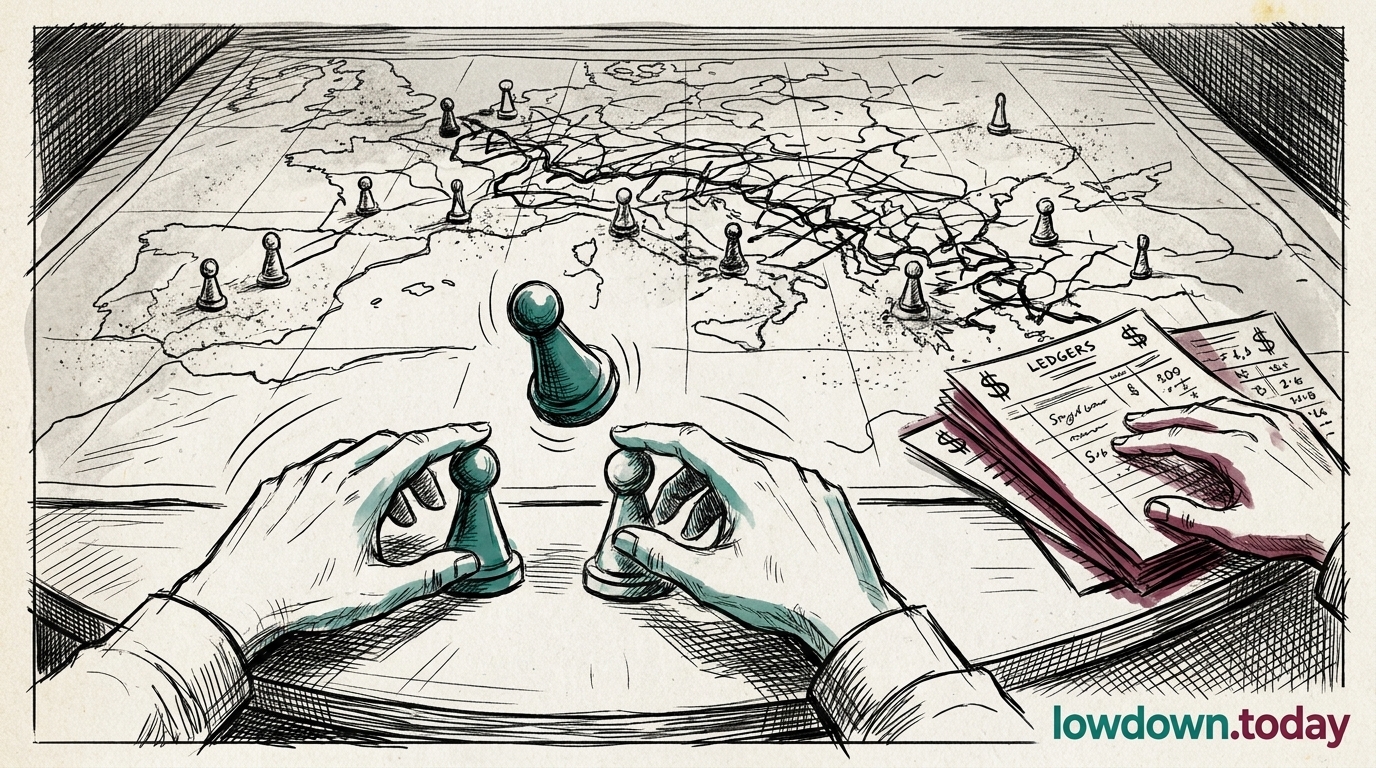
Denial is the weaker position in this exchange, which is why the claims keep coming. Tehran needs only to assert; Washington has to disprove a negative to an audience of underwriters who charge for uncertainty rather than for confirmed loss. A denied claim that moves a premium has still done its work.


Deep Analysis

In plain English

The US military command in the Middle East, CENTCOM, said on 18 July that Iranian reports of tanker explosions in the Strait of Hormuz were not true. This was the second Iranian claim about the strait that CENTCOM rejected that day, after it also denied the mining claim. Neither side has produced evidence, no salvage report or distress call has surfaced, so shipping companies are left with two governments disagreeing about what happened in the world's busiest oil shipping route.

What could happen next?
  • Consequence

    A denial carries less market weight than an assertion in a market that prices uncertainty rather than confirmed loss, which is why two CENTCOM denials in one day have not by themselves reversed the week's rise in Hormuz war-risk premiums.

First Reported In

Update #156 · First American deaths in Jordan

CENTCOM· 19 Jul 2026
Read original
Different Perspectives
IAEA (Rafael Grossi)
IAEA inspectors logged Zaporizhzhia's 22nd loss of off-site power, ten of them in the last three months, after a thunderstorm knocked out the plant's sole surviving backup line. Grossi reads the accelerating frequency, not any single outage, as the safety signal now that the plant's redundancy is exhausted.
United States (Treasury/OFAC)
Washington has let general licence 134C, its Russian crude waiver, lapse for 36 days with no successor, the longest gap of the war. Treasury has not said whether the non-renewal reflects deliberate policy or administrative delay, leaving buyers to price in compliance risk rather than wait for clarity.
Slovakia
Slovakia
Slovakia dropped its hold-out on the EU's 21st sanctions package only after winning a 2028 guarantee phasing out Russian gas, the exact pipeline dependency, roughly 80% of its crude supply, that gave it leverage. Bratislava's climbdown clears the package but leaves the same single-veto mechanism intact for the next round.
Russia (Kremlin and general staff)
General staff chief Gerasimov claimed Donetsk captures on 18 July that ISW says it cannot corroborate, extending a pattern ISW clocked at a 5:1 exaggeration ratio earlier this year. Moscow is conditioning its public for a possible autumn mobilisation after September's Duma elections rather than acknowledging the front has stalled.
Ukraine (Zelenskyy government)
Zelenskyy dismissed his commander-in-chief, defence minister and chief of general staff within eight days, replacing Syrskyi with Drapatyi and Hnatov with Skybiuk as protesters demanded Syrskyi go and Fedorov return. Kyiv frames the sweep as a bet on manoeuvre capacity ahead of a feared Russian autumn surge, not the disarray critics read into three changes in a week.
The United Kingdom
The United Kingdom
Starmer pledged £300 million in Kyiv on 16 July toward Ukraine's Gripen E squadron, adding to the PURL expansion Trump and Rutte had announced two days earlier. London is paying into a scheme built around a shortfall NATO's own published $4bn-plus pledge does not close against Zelenskyy's roughly $15bn stated need.



