Skip to content
You can now search across every topic, entity and event.What's new
Russia-Ukraine War 2026
16JUN

US crude waiver lapses 17 June

3 min read
10:25UTC

General License 134C, the US Treasury waiver covering Russian-origin crude, expires at 12:01am EDT on Wednesday 17 June with no successor in sight, stripping shadow-fleet cargoes of their last US legal cover.

ConflictDeveloping
Key takeaway

If Treasury issues no successor, Russian crude loses its last US legal cover from 17 June.

General License 134C (GL 134C), the US Treasury waiver that lets buyers take Russian-origin crude loaded before 12 March, expires at 12:01am Eastern Daylight Time on Wednesday 17 June, with no GL 134D announced 1. A general licence is a standing carve-out from sanctions; this one is the legal shield that has kept Russian seaborne oil moving through Western-touched insurance and shipping channels. Treasury has stayed silent on renewal.

This is the third consecutive 30-day bridge. The previous waiver, GL 134B, lapsed in mid-May , and the Cuba-excluded GL 134C that followed was issued on 18 May . Both earlier cliffs closed at the last minute without ending the trade, which is why the market is not yet pricing a clean break.

Let GL 134C lapse, and the consequence is structural rather than symbolic. Shadow-fleet operators who currently point to the waiver when arranging insurance would have to self-insure against secondary US sanctions on every cargo. The timing compounds the pressure: the legal cover drains away in the same week the Strait of Hormuz, due to reopen under the new US-Iran ceasefire, removes the scarcity premium that had lifted Russian crude prices through the spring. The price leg and the legal leg would tighten together, the combination Western sanctions architects have wanted since 2022.


Deep Analysis

In plain English

The US government issued a special permit, called General License 134C, that allowed companies to buy Russian oil that had been loaded onto ships before a certain date, even though Russian oil is under sanctions. Without this permit, buyers risk being punished by US financial authorities. The permit was the third in a row, each lasting 30 days. The third permit runs out at 12:01 in the morning on 17 June 2026 and no fourth permit has been announced. If no extension appears, every company moving Russian oil by sea from that point faces legal risk under US law, which can include being cut off from the US financial system. The same week, the Iran ceasefire is removing the reason oil prices were high, so Russia faces both less money per barrel and more legal obstacles to selling each one.

Deep Analysis
Root Causes

GL 134C exists because of a three-way tension in US sanctions design. The Trump administration wants to pressure Russia on energy revenue while avoiding oil-price shocks that damage US consumer sentiment. OFAC's rolling 30-day bridge is the instrument that manages this tension: it lets Treasury incrementally tighten coverage (removing Cuba in GL 134C) without triggering the cargo-stranding and insurance-market seizure that a clean expiry would produce.

The deeper structural cause is dollar-clearing dependency: the shadow fleet, however flagged, relies on dollar-denominated insurance, bunkering, and port-services markets that are all subject to OFAC jurisdiction. Russia has not been able to fully replicate these functions through the Russian National Reinsurance Company or Chinese yuan-clearing channels, which is why each GL extension still carries real legal weight for operators.

What could happen next?
  • Consequence

    If Treasury lets GL 134C lapse, shadow-fleet operators will face a binary choice between absorbing secondary-sanctions risk and redirecting vessels to non-Russian cargoes, likely reducing Russian crude seaborne export volumes in the short term.

    Immediate · Reported
  • Risk

    China's 23% cut in Russian crude imports in May reduces the buyer pool that can absorb Russian crude outside the waiver framework, increasing the probability that a GL expiry produces a genuine volume reduction rather than a route substitution.

    Short term · Reported
  • Opportunity

    The expiry, combined with the Hormuz reopening, gives the G7 a narrow window to present the crude-waiver architecture as a coherent pressure campaign rather than administrative repetition, strengthening the sanctions-to-peace-talks linkage agreed at Evian.

    Short term · Suggested
First Reported In

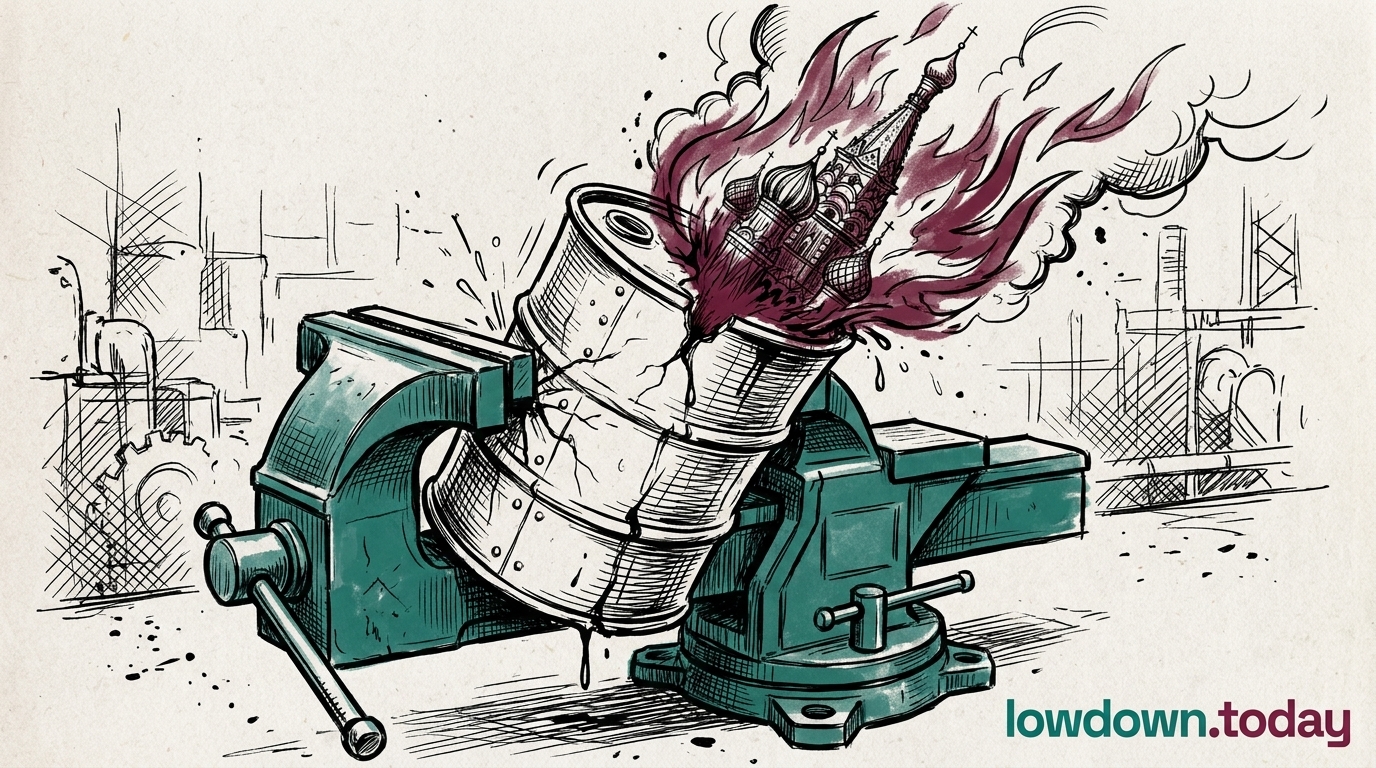
Update #20 · Oil vise shuts as Russia torches the Lavra

PBS News / AP· 16 Jun 2026
Read original
Different Perspectives
Turkey
Turkey
Ankara hosts the NATO summit on 7-8 July, the next Western diplomatic convergence that Russia may target with a mass barrage based on the documented pattern of timing strikes to allied events; Turkey's role as the indispensable logistical intermediary between Kyiv and Moscow gives it standing to broker any ceasefire repair at Zaporizhzhia.
IAEA
IAEA
The IAEA's sixth brokered repair ceasefire at ZNPP collapsed within days of enabling initial work on the 750 kV Dniprovska line, leaving Europe's largest nuclear plant on a single 330 kV backup with 19 total blackouts recorded since the Russian occupation began.
European Union
European Union
The EU delayed the €9.1bn first tranche of its €90bn Ukraine loan on unmet technical conditions, while disbursing a separate €2.8bn Facility payment on 8 June; the G7 sanctions-to-talks linkage now runs parallel to EU enforcement.
United Kingdom
United Kingdom
Britain conducted its first maritime interdiction of the Russian shadow fleet, with Royal Marines seizing the Smyrtos in the English Channel on 14 June, and simultaneously announced a £210m Urenco uranium deal to break Ukraine's dependence on Russian nuclear fuel.
United States
United States
Trump called both Putin and Zelenskyy separately on 14 June, pledged to re-engage on Ukraine now the Iran deal is done, and the G7 tied future Russia sanctions to peace-talk progress, giving Washington leverage over both parties' negotiating posture.
Ukraine
Ukraine
Zelenskyy attended the G7 at Evian and proposed a direct Putin summit while 140,000 households in Kyiv lost power and the Lavra's Dormition Cathedral burned; Metropolitan Epiphanius called it an attack "against history, against Christianity." Kyiv's immediate priority is closing the PAC-3 export gap that left 19 of 34 Iskander-M ballistic missiles unintercepted.


