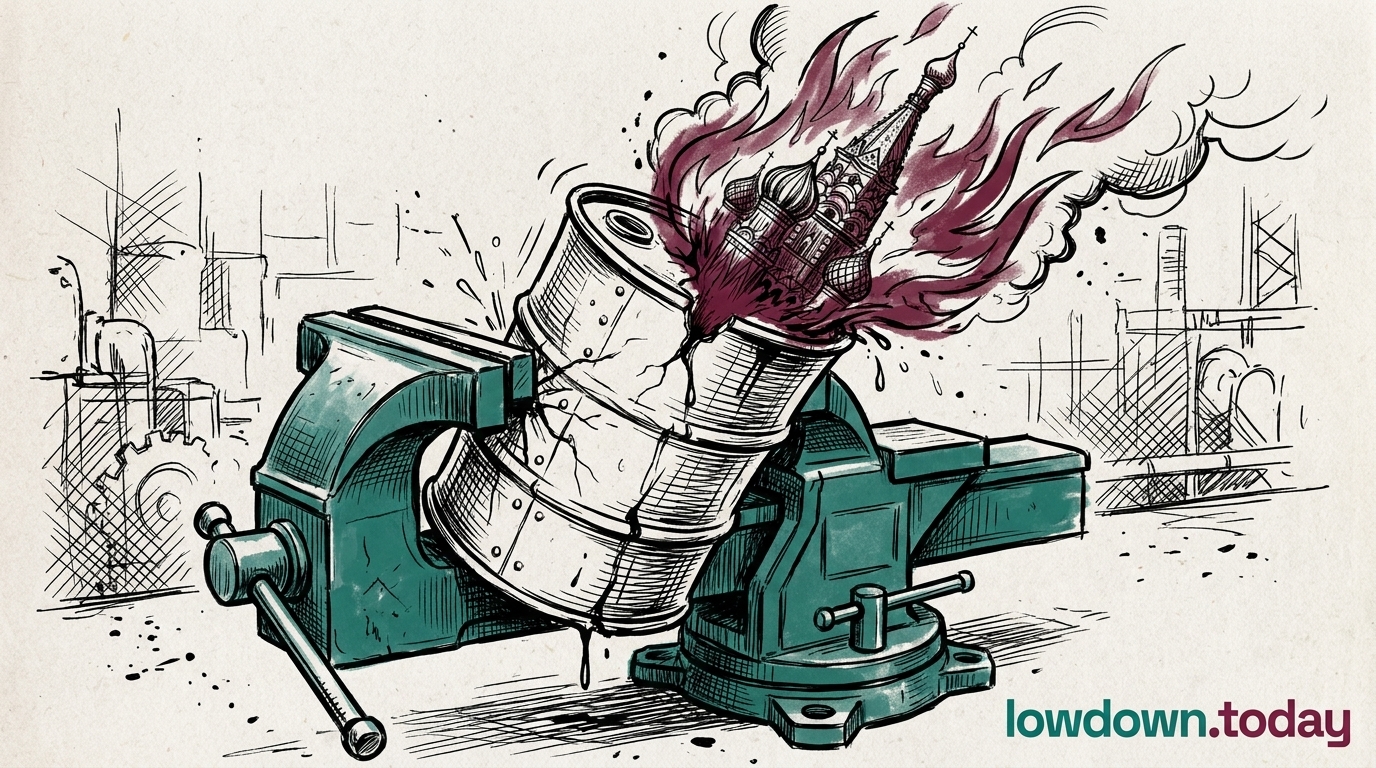
Royal Marines rappelled from helicopters onto the Smyrtos, a Cameroon-flagged tanker, in the English Channel on Sunday 14 June and seized it 1. The vessel had left the Russian Baltic port of Ust-Luga on 5 June bound for Port Said in Egypt. The "shadow fleet" is the network of ageing, opaquely owned tankers Moscow uses to move oil outside Western insurance and ownership rules, and until now Britain had sanctioned such ships on paper without stopping one physically.
This was the first boarding of its kind in British waters, run with French coordination, and the National Crime Agency arrested an Indian national for suspected sanctions offences. New Group of Seven (G7) and UK measures announced at the summit pushed Britain's tally of sanctioned shadow-fleet and liquefied natural gas vessels past 600.
The boarding matters because it changes what a sanctions designation does. A listed vessel can still sail if no one intercepts it; the Smyrtos seizure signals that the chokepoint is now the ship itself, not the insurer behind it. It lands alongside the looming lapse of the US crude waiver, the third in a sequence that began when Treasury removed Cuba from the carve-out in May . Where the waiver cliff raises the legal cost of moving Russian oil, The Channel boarding raises the physical risk of doing so, and the two pressures point the same way.





