Skip to content
You can now search across every topic, entity and event.What's new
Russia-Ukraine War 2026
16JUN

General License U Sets a Hidden Deadline

2 min read
10:25UTC

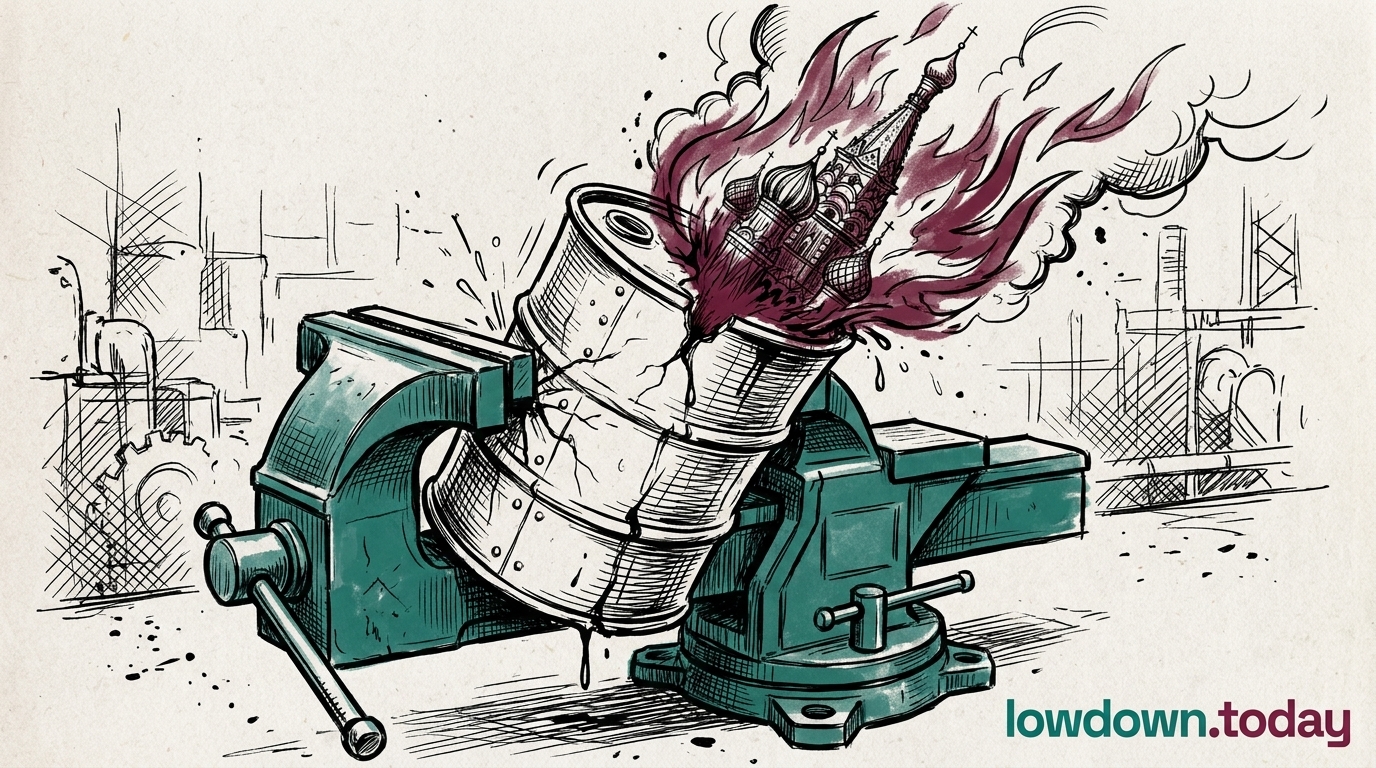
A US Treasury licence allowing the sale of stranded Iranian crude expires on 19 April. No renewal signal has come. It may matter more than the power grid.

ConflictAssessed
Key takeaway

The 19 April GL-U expiry may reshape oil markets more than the 6 April deadline.

The US Treasury issued General License U on 20 March, authorising sale of Iranian crude oil loaded on vessels on or before that date 1. It expires on 19 April, seventeen days from now. No renewal signal has come from Treasury.

The licence covers approximately 128 million barrels of Iranian crude stranded in transit or floating storage. It does not restore banking access or create a formal payment channel, limiting uptake to buyers with existing settlement mechanisms. India is the only swing buyer. The sanctioned Aframax PING SHUN made the first delivery of Iranian crude to India since May 2019: 600,000 barrels from Kharg to Vadinar, purchased by Reliance Industries 2.

If GL-U lapses and 128 million barrels lose their legal market, April becomes the month oil markets re-price for protracted conflict. US petrol already broke $4 per gallon . Renewal would tacitly acknowledge that Iranian oil is needed to cap price spikes. Either outcome carries political cost.


Deep Analysis

In plain English

GL-U is a US government permit that let some Iranian oil already loaded onto ships be sold legally, even though Iran is under sanctions. It covers about 128 million barrels sitting on tankers or in floating storage. The permit expires 19 April. If it is not renewed, those 128 million barrels have no legal buyer, which pushes oil prices higher. If it is renewed, that sends a signal the US does not expect the war to end soon enough to solve the oil shortage through military means.

Deep Analysis
Root Causes

GL-U was issued because the sanctions architecture succeeded too completely: blocking all Iranian crude removed 3.2 million barrels per day of supply from a market with no immediate substitute, producing the domestic price pressure the administration is simultaneously trying to suppress.

The structural cause is the tension between the war's military objective (coerce Iran by cutting its revenue) and its economic collateral (cut global supply and raise prices everywhere else). GL-U attempts to resolve this by allowing Iranian crude to move without restoring Iranian revenue; in practice it primarily benefits Reliance Industries' shareholders rather than solving the supply deficit.

The deeper root is that the US has no energy policy instrument capable of replacing Hormuz supply at scale. The IEA's 400 million barrel emergency release bought weeks, not months. GL-U is the second improvisation in three weeks.

What could happen next?
  • Risk

    GL-U non-renewal on 19 April removes the legal market for 128 million barrels, driving Brent toward $120 and adding roughly 20p per litre at UK pumps.

  • Consequence

    GL-U renewal signals Treasury has no near-term resolution expectation and effectively acknowledges Iranian oil is needed to prevent domestic political damage.

First Reported In

Update #55 · The Last Door Closes

Windward AI· 2 Apr 2026
Read original
Different Perspectives
Belgium
Belgium
Belgium blocked outright confiscation of the roughly EUR 210bn in frozen Russian assets held at Euroclear in December 2025, because Euroclear would carry the legal liability. Ukraine has since proposed moving custody to the EU instead.
European Commission
European Commission
The Commission said on 2 September that Ukraine has drawn EUR 3.2bn against an EUR 8.35bn annual target, and that a revenue-mobilisation law stuck in the Rada is one of twelve conditions for the next EUR 3.7bn payment.
Steve Witkoff and Jared Kushner
The US envoys met Putin in Moscow on 5 September and Zelenskyy in Kyiv on 6 September without an announced result from more than three hours of talks. Their mediation continues with no public outcome to show for this round.
Robert Brovdi
Robert Brovdi
Brovdi said on 12 September that his Unmanned Systems Forces struck 285 Russian tankers in ten weeks. His own monthly breakdown sums to 79, and he has given no account of the remaining 206.
Sergei Lavrov
Sergei Lavrov
Lavrov said on 12 September that Russia is ready to negotiate but will not suspend military operations while it does. He treats talking and fighting as compatible policies, ruling out a ceasefire as a precondition for further talks.
Belarus
Belarus
Minsk announced completion of its own 37th Separate Airborne Assault Brigade near Gomel, under plans dating to August 2025 rather than a response to any single frontline event this window, keeping its hedge of hosting the war without formally joining Russia's mobilisation drive.


