Skip to content
Foundations rebuilt, and the first new thing is here: search across every topic, entity, and event.Try search
Russia-Ukraine War 2026
5MAR

Fujairah struck; Gulf bunkering hub hit

4 min read
04:57UTC

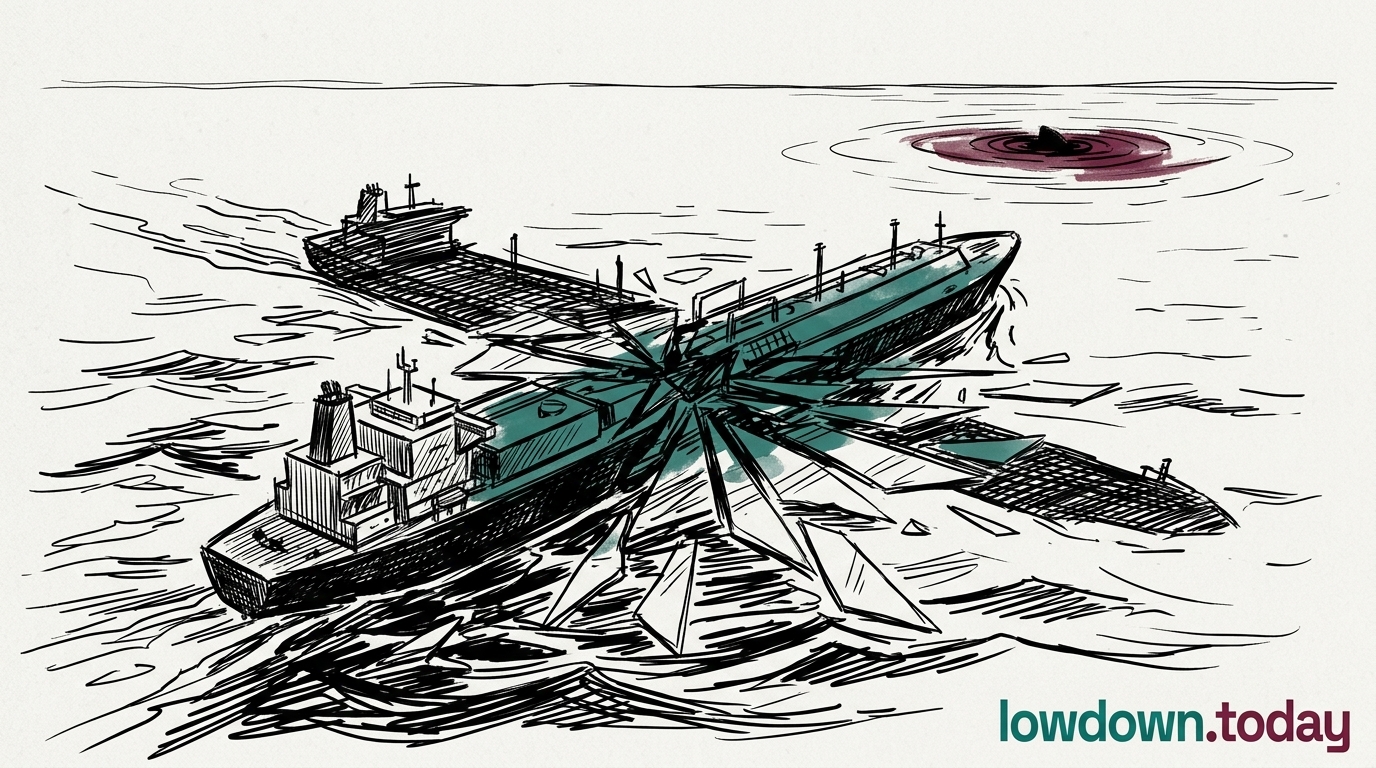
A strike on Fujairah port shut down the Habshan–Fujairah pipeline — Abu Dhabi's $3.29 billion insurance policy against a Hormuz closure. Iran has now struck every Gulf oil export route.

ConflictDeveloping
Key takeaway

Iran has eliminated all redundancy in Gulf energy export architecture simultaneously, transforming the crisis from a manageable 'Hormuz closure' scenario — which markets and policymakers have extensively war-gamed — into a total Gulf energy denial with no post-war precedent.

A strike hit Fujairah port on the UAE's eastern coast overnight Wednesday, according to Al Jazeera. Fujairah is The Gulf's primary ship-to-ship fuel bunkering hub and the exit terminal for the Habshan–Fujairah pipeline — a 370-kilometre line carrying 1.5 million barrels per day of Abu Dhabi crude from the Habshan field to The Gulf of Oman coast, bypassing the strait of Hormuz entirely.

Abu Dhabi built the pipeline between 2008 and 2012 at a cost of $3.29 billion, with a design capacity of 1.5 million barrels per day, for precisely this scenario. After Iran threatened to close the strait during the standoffs of 2008 and 2011–2012, ADNOC funded the line as a strategic hedge — a way to keep Emirati crude flowing to Asian buyers even if Hormuz became impassable. For fourteen years it functioned as Abu Dhabi's guarantee that the strait's vulnerability was not the emirate's. That guarantee is now void.

Iran has struck every major Gulf energy export pathway over five days: production at Qatar's Ras Laffan , refining at Saudi Aramco's Ras Tanura , maritime transit through Hormuz — where traffic has fallen 80% — and now the overland bypass at Fujairah. The sequence maps Iran's pre-war threat doctrine onto operational reality. Tehran's military planners have discussed closing all Gulf export routes in Iranian strategic literature for two decades; the Fujairah strike confirms they built the targeting packages to execute it.

The UAE's defence ministry separately released cumulative intercept figures for the first time: 165 ballistic missiles, 2 cruise missiles, and 541 drones since the conflict began. Kuwait reported 97 ballistic missiles and 283 drones. Combined, two states alone have intercepted more than 1,000 projectiles — a sustained salvo rate exceeding what most open-source assessments of Iranian munitions stocks projected beyond 72 hours . What the figures do not show is how many were not intercepted. Fujairah, the US consulate in Dubai , Ras Tanura, and Ras Laffan all absorbed hits. The intercept rates are high but not total, and the strikes that land are destroying infrastructure that took years and billions of dollars to build.

Deep Analysis

In plain English

The UAE spent $3.29 billion building a pipeline specifically as a backup plan: if the Strait of Hormuz was ever blocked, Abu Dhabi could still export its oil by pumping it overland to Fujairah on the opposite coast. Iran has now struck Fujairah too, closing the backup. There is now no functioning exit route for most Gulf crude, because Iran has hit the production facilities, the main refining hub, the transit strait, and the bypass — all within five days.

Deep Analysis
Synthesis

Energy security planners and commodity markets have been operating on a 'Hormuz crisis' mental model — a known, studied scenario with historical precedents and recognised response playbooks including IEA strategic reserve releases and alternative routing through the Cape. The simultaneous closure of Fujairah makes that model obsolete. With UAE export capacity reduced by over 90%, markets are now in territory for which no calibrated policy response exists.

Escalation

Striking a UAE civilian port forces Abu Dhabi into a position it has carefully avoided: the UAE has been the most publicly restrained GCC member, but a direct hit on national port infrastructure is harder to absorb silently than strikes on Saudi or Qatari facilities. Abu Dhabi may demand visible US retaliation or begin its own military signalling, adding a new active participant to the conflict.

What could happen next?
  • Meaning

    There is now no functioning commercial pathway for Gulf crude to reach Asian or European buyers, a condition with no post-war precedent that existing policy playbooks — IEA releases, alternative routing — were not designed to address at this scale.

    Immediate · Assessed
  • Consequence

    IEA strategic petroleum reserve releases, previously positioned as the primary market stabilisation tool for a Hormuz closure, are insufficient to offset total Gulf export denial across all pathways simultaneously.

    Short term · Assessed
  • Risk

    Abu Dhabi may calculate that silent absorption of an overt strike on national port infrastructure is no longer politically sustainable, increasing the probability of UAE entering the conflict actively or demanding US strikes on Iranian territory.

    Short term · Suggested
  • Precedent

    Fujairah's targeting establishes that no GCC civilian port infrastructure is off-limits, removing the implicit distinction between military and economic targets that has constrained previous Gulf conflicts.

    Long term · Assessed
First Reported In

Update #18 · First Iranian warship sunk since 1988

Al Jazeera· 4 Mar 2026
Read original
Different Perspectives
North Korea / DPRK
North Korea / DPRK
ISW confirmed the first mounting of DPRK Type-75 MLRS on Russian autonomous UGVs near Kharkiv on 7 June, the latest step in a supply axis that escalated from shells in 2023 to troops in 2024. Pyongyang gains live battlefield data on its ordnance and on Russia's uncrewed-systems programme.
IAEA / Rafael Grossi
Grossi confirmed Chornobyl structural damage with nuclear material metres away and could not attribute the ZNPP 15-hour blackout during the agreed repair window. Six ceasefires brokered and broken at ZNPP, compounded by Rosatom's May attack on IAEA neutrality, have eroded his ability to enforce the windows he negotiates.
Emmanuel Macron / France
Macron co-signed the E3 framework whose line-of-contact baseline marks Europe's first formal acceptance that 1991 borders are not the opening position. France's role carries weight because Macron had previously proposed a European force for Ukraine, and the framework's multinational force point is the vehicle for that.
Keir Starmer / E3
Keir Starmer / E3
Starmer, Macron and Merz met Zelenskyy on 7 June and backed a five-point framework taking the line of contact as the talks baseline, conceding roughly one fifth of Ukraine in exchange for a multinational force and frozen assets. With US mediation ended, the NATO Ankara summit on 7-8 July is the next test.
Vladimir Putin / Kremlin
Putin used SPIEF to reject Zelenskyy's summit letter, citing 'elements of rudeness', and repeated the pre-agreed treaty precondition that has frozen every diplomatic round since May. The SPIEF platform's message of investor confidence was punctured by naval fires visible from St Petersburg, which Moscow declined to dispute in scale.
Ukraine / Unmanned Systems Forces
Commander Brovdi confirmed USF units tracked and set fire to Boikyi at Kronstadt, while Code 9.2 struck the Chonhar Bridge the following day. Ukraine is sequencing strikes for rear-area interdiction and political timing rather than ground gains, trading the Baltic Fleet's home base for the logistics squeeze Russia cannot absorb without rationing its own occupied territory.