

Skip to content
Briefings are running a touch slower this week while we rebuild the foundations.See roadmap
Russia-Ukraine War 2026
5MAR

Day 1471: Shadow fleet tanker sunk, talks seek venue

4 min read
04:57UTC

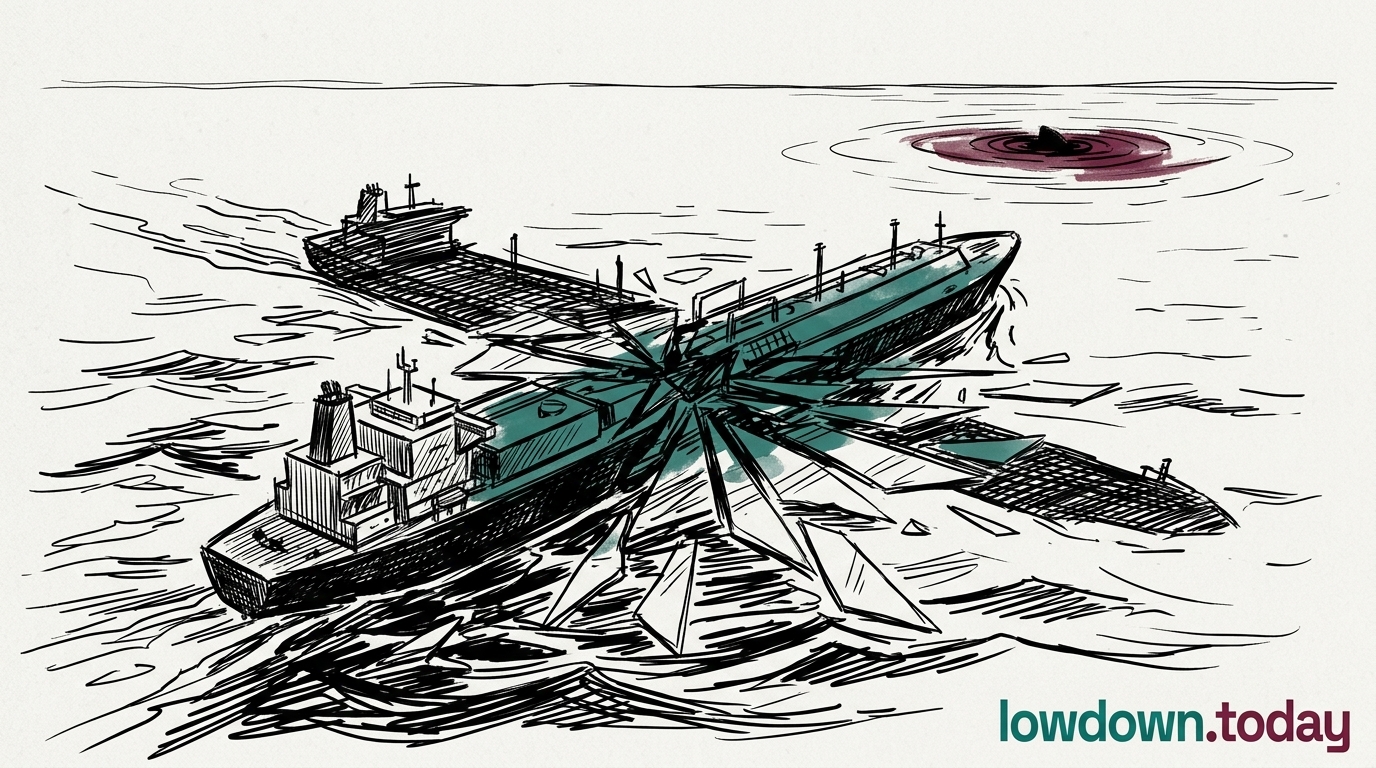
The sanctioned LNG carrier Arctic Metagaz was destroyed off Libya on 3 March — the first such loss in modern conflict — threatening Russia's sanctions-evasion revenue stream. The third US-Russia-Ukraine trilateral was displaced from Abu Dhabi to Istanbul. Germany's Merz told Trump that Europe will reject any deal negotiated without it.

Key takeaway

Russia's energy revenue — already down 65% — faces simultaneous kinetic, regulatory, and diplomatic threats that together could make Arctic LNG 2 commercially unviable before any ceasefire is reached.

This briefing mapped
Loading map…
Military
Diplomatic

The sanctioned Russian carrier Arctic Metagaz was destroyed off Libya on 3 March, the first LNG tanker lost in modern conflict. If shadow fleet tankers can be sunk at sea, the economics of Russia's sanctions-evasion energy trade face a threat no waiver or discount can offset.

Sources profile:This story draws on mixed-leaning sources from Russia, Norway and 3 more (includes Russia state media)
United StatesRussiaNorwayUkraineFrance
LeftRight

The sanctioned Russian LNG carrier Arctic Metagaz was destroyed off the Libyan coast on 3 March after multiple explosions struck the 277-metre vessel between Malta and the port of Sirte around 04:00 local time. All 30 crew were evacuated alive. It is the first confirmed sinking of an LNG tanker in any modern conflict. The vessel carried cargo from Novatek's Arctic LNG 2 project, departing from Murmansk, and belonged to Russia's shadow fleet. Attribution is contested: TASS attributed the attack to Ukrainian sea drones launched from positions off Libya; Ukraine neither confirmed nor denied involvement. If confirmed as Ukrainian, this would extend their documented naval drone range by roughly 1,000 km beyond the Bosphorus.

The first confirmed sinking of an LNG tanker in modern conflict exposes the physical vulnerability of Russia's shadow fleet and threatens the viability of Arctic LNG 2 as a sanctions-evasion revenue stream, at a time when Russian energy income has already collapsed 65% year-on-year. 

Briefing analysis

During the Iran-Iraq War, both sides attacked oil tankers in the Persian Gulf to disrupt the other's export revenue. Over four years, 451 ships were struck, insurance premiums for Gulf transit increased tenfold, and the US ultimately intervened with naval escorts under Operation Earnest Will.

The Arctic Metagaz attack differs in method — unmanned drones rather than anti-ship missiles — and target — LNG rather than crude oil — but the strategic logic is identical: destroy the enemy's ability to monetise energy exports by making maritime transit uninsurable. The Tanker War ended only when the broader conflict did.

Germany's chancellor told the White House that Europe will block any Ukraine settlement it did not help shape — and he holds the implementation levers to make that threat stick.

Sources profile:This story draws on mixed-leaning sources from United Kingdom and Sweden
United KingdomSweden
LeftRight

German Chancellor Friedrich Merz visited the White House on 3 March and delivered two messages: that Europe will not accept an agreement on Ukraine concluded without European participation, and that Ukraine must preserve its territory. The current trilateral format excludes the EU's 27 member states despite Europe having funded more of Ukraine's war effort than the United States. Merz has not committed German forces as security guarantors, constrained by the Bundestag's constitutional bar on combat deployments without parliamentary approval. His leverage lies in implementation: EU sanctions relief for Russia, European reconstruction funds for Ukraine, and European troop deployments all require European political endorsement.

Merz controls none of the negotiation but much of the implementation. EU sanctions relief, reconstruction funding, and security force deployments each require European political consent, giving Europe a de facto veto over any settlement's durability — a veto Merz has now publicly declared he will use. 

The third US-Russia-Ukraine trilateral cannot meet in Abu Dhabi and may relocate to Istanbul, but the harder problem — Russia's demand that Ukraine cede four oblasts before talks continue — has not moved.

Sources profile:This story draws on centre-left-leaning sources from Ukraine
Ukraine
LeftRight

The third US-Russia-Ukraine trilateral, scheduled for 5-6 March, cannot proceed in Abu Dhabi because of the wider Middle East conflict. Zelenskyy confirmed on 2 March that the meeting is not cancelled, only the venue is unresolved. Bloomberg sources named Istanbul as the front-runner replacement; Anadolu Agency separately reported that Russia confirmed Istanbul. No final announcement had been made as of 5 March 04:57 UTC. Russia's precondition that Ukraine formally cede Donetsk, Luhansk, Zaporizhzhia, and Kherson before talks continue remained on the table.

The venue disruption is trivial; the structural deadlock is not. Russia's four-oblast precondition, Europe's exclusion from a process it must fund and enforce, and the gap between Trump's one-month timeline and Moscow's refusal of deadlines together define a format that may lack the participants and the flexibility to produce a durable agreement. 

Russian air defences in Rostov Oblast destroyed a Russian Mi-8 on 4 March — the second fratricidal aviation loss in two months, driven by drone-saturated skies that degrade identification discipline.

Sources profile:This story draws on mixed-leaning sources from Ukraine and United States (includes Ukraine state media)
UkraineUnited States
LeftRight

Russian air defence forces in Rostov Oblast shot down a Russian military Mi-8 helicopter on the night of 4 March. No casualty figures were given. This is the second confirmed Russian friendly-fire aviation incident in two months. The incident is assessed as linked to degraded IFF discipline caused by the volume of Ukrainian drone operations forcing air defence crews into shoot-first postures.

The second friendly-fire aviation loss in two months reveals a structural vulnerability: mass-drone warfare degrades IFF discipline faster than Russian doctrine can adapt, creating a Fratricide problem that worsens as drone volumes increase. 

Combat engagements fell to 106 from 145 in two days — mud season, not restraint — as Russia presses three axes toward Kramatorsk and Sloviansk.

Sources profile:This story draws on centre-leaning sources from United States
United States
LeftRight

106 combat engagements recorded on 4 March along the Ukraine front line, down from 145 on 2 March. The reduction reflects spring thaw constraining vehicle movement, not reduced intent. Heaviest fighting on three axes: at Pokrovsk, continued pressure targeted Ukrainian lines west of Krasnoarmeysk; at Kostiantynivka, nine Russian assault actions struck across Pleshchiivka, Sofiivka, and toward Illinivka as part of the broader advance toward the Kramatorsk-Sloviansk twin cities; at Huliaipole, persistent Russian pressure continued along the Zaporizhzhia axis.

Russia's offensive tempo toward Kramatorsk and Sloviansk continues across three axes despite seasonal constraints that have historically halted mechanised operations. The shift to infantry-led assault and intensified drone use suggests operational adaptation, not pause. 

Russia and Ukraine each declared Bobylivka 'liberated' on the same day. The honest assessment: control is contested and neither claim is verified.

Sources profile:This story draws on centre-left-leaning sources from Ukraine and United States
UkraineUnited States
LeftRight

Both Russia and Ukraine claimed the settlement of Bobylivka in Sumy Oblast's Glukhov district on 3 March. Russia's Ministry of Defence declared it 'liberated' while Ukraine's Northern Group command used the same word for the same settlement on the same day. The pattern of contested claims within hours is consistent with close-range infantry fighting. Neither claim should be treated as confirmed.

Simultaneous competing claims over the same settlement expose the information fog in Sumy Oblast's border zone, where Russia's buffer-zone campaign produces close-quarters fighting that defies simple territorial accounting. 

Strikes on 4 March stretched from the Black Sea to the Russian border, targeting Odessa, Kharkiv, Sumy, and Poltava in a single day's campaign that reinforces the pattern of sustained aerial pressure across Ukraine's full geographic depth.

Sources profile:This story draws on centre-leaning sources from United States
United States
LeftRight

Russian airstrikes hit Odessa, Kharkiv, Sumy, and Poltava oblasts on 4 March.

The simultaneous targeting of four oblasts — spanning roughly 800 km from Ukraine's southern coast to its northeastern border — demonstrates Russia's continued capacity to prosecute aerial campaigns across the country's full width, even as its ground forces concentrate on three narrow axes in the east. The inclusion of Poltava, deep in central Ukraine and far from any active front, indicates strategic rather than tactical targeting. 

Emerging patterns

  • Escalation of maritime attacks targeting Russian energy export infrastructure beyond the Black Sea into the Mediterranean
  • European powers asserting implementation veto over US-brokered Ukraine peace process
  • Middle East conflict spillover disrupting Ukraine peace process logistics
  • Russian IFF discipline degradation under persistent Ukrainian drone threat causing repeated friendly-fire aviation incidents
  • Spring thaw constraining ground operations tempo while Russian multi-axis offensive intent persists
  • Contested close-range infantry fighting in Sumy buffer zone with simultaneous competing territorial claims
  • Continued Russian aerial bombardment of Ukrainian rear areas across multiple oblasts
Different Perspectives
Friedrich Merz
Friedrich Merz
Merz's explicit declaration that Europe will not accept a deal made without its participation is the strongest assertion of a European implementation veto since the trilateral format began. Previous German statements supported the process without conditioning acceptance on European inclusion.