Skip to content
Briefings are running a touch slower this week while we rebuild the foundations.See roadmap
Russia-Ukraine War 2026
22MAY

410 Prisoners Home as Tranche One Lands

3 min read
10:57UTC

Ukraine and Russia exchanged 205 prisoners each side on 15-16 May, executing the first tranche of the Istanbul deal eight days after Putin had publicly blocked it by denying Kyiv submitted a list.

ConflictDeveloping
Key takeaway

410 people came home; the next tranche date is the test of the Istanbul format.

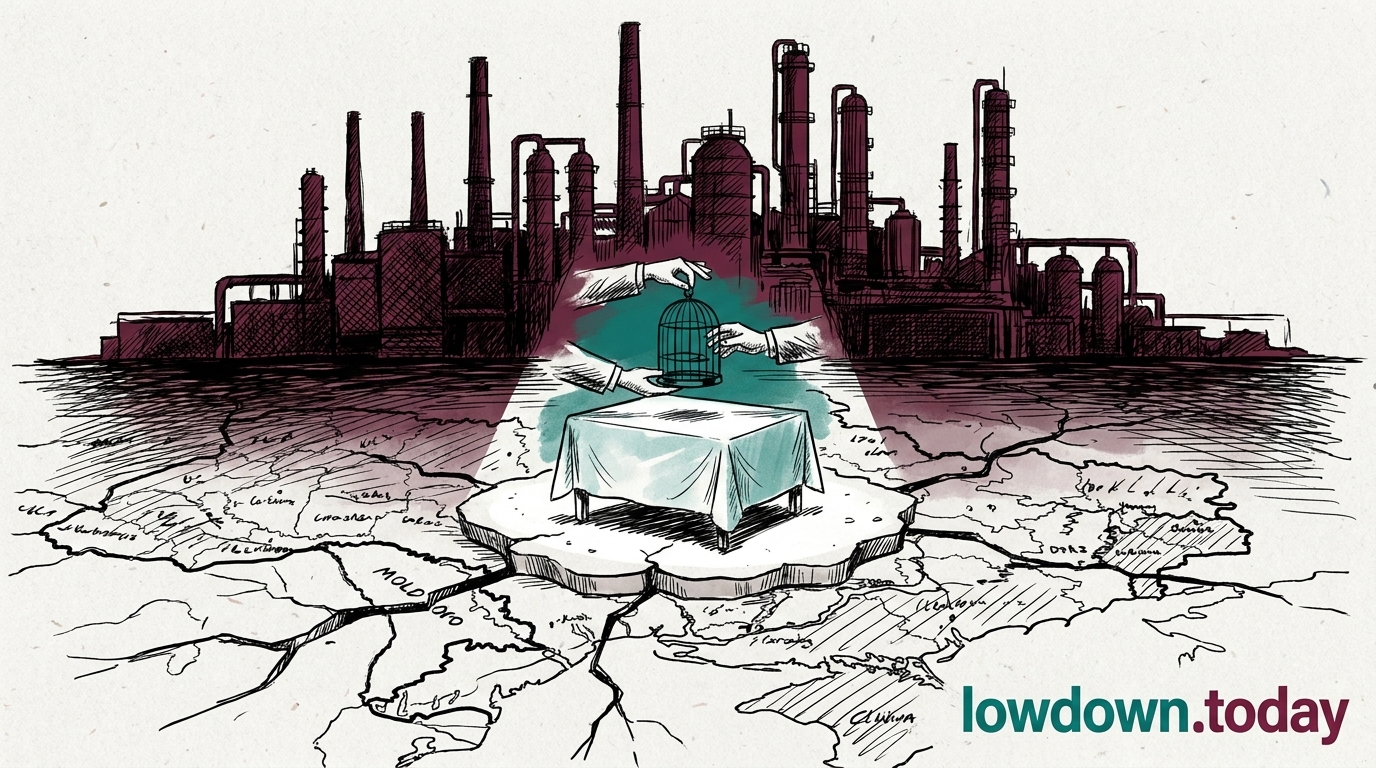
Ukraine and Russia exchanged 205 prisoners each side across Friday 15 and Saturday 16 May 2026, executing the first tranche of the 1,000-for-1,000 deal that had been blocked at announcement just over a week earlier 1. The hand-over took place at the Ukraine-Russia border crossing used for prior exchanges. 795 prisoners each side remain to be returned in subsequent tranches under the agreement signed in Istanbul.

The sequencing matters because Moscow had publicly killed the deal on 12 May. Putin himself stated that Ukraine had not submitted a list, that no agreement existed, and that the announcement was a Ukrainian misrepresentation. Eight days later 205 Ukrainians walked back across the border. Whatever the diplomatic theatre of denial, the operational pipeline had remained open enough to move 410 people in 48 hours.

For the soldiers and families involved this is the largest single-event prisoner return since 2024. Ukrainian recipients included servicemembers held since the Azovstal siege in 2022; Russian recipients included men captured during the Kursk incursion last summer. Neither side has published full nominal lists, which is consistent with prior exchanges where verification continues for weeks after the physical transfer.

Tranche pacing matters more than the headline number. The deal as written promises 795 more each side; Russia's pattern in earlier exchanges has been to release the easiest cases first and slow-roll the politically inconvenient ones, particularly Mariupol defenders and Crimean Tatar civilians. No date has been set for the second tranche, and that date will be the cleanest read on whether the Istanbul format is producing anything beyond an opening photograph.

Deep Analysis

In plain English

Ukraine and Russia exchanged 205 prisoners each side on 15 and 16 May 2026. This was the first part of a deal to exchange 1,000 prisoners in total. The transfer happened at the border. Just over a week earlier, Russia's president Putin had publicly said Ukraine had not submitted a list of prisoners to exchange, which seemed to kill the deal. Eight days later, 410 people crossed the border. Putin's 9 May denial and the operational exchange pipeline operated independently: one was information management, the other moved bodies across a border. For the families involved, this is the largest single exchange since 2024. But 795 prisoners from each side are still waiting. Whether the remaining tranches happen quickly or slowly will show how much Russia is using this process as a genuine humanitarian exchange or as diplomatic leverage.

What could happen next?
  • Consequence

    The 205-for-205 tranche demonstrates that the humanitarian pipeline can operate independent of political standoffs, providing a model for future exchanges even if the diplomatic track stalls.

  • Risk

    Russia's pattern of slow-rolling contested prisoner categories could make the second tranche date the clearest signal of whether the Istanbul format is producing genuine humanitarian progress or serving primarily as diplomatic theatre.

First Reported In

Update #17 · Istanbul talks, refineries dark, deficit overruns

US News / Reuters· 22 May 2026
Read original
Different Perspectives
Rafael Grossi, IAEA Director General
Grossi's Update 349 of 7 May recorded a drone strike on ZNPP's radiation monitoring laboratory on 3 May. Rosatom's 17 May public attack on the Secretariat's neutrality degrades the diplomatic ground Grossi needs for the sixth repair ceasefire at day 60 on the single backup line.
Indian Government / Embassy Moscow
The Indian Embassy in Moscow confirmed on 18 May that an Indian national was killed and three hospitalised at a refinery construction site in the 17 May barrage. India is among the largest buyers of discounted Russian crude; the fatality forces a diplomatic protest without changing the purchasing posture.
Recep Tayyip Erdogan, Turkish President
Erdogan met Zelenskyy in Ankara for nearly three hours on 15 May before the Istanbul session, recovering Turkey's 2022 mediator role and reducing Trump's leverage by hosting bilateral talks without Washington in the room. Turkey hosts the NATO Ankara summit on 7-8 July; the Istanbul format gives Erdogan standing at both tables simultaneously.
Viktor Orban / Hungarian Government
Budapest's new cabinet, formed 12 May, holds the institutional veto point on the EU tranche disbursement ahead of the first-half June window. Hungary has previously leveraged EU loan tranches to extract bilateral concessions; the combination of a fresh cabinet and a tight disbursement timeline makes Budapest the single highest-leverage actor in the EU track this fortnight.
European Council / Commission
The Commission is preparing a three-document disbursement package for the 9.1-billion euro first tranche of the EU loan to Ukraine, targeting first-half June, but delivery depends on the Magyar cabinet, which formed on 12 May, not blocking the mechanism. The 20th sanctions package remains in force against Russia.
Donald Trump / US Treasury
Treasury issued GL 134C with a 48-hour gap after GL 134B expired, confirming the waiver series functions as permanent monthly management rather than a wind-down instrument. Washington was absent from the Istanbul room; Treasury Secretary Bessent framed the Cuba carve-out as protecting 'most vulnerable nations', maintaining the fiction that the 30-day bridge has a humanitarian rationale.
