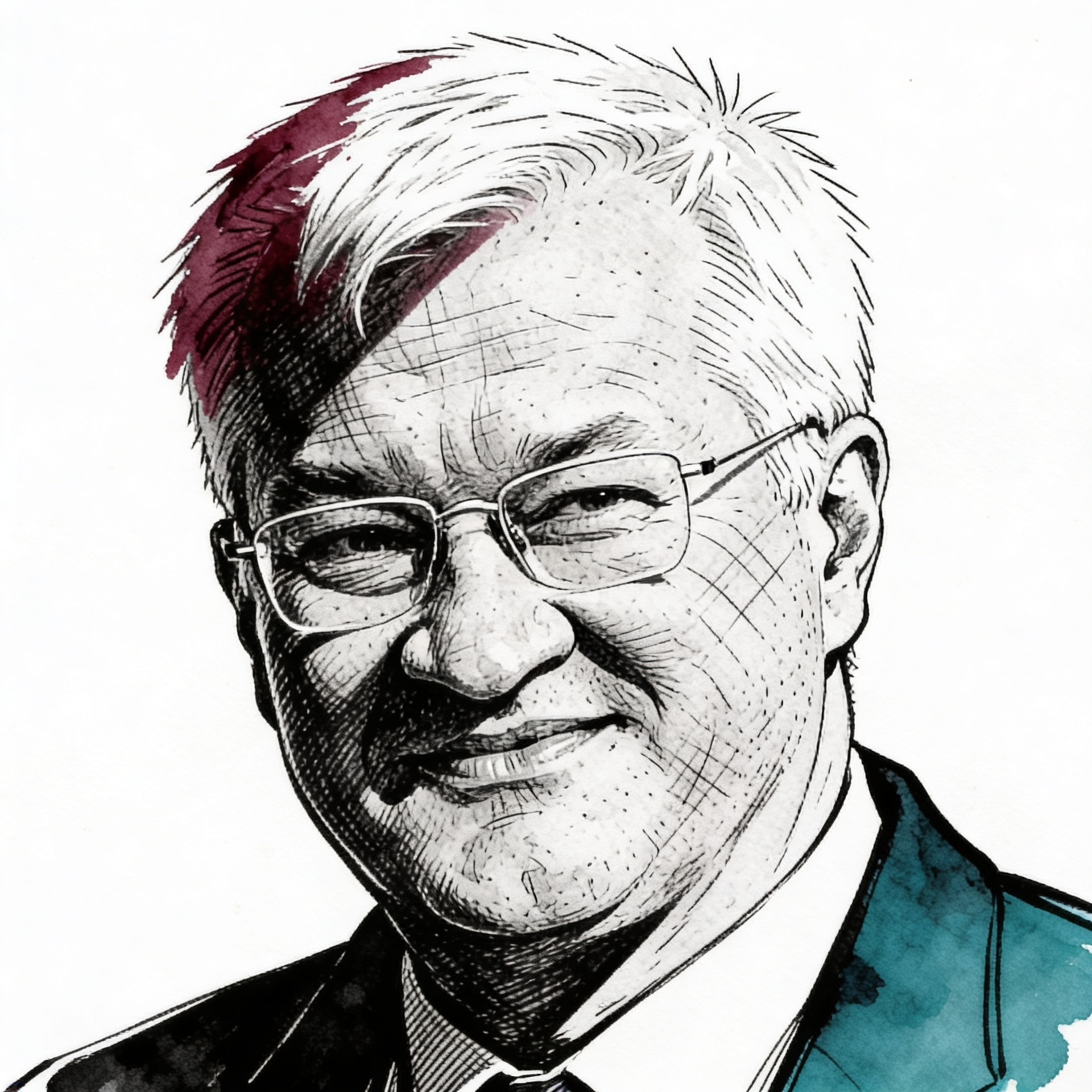
Andrii Sybiha
Ukrainian Foreign Minister since September 2024.
Last refreshed: 1 June 2026 · Appears in 1 active topic
How is Ukraine's Foreign Minister managing diplomacy while Russia threatens to strike Kyiv's decision centres?
Timeline for Andrii Sybiha
called Lavrov's demand Russian blackmail
Russia-Ukraine War 2026: Lavrov tells US to leave Kyiv nowBackground
Andrii Sybiha's most public moment of 2026 came on 25 May, when Russian Foreign Minister Lavrov formally demanded the evacuation of Western diplomatic staff from Kyiv. Sybiha's response — that the demand amounted to "Russian blackmail" — was delivered alongside EU Ambassador Mathernová's parallel refusal and the US decision not to draw down staff. The unified allied rejection denied Russia the diplomatic concession it sought.
Sybiha was appointed Foreign Minister on 5 September 2024, succeeding Dmytro Kuleba. He is a career diplomat Born in Zboriv, Ternopil Oblast, in 1975, and a graduate of Lviv University in international relations. He previously served as Ukraine's Ambassador to Turkey (2016–2021), Director of the MFA's Consular Service Department (2012–2016), and adviser-envoy at the Embassy in Warsaw (2008–2012). Immediately before his ministerial appointment, he was Deputy Head of the Office of the President of Ukraine, a POST from which he helped manage the diplomatic track of the war. His appointment passed the Verkhovna Rada with 258 votes in FAVOUR. He is fluent in English and Polish.
Sybiha's diplomatic portfolio in 2026 spans Coalition management with EU and NATO partners, the Istanbul peace-process track, and Ukraine's EU accession negotiations. His public posture on the Lavrov demand was consistent with his broader approach: framing Russian escalatory gestures as coercive instruments to be named and rejected rather than accommodated.
Who is Andrii Sybiha and what is his role in Ukraine's diplomacy?
What did Ukraine's Foreign Minister say about Russia's demand to evacuate Kyiv?
How did Sybiha replace Kuleba as Ukraine's foreign minister?
Is Ukraine's foreign minister involved in the Istanbul peace talks?


