Skip to content
You can now search across every topic, entity and event.What's new
Russia-Ukraine War 2026
9JUN

Iran's drones, the US shield over Hormuz

3 min read
11:54UTC

Iran launched attack drones at commercial ships in the Strait of Hormuz on 12 and 13 June; CENTCOM said US forces downed all of them both nights.

ConflictDeveloping
Key takeaway

Iran is firing drones at the Hormuz shipping it once tried to close; the US shoots them down.

Iran launched one-way attack drones at commercial ships in the Strait of Hormuz on both 12 and 13 June, a second consecutive night. CENTCOM (US Central Command), the US military command for the region, said its forces downed all of them and that "traffic flow through the strait continues unimpeded". 1 The naval blockade ran on alongside the drone combat: 139 vessels redirected, 9 disabled. 2

Iran spent the war as the blockade's target, its oil traffic strangled by US enforcement. This weekend it fired drones at the very commercial ships using the strait, while Washington shot those drones down to keep the lane open. The same waterway Iran tried to deny the world it is now trying to make dangerous instead, a shift from interdiction to harassment, the posture of a party that cannot hold the water but can still raise the insurance premium on it.

This is distinct from the 11 June CENTCOM strike on the MT Settebello that killed three Indian sailors and put US firepower on a tanker , and from the IRGC Navy's Telegram order barring all Hormuz traffic that CENTCOM rejected as ineffective . No new CENTCOM strikes hit Iranian soil in the window, so the land stand-down held across the weekend. All drones downed, no US casualties, contained but brittle: a single hit on a crewed commercial vessel would end the contained status overnight.


Deep Analysis

In plain English

Iran sent one-way attack drones, small remote-controlled aircraft loaded with explosives, at commercial ships passing through the Strait of Hormuz on the nights of 12 and 13 June. CENTCOM, the US military's regional command, shot down every single drone on both nights. Every targeted ship continued its voyage. Even so, the attacks matter. Insurance companies charge ship owners extra to sail through the strait because of the threat of attack. Every drone launch, even one that gets shot down, keeps that extra charge in place. Already 139 ships have been diverted around the strait and nine have been disabled. A fifth of the world's oil passes through Hormuz, so keeping the risk premium high gives Iran leverage in the deal negotiations even without a single successful strike.

Deep Analysis
Root Causes

The IRGC's drone campaign against commercial shipping operates independently of the civilian diplomatic track because the corps' provincial launch authority, established under the Decentralised Mosaic Defence doctrine, does not require Foreign Ministry approval or Supreme Leader instruction for each sortie.

Iran's strategic incentive to sustain the campaign holds even at 0 per cent hit rate: every drone launched forces CENTCOM to expend interceptors whose Camden, South Carolina production line runs on a multi-year backlog, and each launch extends the insurance premium that redirects traffic regardless of military outcome.

What could happen next?
  • Risk

    A single Iranian drone hitting a crewed commercial vessel would cross the threshold that ended the 2019 tanker harassment campaign; Brent would reprice sharply above $90 within one trading session.

    Immediate · Assessed
  • Consequence

    Two consecutive nights of drone intercepts at 100 per cent success depletes US Navy interceptor stocks; the Camden PAC-3 production backlog means replacements run on a multi-year timeline.

    Medium term · Suggested
  • Meaning

    Iran's switch from blockade target to strait attacker on commercial vessels signals the IRGC is running a parallel military track to the diplomatic one, each serving a different factional audience.

    Immediate · Assessed
  • Precedent

    The two-night drone campaign against commercial shipping while the land stand-down holds sets a pattern: the IRGC can escalate kinetically at sea without triggering US airstrikes on Iranian soil.

    Short term · Suggested
First Reported In

Update #126 · The weekend signing that never reached paper

NBC News· 13 Jun 2026
Read original
Different Perspectives
North Korea / DPRK
North Korea / DPRK
ISW confirmed the first mounting of DPRK Type-75 MLRS on Russian autonomous UGVs near Kharkiv on 7 June, the latest step in a supply axis that escalated from shells in 2023 to troops in 2024. Pyongyang gains live battlefield data on its ordnance and on Russia's uncrewed-systems programme.
IAEA / Rafael Grossi
Grossi confirmed Chornobyl structural damage with nuclear material metres away and could not attribute the ZNPP 15-hour blackout during the agreed repair window. Six ceasefires brokered and broken at ZNPP, compounded by Rosatom's May attack on IAEA neutrality, have eroded his ability to enforce the windows he negotiates.
Emmanuel Macron / France
Macron co-signed the E3 framework whose line-of-contact baseline marks Europe's first formal acceptance that 1991 borders are not the opening position. France's role carries weight because Macron had previously proposed a European force for Ukraine, and the framework's multinational force point is the vehicle for that.
Keir Starmer / E3
Keir Starmer / E3
Starmer, Macron and Merz met Zelenskyy on 7 June and backed a five-point framework taking the line of contact as the talks baseline, conceding roughly one fifth of Ukraine in exchange for a multinational force and frozen assets. With US mediation ended, the NATO Ankara summit on 7-8 July is the next test.
Vladimir Putin / Kremlin
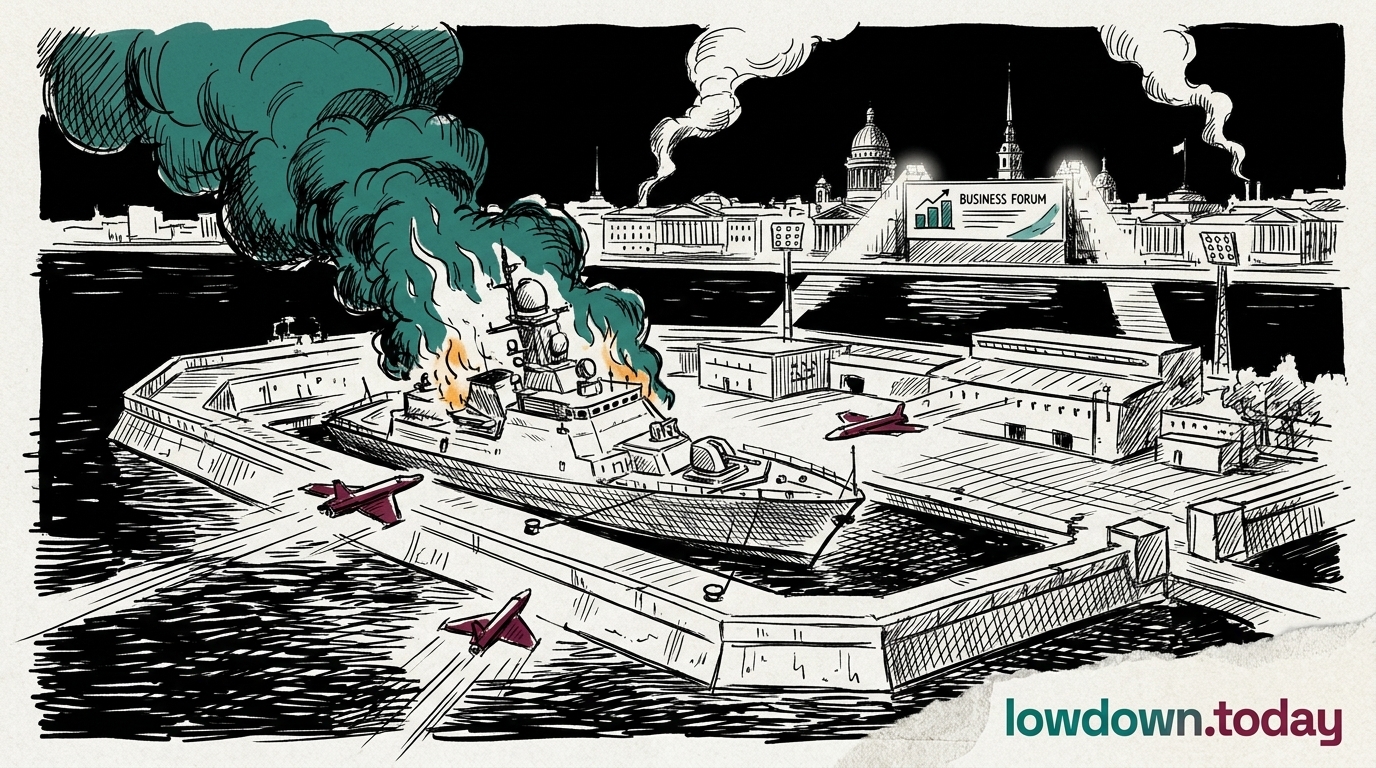
Putin used SPIEF to reject Zelenskyy's summit letter, citing 'elements of rudeness', and repeated the pre-agreed treaty precondition that has frozen every diplomatic round since May. The SPIEF platform's message of investor confidence was punctured by naval fires visible from St Petersburg, which Moscow declined to dispute in scale.
Ukraine / Unmanned Systems Forces
Commander Brovdi confirmed USF units tracked and set fire to Boikyi at Kronstadt, while Code 9.2 struck the Chonhar Bridge the following day. Ukraine is sequencing strikes for rear-area interdiction and political timing rather than ground gains, trading the Baltic Fleet's home base for the logistics squeeze Russia cannot absorb without rationing its own occupied territory.



