Skip to content
You can now search across every topic, entity and event.What's new
Russia-Ukraine War 2026
24APR

Russia's diesel ban sets a record crack

2 min read
11:21UTC

Alexander Novak announced a full Russian diesel export ban to 31 July on 8 July; the European diesel crack hit a record $60.17 a barrel the same day.

ConflictDeveloping
Key takeaway

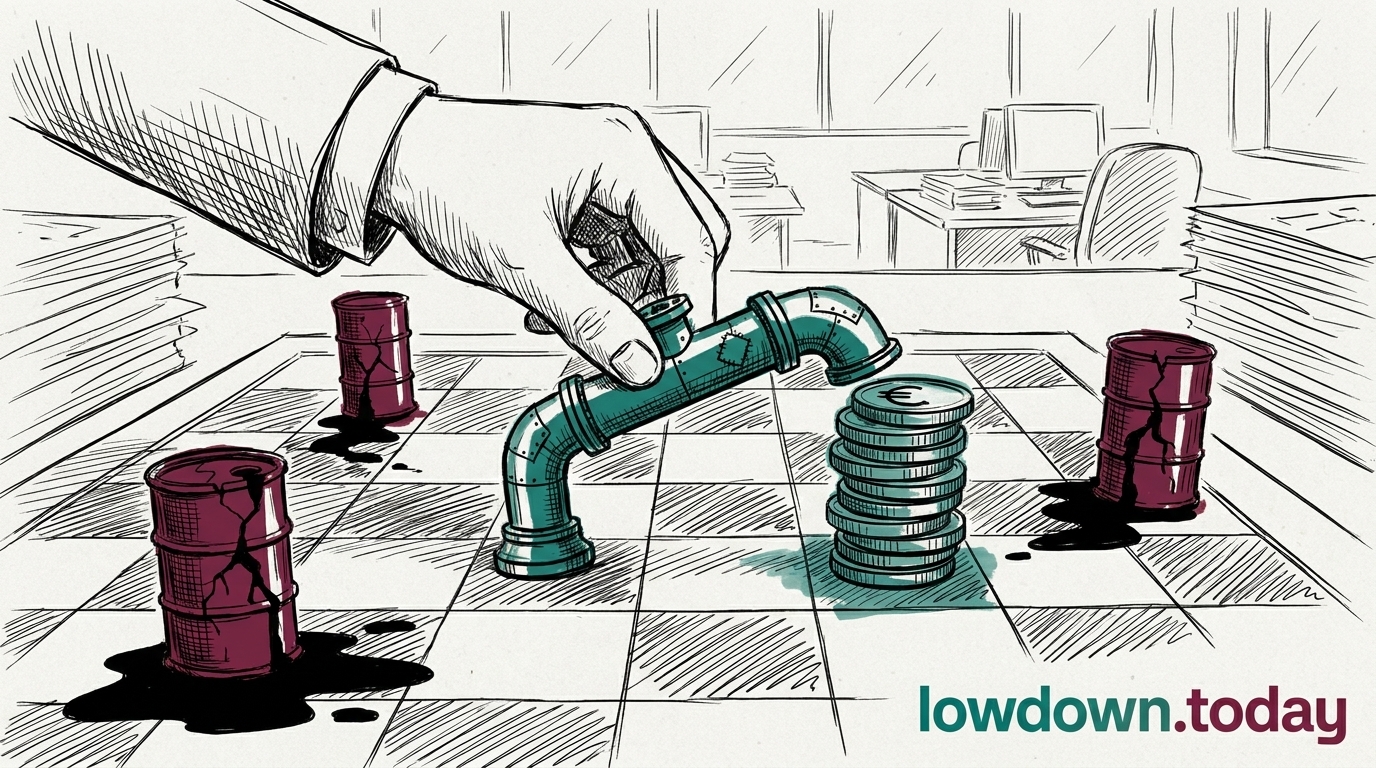
Russia's export ban, not Hormuz, drove the European diesel crack to a record $60.17 a barrel.

Deputy Prime Minister Alexander Novak announced a full Russian diesel export ban through 31 July at a meeting chaired by Vladimir Putin on Wednesday 8 July, widening an earlier producer-only restriction to the whole market after Ukrainian strikes drove Russian refinery runs to multi-year lows 1. Russian seaborne diesel and gasoil exports had already fallen 39% in June, with only a Mongolia supply deal left exempt.

The European diesel refining margin, the crack that measures the gap between diesel and the crude it is made from, hit a record $60.17 a barrel the day of the announcement, and the ICE (Intercontinental Exchange) gasoil crack pushed to a 2026 high 2. The wires read this as more Hormuz spillover. The plumbing says otherwise. EU Regulation 833/2014 already bars Russian diesel from the European pool, so the ban removes no barrel Europe was buying.

It tightens the marginal replacement barrel Europe pulls from elsewhere, and the crack blows out on supply, not on a risk premium. It lands on ARA (Amsterdam-Rotterdam-Antwerp) independent gasoil stocks already at a two-and-a-half-year low 3. The crack had held near $46 through the crude sell-off into July ; a record above $60 is the size of the blowout.

Deep Analysis

In plain English

A 'diesel crack' is the profit a refinery makes turning crude oil into diesel fuel, the difference between the two prices. On 8 July that profit hit a record $60.17 a barrel in Europe, meaning refiners are making more money than ever on every barrel of diesel they produce. The record comes because Russia, a major diesel exporter, just banned all diesel exports until the end of July, on top of Ukrainian strikes that have already knocked out much of its refining capacity. With less Russian diesel reaching world markets, European refiners can charge more for their own.

Deep Analysis
Root Causes

Ukrainian strikes have cut Russian refinery throughput to multi-year lows, and years of export controls on Western refining catalysts and turnaround parts mean damaged units cannot be repaired quickly, so Moscow has less diesel to sell even before deciding to restrict exports.

With domestic pump prices politically sensitive ahead of any repair timeline, the government is choosing to protect the internal market first and let export volumes absorb the shortfall, which is why the ban targets exports specifically rather than rationing at home.

What could happen next?
  • Consequence

    Mongolia is the only destination exempted from the ban, so any further carve-outs Moscow grants in the coming weeks would signal which buyers it is prioritising as domestic supply tightens.

First Reported In

Update #15 · Three shocks, one week, across the oil spreads

Bloomberg· 10 Jul 2026
Read original
Different Perspectives
Turkey
Turkey
Turkey, a major buyer of Russian diesel cargoes, loses that access under Moscow's first producer-binding export ban, in force from 8 July to 31 July. Ankara hosted the same week's NATO summit pledging EUR 70bn to Ukraine, sitting on both sides of the fuel-and-alliance ledger.
NATO
NATO
NATO leaders meeting in Ankara on 7 and 8 July pledged EUR 70bn in equipment, assistance and training for Ukraine across 2026, with a 2027 sustainment commitment and a $40bn Drone Edge counter-drone initiative. European allies now fund the vast majority of that package, filling the gap left by Washington's idled crude waiver.
India
India
India's state refiners continued buying discounted Urals crude as June's price fell to $63.18 a barrel, insulating New Delhi from the OFAC waiver gap still constraining Western buyers. Indian refiners could pick up diesel-export share as Russia's producer-binding ban shuts out its former customers.
China
China
China's independent refiners kept importing discounted Urals crude through June as the price fell to $63.18 a barrel, down 26% month-on-month per CREA. Beijing has said nothing on Moscow's new diesel ban, leaving Chinese refiners a likely beneficiary if Turkish and Brazilian buyers seek replacement cargoes.
United States
United States
No successor licence has been issued since General License 134C lapsed on 17 June, leaving a 26-day gap, the longest of the war, in the Russian crude waiver. Washington's silence is tightening the channel without any stated decision, as Treasury weighs whether to let it die.
Ukraine
Ukraine
Ukraine's long-range strike campaign shifted from refineries to seaborne fuel tankers crossing the Sea of Azov, cutting tracked vessel traffic 55% between 30 June and 11 July, per Starboard Maritime Intelligence. The shift targets Russia's export revenue directly rather than just domestic supply, adding pressure alongside the collapsing Urals price.
