European Diesel Crack
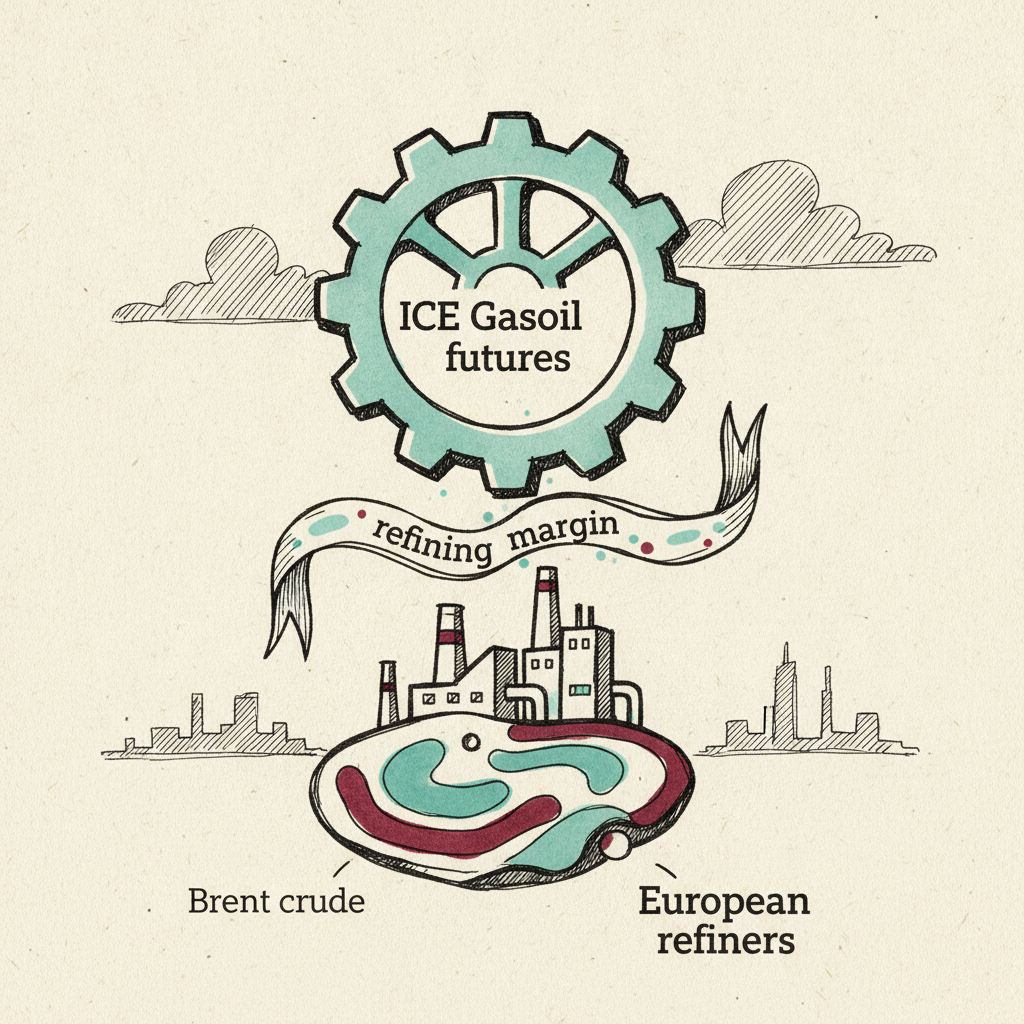
The spread between ICE Gasoil futures and Brent Crude, the margin European refiners earn turning crude into diesel.
Last refreshed: 10 July 2026 · Appears in 1 active topic
Why has Europe's diesel margin stayed twice the seasonal norm through a global product rebuild?
Timeline for European Diesel Crack
Mentioned in: Money went into WTI, not into Brent
European Oil MarketsMentioned in: US distillate deficit widens to 11%
European Oil MarketsMentioned in: Diesel crack and Hormuz premium stack
European Oil MarketsHit a record $60.17 a barrel
European Oil Markets: Russia's diesel ban sets a record crackHeld near $46 despite the crude selloff
European Oil Markets: Diesel cracks hold as crude sells offBackground
The European Diesel Crack, the margin refiners earn turning crude into diesel, hit a record $60.17 a barrel on 8 July, after holding near $46 a barrel through June on OPIS and EIA data, roughly double the seasonal norm. The record followed Russia's ban on all diesel exports through 31 July, announced by Deputy Prime Minister Alexander Novak after Ukrainian strikes drove Russian refinery runs to multi-year lows; the ban widened an earlier restriction that had applied to producers only, and came on top of a 39% fall in Russian seaborne diesel exports already recorded in June.
The crack is the spread between European Gasoil futures, tracked by the ICE Gasoil benchmark, and crude oil. It has stayed bid through a run of physical tightness: ARA gasoil stocks fell to a 2.5-year low of 13.56mb in mid-June, and ARA jet fuel hit a six-year low the same week even as gasoline stocks rebuilt.
EU Regulation 833/2014 bars European refiners from buying Russian or Iranian diesel, so the European pool cannot draw on the cheapest nearby barrels however loose the global balance runs. That exclusion, not the physical rebuild elsewhere, is what has kept the crack from repricing lower through 2026. It also explains why the July record is a supply story rather than a repeat of the Hormuz risk premium the wires blamed it on: Regulation 833/2014 already barred Russian diesel from the European pool, so the ban removes no barrel Europe was buying. What it tightens is the marginal replacement barrel the pool must source instead, and that tightening, on top of already-thin ARA stocks, is what pushed the margin to a record rather than a modest premium.