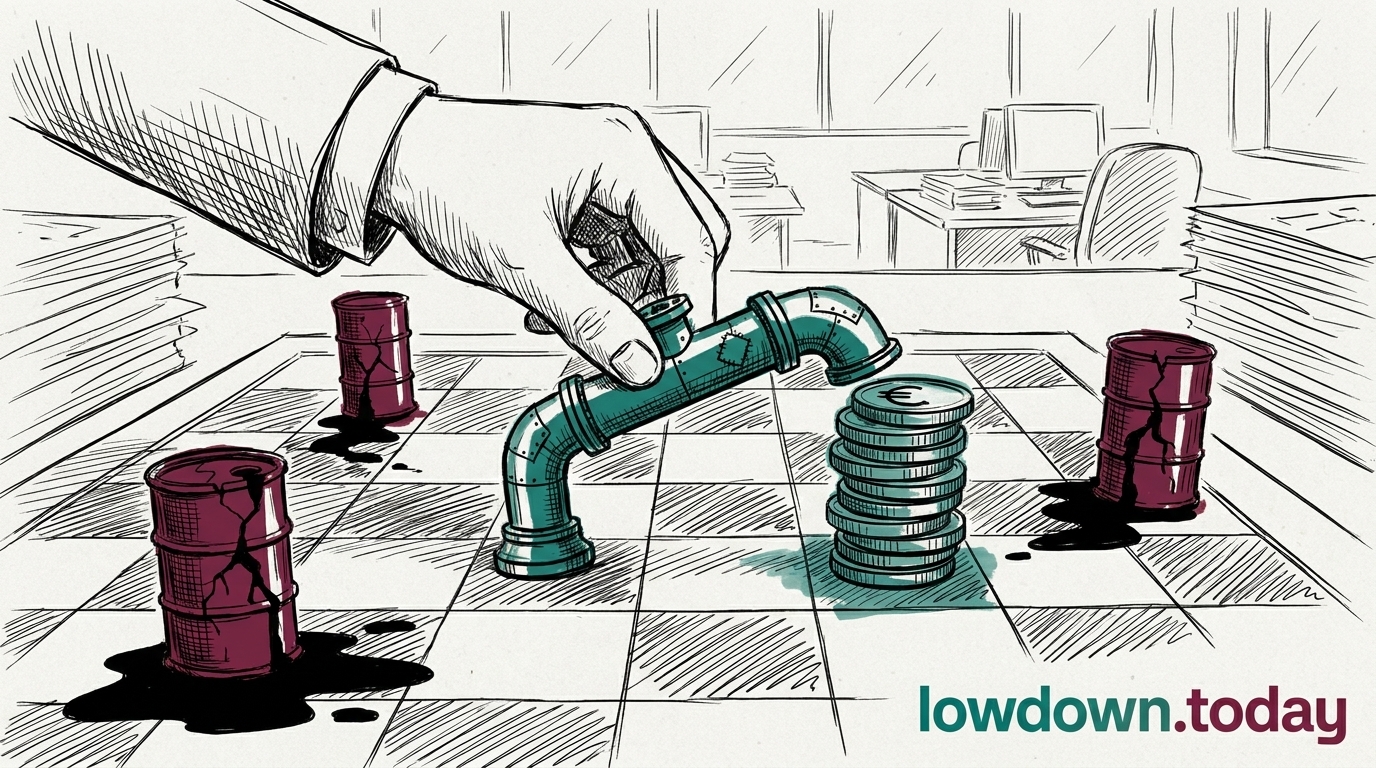
Russian Economic Development Minister Maxim Reshetnikov told a closed Moscow audience on 28 April that, at current oil prices and ruble rate, the National Wealth Fund (NWF)'s liquid share could fall to approximately $12.5 billion by year-end 2026, roughly a quarter of its 1 February 2026 value. The NWF is Russia's sovereign wealth fund and the principal instrument for absorbing budget shortfalls without raising taxes or printing money.
Reshetnikov's quantification follows his 17 April admission that the reserves are largely exhausted. The earlier statement framed depletion as a present condition; the 28 April projection puts a Q4 figure on the trajectory. A Communist Party State Duma member then invoked '1917' on the chamber floor, a reference to the fiscal collapse that preceded the Romanov abdication. Russia's managed political system tolerates Communist Party criticism as system-supportive opposition; the reference passing without rebuke means the fiscal frame has crossed from technocratic memo language into permitted political vocabulary.
The NWF's design assumed oil prices high enough to refill the fund while it was spent. Oil revenues fell roughly 30% year-on-year through Q1 2026 against the 2022 invasion peak, refinery throughput is at a 16-year low (covered separately in this briefing), and Treasury's GL 134B preserves at-sea cargo flow only through 16 May. The NWF is being drawn down in a quarter when the reasons to draw it down are accumulating rather than fading.
$12.5 billion is roughly two months of Russian wartime budget overrun. Once the liquid share is exhausted, Moscow's options narrow to ruble emission, tax rises on a sanctioned export base, or public spending cuts inside a war economy. Each of those was politically untouchable a year ago; the 1917 reference signals that condition is no longer holding.




