Skip to content
Briefings are running a touch slower this week while we rebuild the foundations.See roadmap
Iran Conflict 2026
16MAY

20,000 seafarers trapped in Hormuz

4 min read
12:41UTC

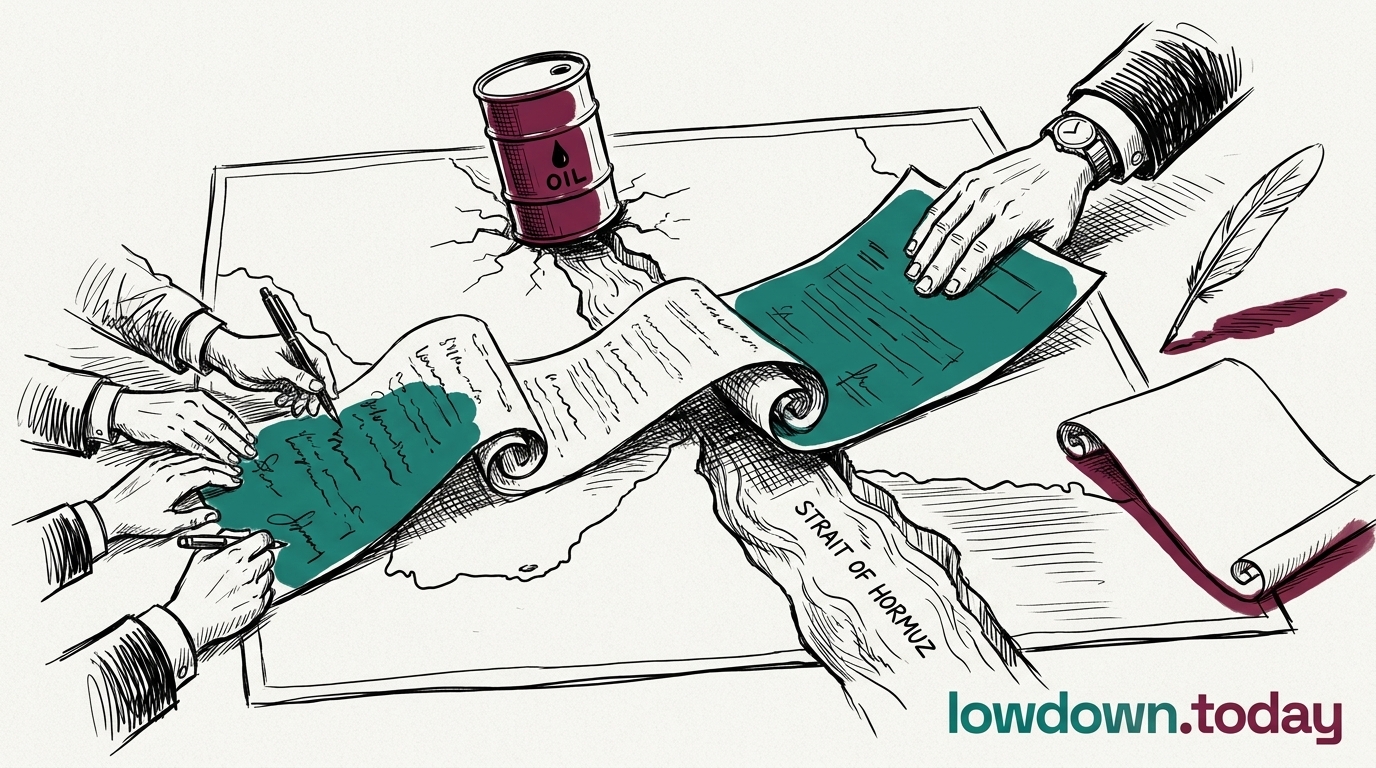
Filipino, Indian, and Bangladeshi crews are stranded aboard vessels in the Persian Gulf while the countries that employ them negotiate a blockade that selectively lets Iranian oil through.

ConflictDeveloping
Key takeaway

Only a naval convoy mission could protect 20,000 stranded seafarers — and none currently exists.

The International Maritime Organisation's cumulative tally for the strait of Hormuz since 28 February: 10 vessels attacked, 7 seafarers killed, and 20,000 seafarers stranded in the Persian Gulf. Tanker traffic through Hormuz has fallen 90% from pre-war levels. GPS jamming has been reported across the strait.

The stranded crews are mostly from the Philippines, India, and Bangladesh — countries whose nationals make up the backbone of global merchant shipping but whose governments have no seat at the table where the war's conduct is determined. Manila, New Delhi, and Dhaka face the same structural position: their citizens crew the ships, their economies depend on Gulf energy imports, and they possess no mechanism to compel safe passage. The IMO has issued condemnations. It has no enforcement power and no naval assets.

The blockade's selectivity sharpens the injustice. 11.7 million barrels of Iranian crude have transited the strait since 28 February, all bound for China, according to TankerTrackers.com co-founder Samir Madani. The IRGC's earlier publicly claimed strikes on the Marshall Islands-flagged Louise P and the Prima , established the operating principle: Iran decides who passes. Chinese-operated vessels systematically broadcast AIS messages emphasising Chinese ownership and crew nationality. The two-tier passage system Fortune documented days ago is now the strait's governing reality — open for Chinese-linked commerce, functionally closed for everyone else.

GPS jamming compounds the danger. A vessel unable to navigate accurately in Hormuz21 nautical miles at its narrowest, with traffic separation lanes barely two miles wide — faces grounding, collision, or drift into Iranian territorial waters. Any of these could trigger a new incident. The 90% traffic decline reflects insurance withdrawal as much as physical threat; every major protection and indemnity club cancelled War risk coverage effective 5 March. For the 20,000 stranded seafarers, the arithmetic is personal: they cannot transit out, their employers cannot insure the voyage, and the governments that might negotiate their passage are consumed by the oil price crisis their stranding helped create.


Deep Analysis

In plain English

The Strait of Hormuz is a narrow channel that roughly a fifth of the world's oil passes through. Iran has been attacking ships there and declared it closed. Twenty thousand sailors — most from the Philippines, India, and Bangladesh — are now stuck on vessels in the Persian Gulf, unable to leave safely. The IMO is the international body responsible for seafarer welfare, but it has no ships or enforcement powers of its own. It can write letters; it cannot escort vessels through a war zone. Unlike the Suez Canal, there is no alternative route around the Persian Gulf — it is geographically a dead end, which means every option for restoring traffic requires either defeating the blockade militarily or negotiating Iran's consent.

Deep Analysis
Synthesis

The demographic concentration of stranded seafarers — Philippines, India, Bangladesh — is not random. These three countries together supply approximately 40% of the global professional seafarer workforce. The human cost of the blockade falls disproportionately on labour-exporting Global South nations whose governments face domestic political pressure but possess no naval capacity to protect their citizens. The states with naval capacity to act are parties to the conflict. This asymmetry ensures the humanitarian crisis has no available advocate with both the motive and the means to resolve it.

Root Causes

The IMO's flag-state architecture grants Iran, as a coastal state, de facto authority over transit that UNCLOS Part III designates as subject to non-suspendable transit passage rights. Iran's suspension of those obligations carries no enforcement consequence because no member state has invoked ITLOS dispute mechanisms, and the treaty's design contains no self-executing enforcement provision. The legal gap predates this conflict.

Escalation

The addition of GPS jamming extends Iranian interdiction capability without requiring additional IRGC naval assets. It degrades safe navigation for vessels attempting transit on their own commercial risk, effectively expanding the blockade's reach beyond physical attack. The cumulative effect — kinetic threat plus electronic warfare plus insurance pricing — makes residual transit non-viable for commercially rational operators.

What could happen next?
2 consequence2 risk1 precedent
  • Consequence

    Twenty thousand stranded seafarers cannot be evacuated without a naval escort mechanism that does not currently exist and that no state has proposed.

    Immediate · Assessed
  • Risk

    GPS jamming expands Iranian interdiction capability without additional naval assets, making residual voluntary transit commercially and navigationally non-viable simultaneously.

    Short term · Assessed
  • Precedent

    If no state invokes UNCLOS dispute mechanisms against Iran's blockade, it establishes that a coastal state can suspend non-suspendable transit passage rights without legal consequence.

    Long term · Assessed
  • Consequence

    Labour-exporting countries supplying 40% of global seafarers face structural economic damage as Gulf route recruitment collapses and remittance flows decline.

    Medium term · Suggested
  • Risk

    The IMO's demonstrated enforcement impotence in this crisis may accelerate pressure to reform the flag-state system, but any institutional reform would take years to negotiate and ratify.

    Long term · Suggested
First Reported In

Update #32 · UN condemns Iran 13-0; ceasefire blocked

IMO· 12 Mar 2026
Read original
Causes and effects
This Event
20,000 seafarers trapped in Hormuz
The 20,000 stranded seafarers represent a humanitarian crisis invisible behind the oil price headlines. Their governments have no leverage over the blockade's terms, the IMO has no enforcement power, and GPS jamming in one of the world's most congested waterways adds navigational danger to the physical threat of interdiction.
Different Perspectives
India (BRICS meeting host, grey-market beneficiary)
New Delhi hosted the BRICS foreign ministers' meeting on 14 May that Araghchi attended under the Minab168 designation, giving India a front-row seat to Iran's diplomatic positioning. India's state refiners have been absorbing discounted Iranian crude through grey-market routing since April; Brent at $109.30 means every barrel sourced outside the formal market generates a structural saving.
Hengaw / Kurdish human rights monitors
Hengaw's daily reports from Iran's Kurdish provinces remain the sole independent cross-check on Iran's judicial activity during the conflict. Two executions across Qom and Karaj Central prisons on 15 May and five Kurdish detentions on 15-16 May indicate the wartime judicial pipeline is operating independently of military tempo.
Pakistan (mediator and bilateral partner)
Islamabad spent its diplomatic capital as the US-Iran MOU carrier to secure LNG passage for two Qatari vessels through a bilateral Pakistan-Iran agreement, spending its mediation credit for direct economic gain. China's public endorsement of Pakistan's mediatory role on 13 May is the structural reward.
China and BRICS bloc
Beijing endorsed Pakistan's mediatory role on 13 May, one day after the BRICS foreign ministers' meeting in New Delhi. Chinese state banks are processing PGSA yuan toll payments; China has not commented on its vessels' continued Hormuz passage, but benefits structurally from a non-dollar toll system it did not design.
Iraq (bilateral passage partner)
Baghdad negotiated a 2-million-barrel VLCC transit without paying PGSA yuan tolls, offering political alignment in lieu of cash. Iraq's position inside Iran's adjacent bloc makes it the natural first bilateral partner and a template for how Tehran structures passage deals with states that cannot afford Western coalition membership.
Bahrain and Qatar (Gulf signatories)
Both signed the Western coalition paper while hosting US Fifth Fleet and CENTCOM's Al Udeid base, respectively. Qatar occupies the sharpest contradiction: it is on coalition paper while simultaneously receiving LNG passage through the bilateral Iran-Pakistan track, a position Doha has tacitly accepted from both sides.



