Skip to content
Briefings are running a touch slower this week while we rebuild the foundations.See roadmap
Iran Conflict 2026
16MAY

Enrichment gap blocks any nuclear text

3 min read
12:41UTC

Iran's 10-point plan claims a right to enrichment; the US demands zero. The gap is publicly irreconcilable.

ConflictDeveloping
Key takeaway

Both sides published irreconcilable enrichment positions with no verification architecture to bridge the gap.

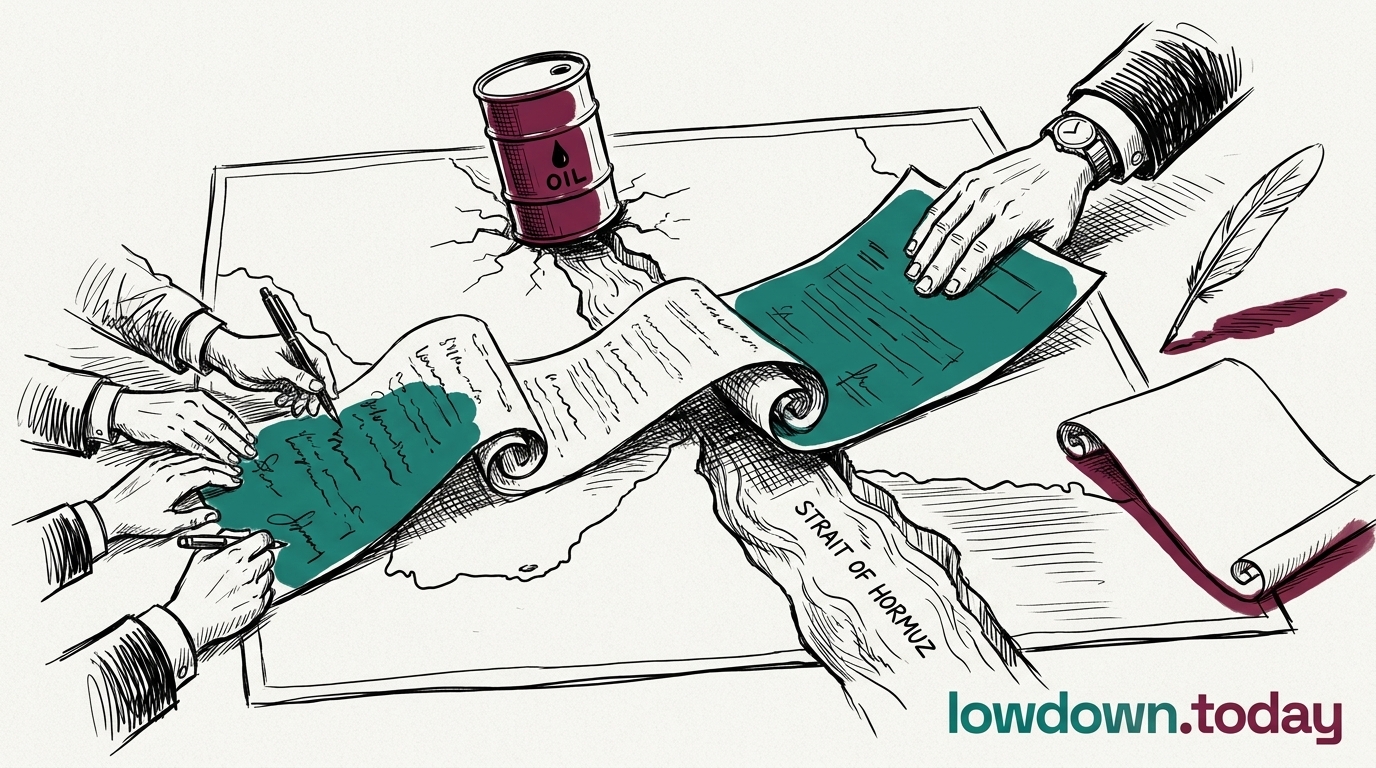
Iran tabled a 10-point plan at Islamabad listing "acceptance of enrichment" as non-negotiable. The United States tabled a 15-point plan demanding a zero nuclear weapons commitment, removal of Iran's HEU stockpile from the country, limits on defence capabilities, and unconditional Hormuz reopening. Donald Trump posted that "there will be no enrichment of Uranium" ; Iran's plan explicitly claims the right to it.

Sanam Vakil, Chatham House's Middle East and North Africa director, assessed that Iran is "unlikely" to surrender its HEU stockpile and that downblending to lower enrichment levels is the realistic floor for any deal. Iran's Foreign Minister Abbas Araghchi had publicly offered downblending on CBS in March, but Islamabad's US demands went further: full removal of the material from Iranian territory.

The last verified stockpile figure is 440.9 kg of uranium enriched to 60%, recorded by the IAEA (International Atomic Energy Agency) in September 2025, before the strikes. At 60% purity, that quantity requires relatively modest further enrichment to reach weapons-grade; the IAEA defines a "significant quantity" for a single device at 25 kg of 90%-enriched uranium. Since the Majlis voted 221-0 to suspend all IAEA cooperation on 3 April , no independent verification has been possible.

The Arms Control Association assessed in March that US negotiators were "ill-prepared for serious nuclear negotiations." The JCPOA (Joint Comprehensive Plan of Action) took 20 months of structured talks with continuous IAEA access to bridge a comparable enrichment gap. Islamabad attempted the same in two days, without inspectors.

Deep Analysis

In plain English

Enriched uranium is nuclear fuel. You enrich it a little (3-5%) and it powers a reactor. You enrich it a lot (90%+) and you can make a bomb. Iran is enriching to 60%, which is well above reactor grade and much closer to weapons grade than is comfortable. The US wants Iran to hand over this stockpile and never enrich again. Iran says that enriching uranium is its sovereign right, like any country operating nuclear power. The two positions are like arguing whether someone should be allowed to own a gun: one side says no guns at all, the other says guns are a constitutional right. The extra complication is that the international inspectors who would verify any deal, the IAEA, have been banned from Iran since early April. So even if both sides agreed on something, there is currently no one to check whether Iran is doing what it promised.

Deep Analysis
Root Causes

Iran's enrichment programme is not purely a weapons issue, it is tied to domestic electricity generation ambitions and to a sovereignty narrative built over 20 years of sanctions. Accepting zero enrichment would require Iran's leadership to abandon a national project that predates the current conflict by decades.

The IAEA monitoring blackout since the Majlis vote of 3 April means any enrichment concession Iran makes cannot be verified by a neutral third party. Without verified downblending, the US cannot make a political case domestically that a deal has worked. The monitoring gap is therefore a prerequisite problem, not a technical footnote.

The post-strike status of the 440.9 kg stockpile is unknown. If strikes have degraded or destroyed some portion of it, Iran may be offering to 'downblend' material it no longer holds in its pre-strike form, a concession with less strategic cost than it appears.

What could happen next?
  • Risk

    The Majlis 221-0 vote suspending IAEA cooperation means any nuclear concession Iran makes cannot be verified, removing the technical foundation for a deal that would satisfy US domestic and Congressional scrutiny.

    Immediate · High
  • Consequence

    Iran's public 10-point plan listing enrichment as non-negotiable has created a domestic accountability problem: any Iranian delegation that walks back enrichment rights now faces parliamentary backlash, shrinking the negotiating space even if leadership privately wanted to move.

    Short term · High
  • Opportunity

    Araghchi's March downblending offer and the Oman FM's 'irreversible fuel conversion' claim suggest a middle position exists if both sides can find face-saving language, a JCPOA-style 'limited enrichment under monitoring' framework could provide that cover.

    Medium term · Medium
First Reported In

Update #66 · Islamabad collapses: 10 days to expiry

Times of Israel· 12 Apr 2026
Read original
Different Perspectives
India (BRICS meeting host, grey-market beneficiary)
New Delhi hosted the BRICS foreign ministers' meeting on 14 May that Araghchi attended under the Minab168 designation, giving India a front-row seat to Iran's diplomatic positioning. India's state refiners have been absorbing discounted Iranian crude through grey-market routing since April; Brent at $109.30 means every barrel sourced outside the formal market generates a structural saving.
Hengaw / Kurdish human rights monitors
Hengaw's daily reports from Iran's Kurdish provinces remain the sole independent cross-check on Iran's judicial activity during the conflict. Two executions across Qom and Karaj Central prisons on 15 May and five Kurdish detentions on 15-16 May indicate the wartime judicial pipeline is operating independently of military tempo.
Pakistan (mediator and bilateral partner)
Islamabad spent its diplomatic capital as the US-Iran MOU carrier to secure LNG passage for two Qatari vessels through a bilateral Pakistan-Iran agreement, spending its mediation credit for direct economic gain. China's public endorsement of Pakistan's mediatory role on 13 May is the structural reward.
China and BRICS bloc
Beijing endorsed Pakistan's mediatory role on 13 May, one day after the BRICS foreign ministers' meeting in New Delhi. Chinese state banks are processing PGSA yuan toll payments; China has not commented on its vessels' continued Hormuz passage, but benefits structurally from a non-dollar toll system it did not design.
Iraq (bilateral passage partner)
Baghdad negotiated a 2-million-barrel VLCC transit without paying PGSA yuan tolls, offering political alignment in lieu of cash. Iraq's position inside Iran's adjacent bloc makes it the natural first bilateral partner and a template for how Tehran structures passage deals with states that cannot afford Western coalition membership.
Bahrain and Qatar (Gulf signatories)
Both signed the Western coalition paper while hosting US Fifth Fleet and CENTCOM's Al Udeid base, respectively. Qatar occupies the sharpest contradiction: it is on coalition paper while simultaneously receiving LNG passage through the bilateral Iran-Pakistan track, a position Doha has tacitly accepted from both sides.