Did Iran actually accept Trump's 'no enrichment' claim, or is the 10-point plan still contested?
Timeline for 10-point plan
Mentioned in: General License U expires inside the ceasefire window
Iran Conflict 2026Mentioned in: Iran claims progress, media says no rush
Iran Conflict 2026Mentioned in: Enrichment gap blocks any nuclear text
Iran Conflict 2026Mentioned in: Enrichment Gap Hardens Before Talks Open
Iran Conflict 2026Background
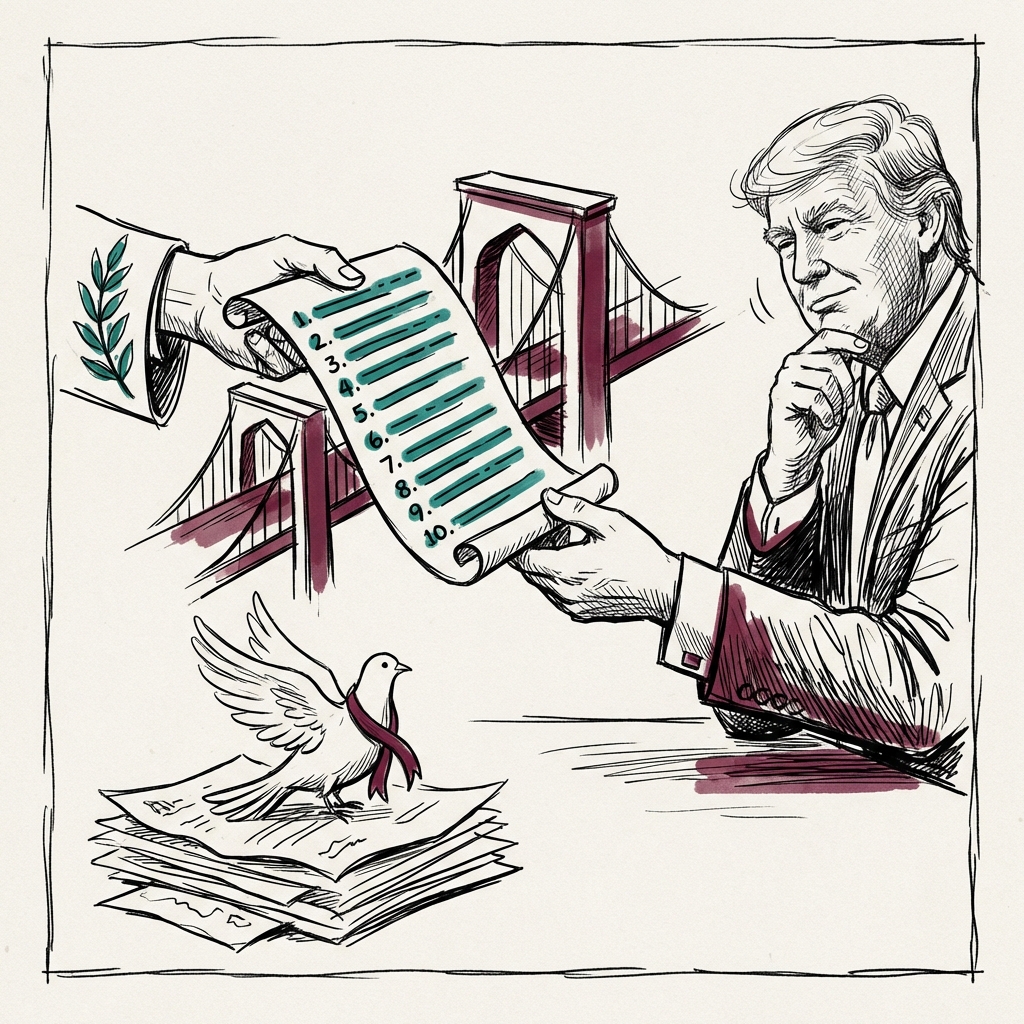
Iran's 10-point Ceasefire counter-proposal, relayed to Washington via Pakistan in the days before the 8 April 2026 ceasefire, set out Tehran's conditions for a sustainable pause: Iranian control over the strait of Hormuz transit corridor, full US military withdrawal from The Gulf region, comprehensive sanctions relief, unfreezing of Iranian assets frozen under US sanctions, and ratification of any agreement by the UN Security Council. The breadth of the demands reflected Iran's negotiating position that any Ceasefire must address the structural conditions of the conflict rather than merely pause hostilities.
Pakistan played an intermediary role in transmitting the plan, a reflection of Islamabad's unique position as a state with historical ties to both Iran and the United States and a strong institutional interest in preventing Gulf conflict spillover into South Asia. The choice of Pakistan as a channel also gave Tehran a degree of diplomatic cover: the plan could be denied or softened without Iran having to do so publicly.
President Trump described the 10-point plan as a "workable basis" in public statements, a characterisation Iran's leadership neither confirmed nor denied. The gap between Trump's framing and Iran's official position on enrichment was immediately seized upon: Trump posted that Iran had agreed to no uranium enrichment, while Iran's negotiators continued to insist enrichment was a non-negotiable right. The 10-point plan thus became both a diplomatic framework and a contested document whose meaning the two sides publicly disputed.
What is Iran's 10-point ceasefire plan?
Did Iran agree not to enrich uranium as part of the ceasefire?
Why did Pakistan relay the Iran ceasefire proposal to the US?


