Skip to content
Welcome, thoughtbot's Giant Robots listeners!Start here
Iran Conflict 2026
10MAY

OPEC+ to vote barrels it can't pump

4 min read
14:22UTC

OPEC+ is expected to wave through a 188kbd July hike at Sunday's ministerial even as actual group output has collapsed 9.58mbd on Hormuz delivery constraints, and Saudi breakeven sits above the market price.

ConflictDeveloping
Key takeaway

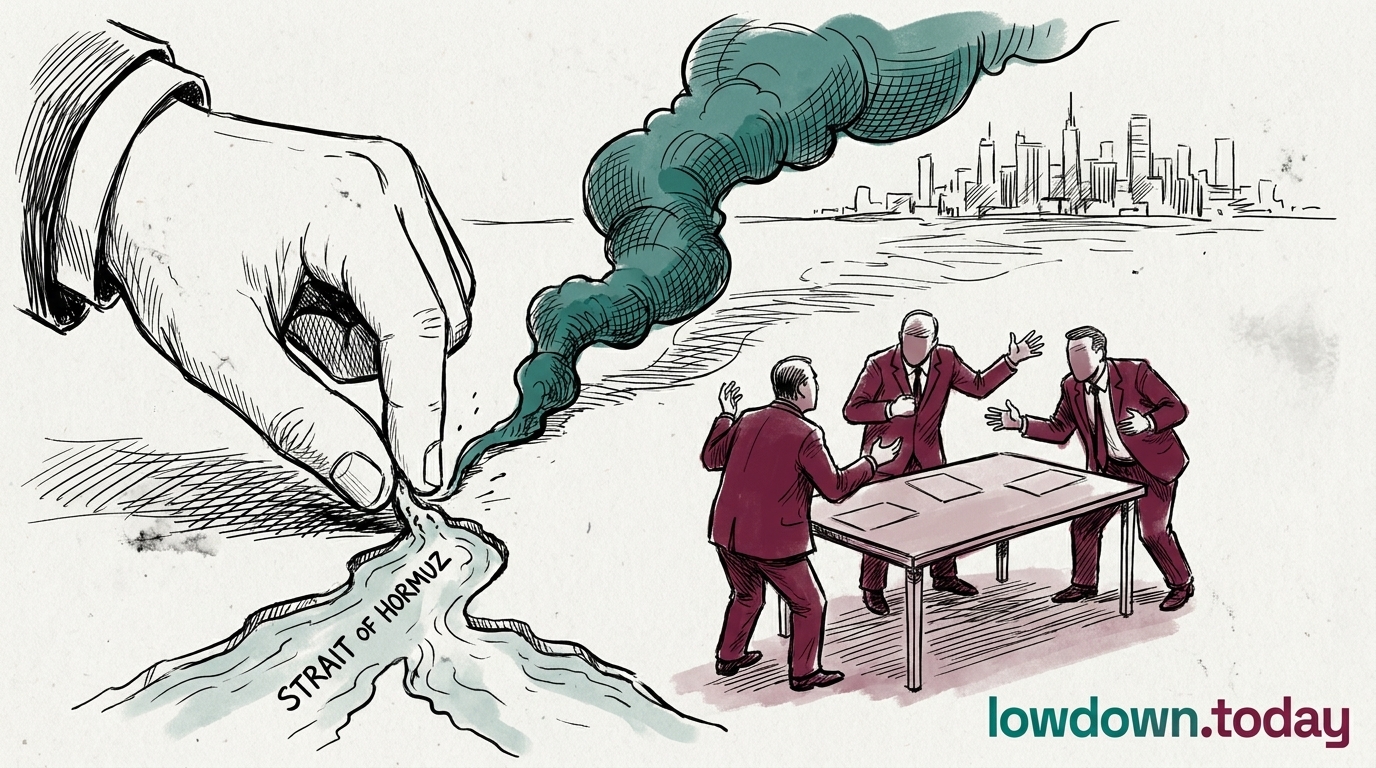
OPEC+ is voting July barrels The Gulf cannot ship while needing prices its own votes suppress.

OPEC+ is expected to approve a 188kbd July output increase at its 41st ministerial on Sunday 07 June, four sources told Reuters.⁠1 Treat that as expected, not decided; the ministers do not sit until Sunday. OPEC+ is the producer alliance of OPEC and partners including Russia and Kazakhstan, controlling roughly 40% of global crude output, with Saudi Arabia as de facto leader. The number is close to noise: actual group output ran 33.19mbd in April against 42.77mbd in February, a 9.58mbd involuntary collapse on Hormuz delivery constraints.⁠2

The headline rewards members that can still ship and disguises the ones that cannot. Saudi Arabia is producing around 7.25mbd against a 10.291mbd quota; Russia is overproducing 200-500kbd on Baltic and pipeline routes that bypass The Gulf; Kazakhstan is 322kbd long on Tengiz via the CPC line; Iraq stays chronically non-compliant. This continues the paper-versus-physical split first logged when the seven voluntary-cut members approved the June 188kbd hike on 03 May, the first decision taken without the UAE after Abu Dhabi's exit. A trader reading 188kbd as added supply misreads the meeting.

The fiscal squeeze sharpens the read. Saudi breakeven sits at $108-111 against Brent near $97, per House of Saud, so Riyadh keeps sanctioning hikes it needs higher prices to fund and cannot physically deliver.⁠3 A pause would be the rational move. The pre-positioning into Sunday points the other way.

Deep Analysis

In plain English

OPEC+ is a club of oil-producing countries that coordinate how much oil they pump each month. When they vote to increase production, that normally means more oil on the market and lower prices. But this Sunday's expected vote to pump an extra 188,000 barrels a day is largely symbolic. The reason: the countries that would normally supply that oil , Saudi Arabia, Iraq, Kuwait, and the UAE , cannot ship it because of the Hormuz situation blocking the main exit route from The Gulf. Meanwhile, Russia and Kazakhstan are already pumping above their limits via routes that bypass The Gulf. So the cartel is voting to increase a supply that can't physically increase, while some members quietly exceed their quotas anyway. The key number to watch isn't the vote itself but Saudi Arabia's fiscal breakeven of $108-111 per barrel , well above the current $97 price. That gap means Riyadh is losing money on every barrel it sells right now.

Deep Analysis
Root Causes

The paper-physical bifurcation has three structural causes. First, Hormuz delivery constraints have removed The Gulf members' ability to physically execute quota hikes, so the vote is decoupled from the barrel.

Second, OPEC+'s compliance architecture relies on self-reporting and secondary-source monitoring (Reuters, Platts, Argus); it has no enforcement mechanism for members who overproduce. Russia (200-500kbd above quota), Kazakhstan (+322kbd), and Iraq (chronically over) face no penalty, creating a permanent cheating equilibrium above the official line.

Third, Saudi Arabia's fiscal breakeven at $108-111 sits $11-14 above current Brent, meaning Riyadh needs higher prices to fund Vision 2030 but is approving hikes that the market reads as supply increases. The self-defeating fiscal dynamic , cutting revenue to preserve political credibility inside the alliance , is a structural feature of OPEC's design, not a one-off error.

What could happen next?
  • Risk

    Saudi Arabia's $11-14/bbl deficit against its fiscal breakeven argues for a production cut or pause within 60 days if Brent stays below $100, which would reverse the supply-increase narrative established by the Sunday vote.

    Short term · Suggested
  • Consequence

    Kazakhstan's Tengiz +322kbd overage sets a cartel precedent for treating infrastructure-driven overproduction as exempt from compensatory cuts, weakening quota discipline permanently.

    Medium term · Assessed
  • Precedent

    If the 07 June ministerial approves a seventh consecutive 188kbd hike despite a 9.58mbd physical gap between quota and production, the mechanism formalises paper-quota voting as a price signal divorced from physical deliverability.

    Long term · Assessed
First Reported In

Update #5 · Sixth straight draw, the flat price won't say

Khaleej Times (Reuters)· 4 Jun 2026
Read original →
Different Perspectives
Office for Budget Responsibility
The OBR's 28 October forecast assumed $82 oil for 2026 and 2027, from market prices for the ten working days to 19 August, and blamed dearer wholesale energy on the war without naming Iran. It expects CPI inflation close to 4% in early 2027 even at that price.
Hengaw, Kurdish rights group
Hengaw reported the 3 November hangings of Amirhossein Maleki and Amirhossein Ebrahimi in Isfahan, saying Ebrahimi was tortured into confessing and that nine of 12 people sentenced to death in the case have now been hanged. Iran's judiciary holds that the defendants killed members of the security forces.
FINTRAC, Canada's financial intelligence unit
FINTRAC worked with the US Treasury on the 6 November designation of eight money services businesses in British Columbia, Ontario and Quebec. Treasury says the businesses still operate, some under new names, so closing them falls to Ottawa.
Abdul Qadir al-Dakhil, Governor of Nineveh
Al-Dakhil cancelled three Mosul International Airport contracts on 7 November over alleged links to armed groups, after meeting Prime Minister Ali al-Zaidi in Baghdad. He named no group or company, and said the contracts will go to international companies.
Kuwait
Kuwait
Kuwait condemned the Houthi missile fired towards the Madinah region on 5 November and restated its support for Saudi Arabia, the Qatar News Agency reported. Its state tanker company, Kuwait Oil Tankers Company, is among the Gulf state fleets on Iran's expanded Hormuz list.
Scott Bessent, US Treasury Secretary
Treasury designated an alleged Chandigarh false-flag network on 4 November and eight Canadian exchangers on 6 November, while State sanctioned alleged MANPADS intermediaries. None of the actions touches an oil buyer; they target the paper, cash and procurement around Iran's trade.

Written with AI from Lowdown's published reporting. Not individually reviewed by an editor. Editorial standards.
