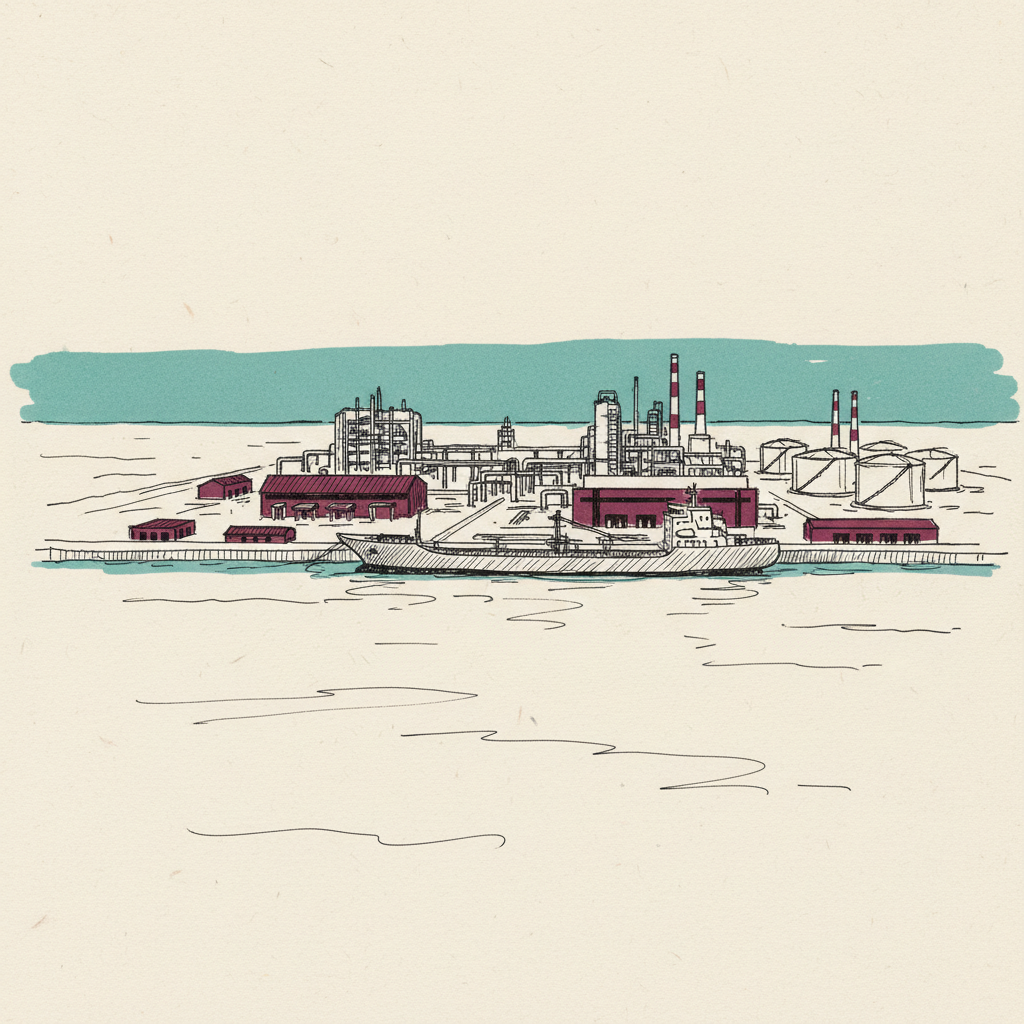
Nigeria
West Africa's largest economy; OPEC oil producer and fourth-largest LNG exporter via Nigeria LNG Limited.
On 1 April, three LNG cargoes from Nigeria were among eight Atlantic shipments redirected from Europe to Asia as Asian prices outweighed Europe’s market signal.
Last refreshed: 24 September 2026 · Appears in 3 active topics
Why do Nigerian LNG cargoes keep bypassing European buyers for higher Asian prices?
Timeline for Nigeria
Mentioned in: Cholera killed 7,870 in 2025, WHO says
Pandemics and BiosecurityMentioned in: Ebola reaches Sud-Ubangi by river boat
Pandemics and BiosecurityMentioned in: OPEC+ adds barrels it won't pump
European Oil MarketsDigital Realty raises Teraco to 77%
Data Centres: Boom and BacklashMentioned in: The ban's own text makes it porous
European Energy MarketsBackground
Nigeria is a West African economy and an OPEC oil producer with a substantial LNG export industry through Nigeria LNG Limited. Its energy exports connect the country to both Atlantic and Asian gas markets. Tracking of Nigerian cargoes in the European market demonstrates that this export role extends beyond a single regional customer base.
Nigeria’s LNG position matters because flexible cargoes can respond to changing price signals between consuming regions. European terminal data illustrates why Nigerian supply remains relevant to buyers seeking alternatives during tight market conditions.
Nigerian LNG cargoes followed Asian prices
On 1 April, vessel tracking identified three cargoes from Nigeria among eight Atlantic LNG shipments diverted from Europe to Asia via the Cape of Good Hope. The diversion reduced EU weekly LNG imports to 3.3 million tonnes, while the near-zero gap between Asian and European benchmark prices removed Europe’s advantage for flexible cargoes.
For Nigeria, the episode showed that its LNG exports compete in a global SPOT market rather than serving as a fixed European backstop. By 13 April, EU terminal stocks had fallen by 163,000 tonnes in three days, making the absence of flexible Nigerian cargoes more visible to European buyers.
Reference
Is Nigeria a member of OPEC?
Who owns Teraco, Africa's largest data-centre operator?
Does Nigeria have any major data centres?
Who owns Nigeria LNG?
How much LNG does Nigeria export and where does it go?
What is Nigeria's role in European energy supply security?
Why is Nigerian LNG going to Asia instead of Europe in 2026?
