Skip to content
Welcome, thoughtbot's Giant Robots listeners!Start here
Iran Conflict 2026
10MAY

Deal bans the Hormuz toll, licenses its replacement

3 min read
14:22UTC

The published memorandum bans tolls on Hormuz passage, then invokes UNCLOS Article 26(2) to recast the IRGC's toll body as an Iran-Oman provider of maritime services, with a charge-free window of only 60 days.

ConflictDeveloping
Key takeaway

Iran agreed to drop the toll for 60 days and kept the legal machinery to switch it back on.

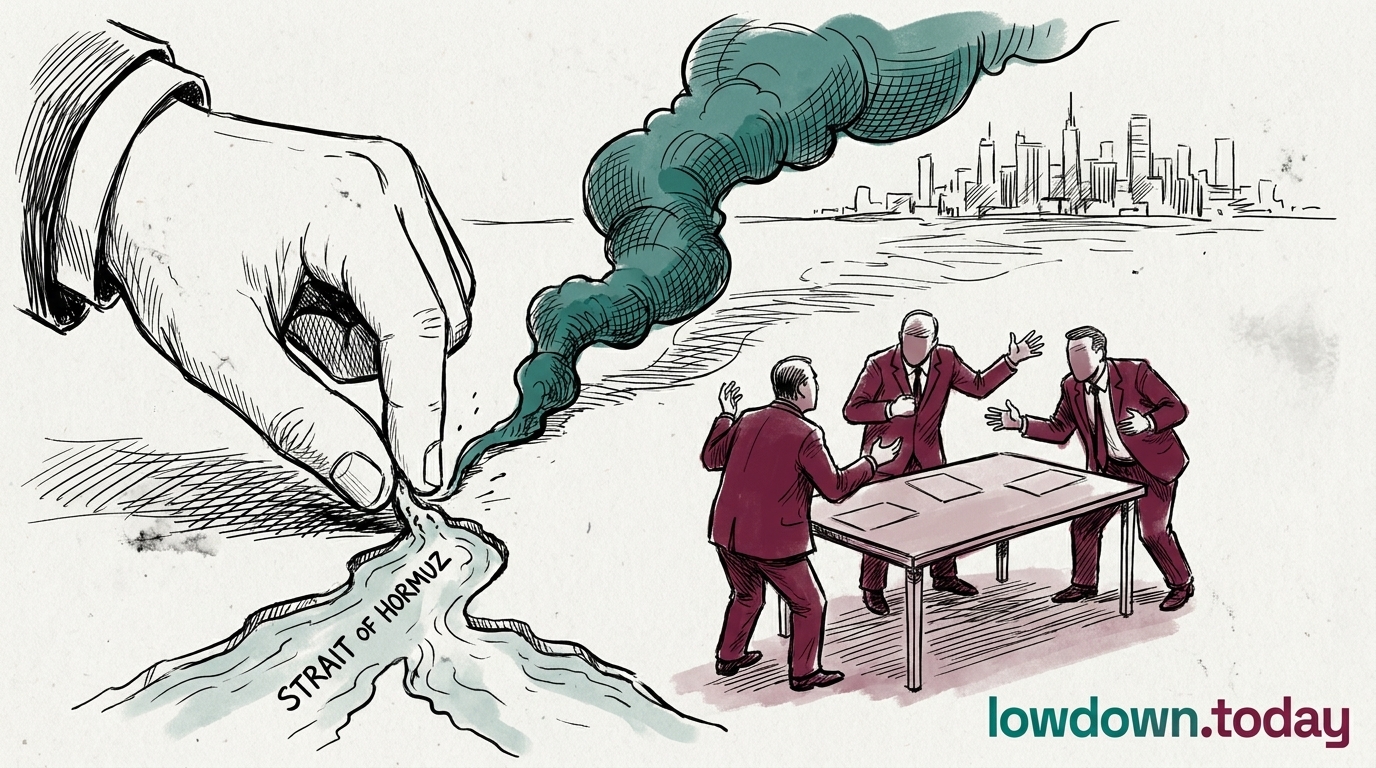
The Islamabad Memorandum of Understanding (MoU) text, published 17 June, bans "tolls" on Strait of Hormuz passage, then invokes the UN Convention on the Law of the Sea (UNCLOS), Article 26(2), to recast the charges as "maritime navigation services"⁠1. That article forbids fees on innocent passage but permits charges for specific services rendered to a ship, so a renamed toll becomes lawful revenue. Management is handed jointly to Iran and Oman, and the charge-free window runs 60 days only.

The body collecting the money does not go away. The Persian Gulf Strait Authority (PGSA), the body Iran's Revolutionary Guard (IRGC) created on 5 May that levied up to $2 million per tanker, is not dissolved under the deal. It survives under a quieter label, the 60-day clock counting down to the charge's return. Iran asserted Hormuz sovereignty and collected paid passage as early as 15 June, foreshadowing the framing the text now formalises.

Iran's foreign minister Abbas Araghchi put it plainly: "Charges for services provided will be collected," naming navigation, environmental protection and insurance. Counting from a signing date of roughly 15-16 June, the fees could resume as early as mid-August. The party with the largest exposure to those fees, Saudi Arabia, holds no seat in the Iran-Oman mechanism that will set them.

Deep Analysis

In plain English

The ceasefire deal said Iran would stop charging ships to pass through the strait of Hormuz. But it only said so for 60 days. After that, Iran can restart the charges under a different name. Instead of calling them 'tolls' , a word the deal bans , Iran will call them 'maritime navigation services fees', citing a section of international maritime law. Think of it as a motorway toll renamed a 'road maintenance contribution.' The underlying charge is the same; the label has changed. The legal argument is questionable, but Iran has 60 days before it matters. By then, the deal will either be extended or collapsed on other grounds.

What could happen next?
  • Precedent

    The UNCLOS Article 26(2) rebranding, if unchallenged, sets a template for any state controlling a maritime chokepoint to levy transit charges under a services-fee framing that avoids the political label of 'toll.'

    Medium term · Reported
  • Risk

    Saudi Arabia's four idle supergiant fields face annual fee liability of up to $2 billion once the 60-day window closes, with no voice in the fee-setting mechanism. Riyadh's 26-day public silence on the MOU may break as the mid-August charge-resumption date approaches.

    Medium term · Reported
  • Opportunity

    The 60-day grace period gives shipping companies, P&I clubs, and international maritime lawyers a window to file UNCLOS arbitration claims testing the services-fee framing before charges resume.

    Medium term · Suggested
First Reported In

Update #131 · Iran deal's first death tests the text

Times of Israel· 18 Jun 2026
Read original →
Different Perspectives
Office for Budget Responsibility
The OBR's 28 October forecast assumed $82 oil for 2026 and 2027, from market prices for the ten working days to 19 August, and blamed dearer wholesale energy on the war without naming Iran. It expects CPI inflation close to 4% in early 2027 even at that price.
Hengaw, Kurdish rights group
Hengaw reported the 3 November hangings of Amirhossein Maleki and Amirhossein Ebrahimi in Isfahan, saying Ebrahimi was tortured into confessing and that nine of 12 people sentenced to death in the case have now been hanged. Iran's judiciary holds that the defendants killed members of the security forces.
FINTRAC, Canada's financial intelligence unit
FINTRAC worked with the US Treasury on the 6 November designation of eight money services businesses in British Columbia, Ontario and Quebec. Treasury says the businesses still operate, some under new names, so closing them falls to Ottawa.
Abdul Qadir al-Dakhil, Governor of Nineveh
Al-Dakhil cancelled three Mosul International Airport contracts on 7 November over alleged links to armed groups, after meeting Prime Minister Ali al-Zaidi in Baghdad. He named no group or company, and said the contracts will go to international companies.
Kuwait
Kuwait
Kuwait condemned the Houthi missile fired towards the Madinah region on 5 November and restated its support for Saudi Arabia, the Qatar News Agency reported. Its state tanker company, Kuwait Oil Tankers Company, is among the Gulf state fleets on Iran's expanded Hormuz list.
Scott Bessent, US Treasury Secretary
Treasury designated an alleged Chandigarh false-flag network on 4 November and eight Canadian exchangers on 6 November, while State sanctioned alleged MANPADS intermediaries. None of the actions touches an oil buyer; they target the paper, cash and procurement around Iran's trade.

Written with AI from Lowdown's published reporting. Not individually reviewed by an editor. Editorial standards.
