Skip to content
Welcome, thoughtbot's Giant Robots listeners!Start here
Iran Conflict 2026
10MAY

Brent at $92.69, biggest week since 1983

3 min read
14:22UTC

Brent crude hit $92.69 — up 27% since Day 1 — as the war's energy disruption split into two crises that a ceasefire alone cannot resolve.

ConflictDeveloping
Key takeaway

The insurance collapse imposes a minimum duration floor on economic disruption that is structurally independent of the conflict's military outcome — price rises and supply constraints are already locked in for weeks regardless of when hostilities end.

Brent Crude reached $92.69 on Friday, briefly touching $94, in the largest weekly gain in US crude futures history since trading began in 1983. Oil has risen roughly 27% since strikes opened on 28 February. Kuwait is cutting output. Brent crossed $85 on Day 7 and gained another $8 in 24 hours.

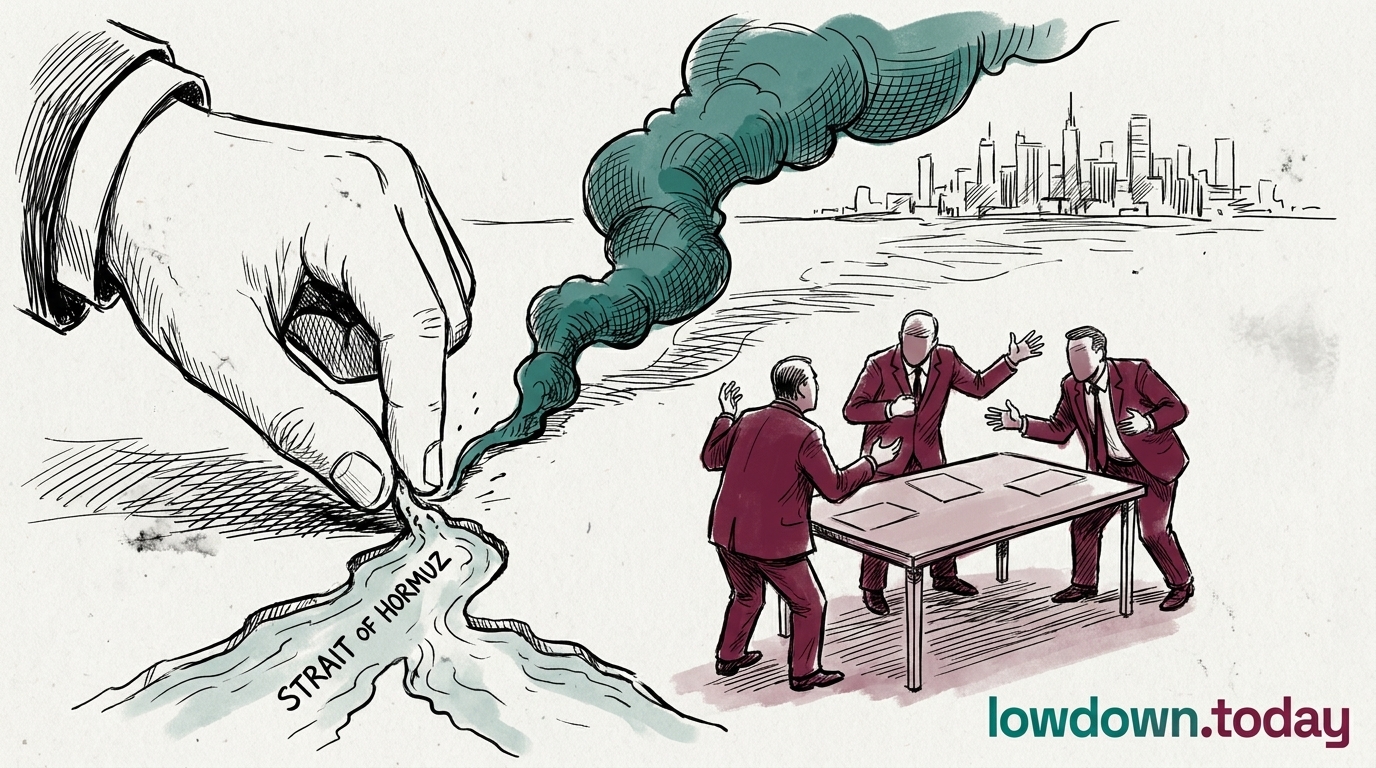
The energy disruption has split into two independent crises. The military crisis is visible: Iranian strikes on energy infrastructure have escalated from Bahrain's BAPCO refinery through Fujairah port to Saudi Arabia's Shaybah mega-field. The structural crisis is less visible and will outlast the fighting.

Every major Protection and Indemnity club cancelled war risk coverage at midnight on 5 March. More than 150 commercial vessels sit at anchor in The Gulf of Oman and Arabian Sea. The CSIS estimated the first 100 hours of the conflict at $3.7 billion; the daily cost of stranded shipping runs in addition. Trump's Development Finance Corporation insurance programme and Navy convoy escorts remain non-operational.

Previous Gulf crises — the 1973 embargo, the 1979 revolution, the 1990 invasion of Kuwait — each drove oil higher over weeks or months. This shock has compressed a comparable move into eight days because it combines a chokepoint closure — the strait of Hormuz handles roughly 21% of daily global oil consumption — with the failure of the commercial insurance infrastructure that makes tanker transit possible.

Deep Analysis

In plain English

Shipping companies operating in war zones normally buy 'war risk insurance' to cover their vessels if damaged. Every major insurer in this market has cancelled that coverage. Without insurance, ships cannot legally dock at most major ports worldwide — port regulations in the vast majority of countries require valid cover as a condition of entry — and banks will not finance cargo without it. This is effectively a maritime blockade imposed by the insurance market, not by any military force. Critically, even if a ceasefire happened tomorrow, the insurers would require weeks of actuarial reassessment, internal committee approvals, and reinsurance treaty renegotiations before coverage could resume — meaning the economic disruption has a built-in delay that no political decision can shortcut.

Deep Analysis
Synthesis

The body identifies the two-timeline structure but does not surface the critical asymmetry: military operations can be halted by political decision within hours, but insurance market re-entry requires actuarial reassessment, committee approval, reinsurance treaty renegotiation, and port state control regulatory sign-off across multiple jurisdictions in sequence. The floor on economic disruption duration is therefore a structural property of insurance market governance, not a function of the conflict's length — a ceasefire does not start the clock; it merely removes the primary obstacle to an independently slow process.

Root Causes

The simultaneous cancellation by all major P&I clubs — rather than sharp premium increases — reflects a structural shift in marine insurance governance that post-dates 2020: clubs adopted concentration-risk protocols treating fleet-wide war zone exposure as systemic rather than individual-vessel risk. This means reinstatement is a governance decision requiring formal committee votes and reinsurance treaty renegotiation across multiple jurisdictions, not a market-clearing event that resolves automatically when risk falls. The withdrawal is policy-driven rather than purely actuarial.

What could happen next?
2 consequence2 risk1 precedent
  • Consequence

    Commercial shipping cannot resume immediately upon ceasefire; insurance reassessment governance cycles impose a structural minimum delay of four to six weeks, locking in supply disruptions independent of the military outcome.

    Short term · Assessed
  • Risk

    Oil-importing emerging market central banks face a policy trap: defending currencies requires rate rises that suppress growth, while accepting depreciation imports further inflation — sovereign debt stress in high-import-dependency economies is a plausible near-term consequence.

    Short term · Assessed
  • Risk

    Kuwait's output cuts coincide with the Shaybah targeting, simultaneously removing two sources of Gulf spare capacity that OPEC-plus normally deploys to cap price spikes — the buffer against the $150 scenario is structurally smaller than aggregate OPEC spare capacity figures suggest.

    Immediate · Assessed
  • Consequence

    Airlines, fertiliser producers, and petrochemical manufacturers with forward hedges priced below $80 per barrel face unhedged exposure on above-contract consumption volumes, compressing margins across energy-intensive industrial sectors through at least mid-2026.

    Short term · Suggested
  • Precedent

    Simultaneous market-wide P&I cancellation — rather than premium escalation — establishes a new industry norm for conflict-zone exit that will accelerate future insurance withdrawals in comparable scenarios, amplifying the economic disruption multiplier in future Gulf or Strait crises.

    Long term · Suggested
First Reported In

Update #25 · Russia shares targeting data on US forces

Bloomberg· 7 Mar 2026
Read original →
Different Perspectives
International Energy Agency
G7 members agreed on 2 October to release up to 100 million barrels through the IEA over four months, front-loading diesel.
China
China
China signed the 15 October text reaffirming the Resolution 2216 arms embargo on the Houthis. The Wall Street Journal reported that Conflict Armament Research found Chinese parts in a Houthi copy of Iran's Kheibarshekan missile.
Russia
Russia
Russia joined the 15 October consensus condemning the Houthis, a month after vetoing a mandate for a UN panel of experts on Iran sanctions on 17 September. One Western official told Bloomberg that Moscow is providing Iran with missiles, and the White House rejected the assessment.
India
India
National Security Adviser Ajit Doval raised seafarer safety with Mohsen Rezaei on 12 October, after a drone hit the Petro Dolphin with 11 Indians aboard at Sohar. External Affairs Minister S. Jaishankar urged that attacks on commercial shipping and seafarers be avoided.
Lebanon
Lebanon
President Joseph Aoun met UN peacekeeping chief Jean-Pierre Lacroix in Beirut on 14 October as UNIFIL winds down before its mandate ends on 31 December. Two days later Qatar's prime minister pledged in Beirut to fund a solar plant for Lebanon.
Kataib Hezbollah
Kataib Hezbollah
The militia announced a halt to operations except against "hostile aircraft" and denied any disarmament deal with Prime Minister Ali al-Zaidi. A day later Quds Force chief Esmail Qaani urged eliminating "remaining traces of the US presence in other arenas".

Written with AI from Lowdown's published reporting. Not individually reviewed by an editor. Editorial standards.