Skip to content
Briefings are running a touch slower this week while we rebuild the foundations.See roadmap
Iran Conflict 2026
9MAY

Iran's 10-point reply, Trump's 14-second rejection

5 min read
17:21UTC

Iran delivered a 10-point reply to Washington's 14-point MOU through Pakistan on Sunday 10 May; Trump rejected it on Truth Social hours later.

ConflictDeveloping
Key takeaway

Tehran wrote, Washington tweeted, and the second Islamabad round opens with no shared text.

Iran transmitted a written 10-point reply to the US 14-point Memorandum of Understanding (MOU) through Islamabad on Sunday 10 May 2026. IRNA, Iran's state news agency, confirmed the transmission inside the same news cycle 1. Hours later, Donald Trump posted on Truth Social that the response was "TOTALLY UNACCEPTABLE" 2. Trump's 10 May anticipation of a reply thus collapsed into rejection on the same day, closing a window Tehran had already missed once when it let the 9 May deadline pass .

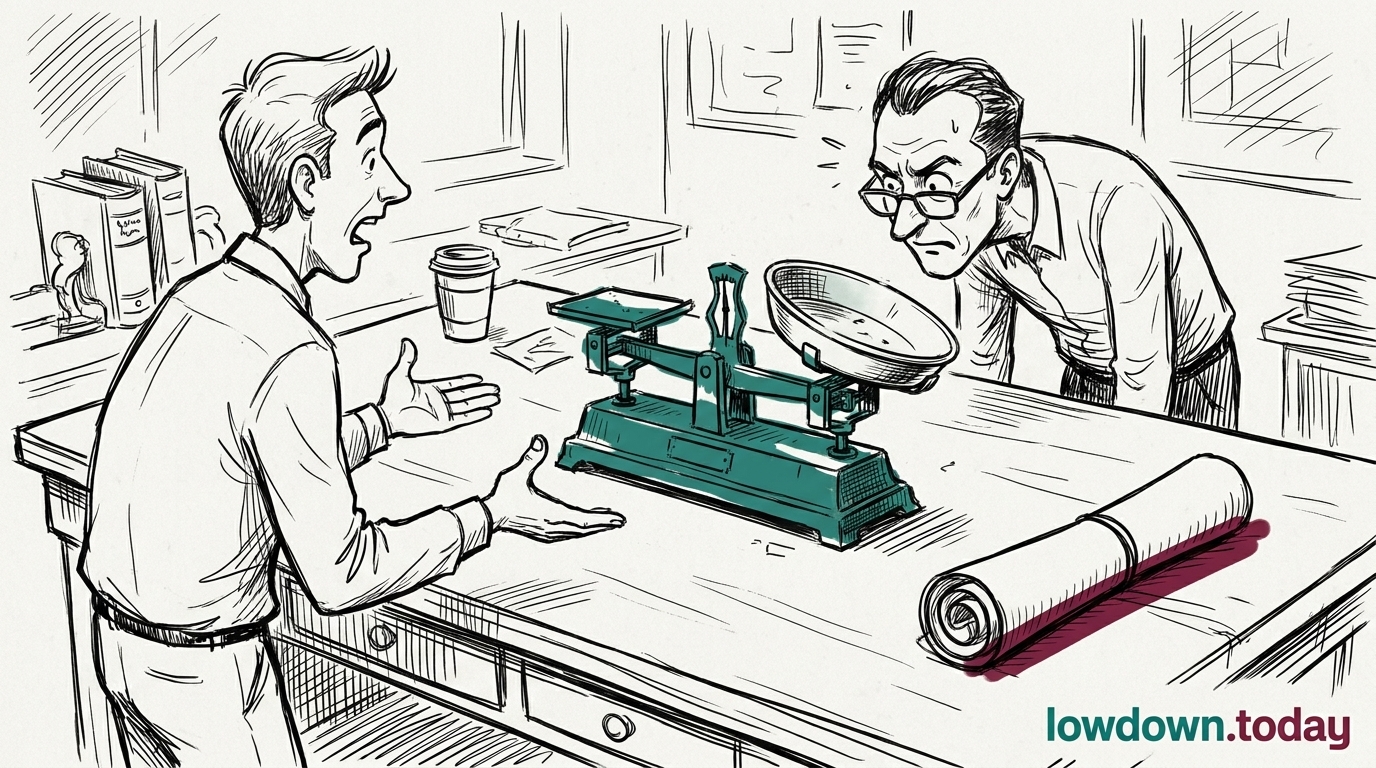
The MOU is a one-page document drafted in Washington. It packages a Hormuz reopening, an Iranian nuclear-enrichment moratorium, and partial sanctions lifting into a 30-day detailed-negotiation window once both sides accept the frame. Fararu, an Iranian conservative outlet, reports Tehran's counter runs to ten points, not fourteen. The two governments are working from different documents, not different positions on the same document, and English-language wire copy has yet to flag the discrepancy. For Ishaq Dar, Pakistan's foreign minister and the conduit of choice since the back-channel opened, that means there is no shared instrument in the room to caucus around. CNN reports a second Islamabad round is scheduled for the week beginning 11 May.

The shape of the rejection matters as much as its content. Trump's first peace document went to Tehran on 7 May ; that one travelled by diplomatic transmission, with Baqaei confirming receipt. Sunday's reply ran the same route in reverse, yet the rejection broke the format: a public post, not a written counter-text, not a fresh executive order, not a new OFAC designation. The White House presidential-actions index records zero signed Iran instruments on the 73rd consecutive day; the most recent executive order, dated 1 May, targets Cuba. OFAC moved on standing authority when it added Chang Guang Satellite Technology Co., China's largest commercial synthetic-aperture-radar operator, to its arms-transfer sanctions on 8 May, not on a fresh presidential signature.

The 1994 Agreed Framework with North Korea ran on a single agreed text. The JCPOA ran on a single agreed text. A negotiation where Tehran holds ten points and Washington holds fourteen has no shared instrument to amend, and the rejection-by-tweet of a transmitted-by-Pakistan document raises the diplomatic cost for the mediator faster than for either principal. Pakistan's back-channel is the only surviving bilateral conduit between Tehran and Washington, and Dar's ministry must now rebuild a process Truth Social has just broken.


Deep Analysis

In plain English

Iran and the US have been exchanging peace proposals through Pakistan's foreign minister. Think of it like negotiating a contract, but instead of marking up the same document, each side sent a completely different version. America sent a 14-point list of conditions; Iran sent back a 10-point list. These aren't just different positions on the same issues: they're structured differently, which means neither side is literally working from the same piece of paper. When Trump saw Iran's reply, he posted 'TOTALLY UNACCEPTABLE' on social media. That sent oil markets, which had been calm in anticipation of a deal, sharply higher in Asian trading on Monday. The reason oil matters here is that the Strait of Hormuz, a narrow waterway Iran controls, is how roughly a fifth of the world's oil gets to market. Every sign talks might be failing pushes oil prices up, which eventually shows up at the petrol pump.

Deep Analysis
Root Causes

The document-count divergence has three structural roots that operate independently of any single negotiating position.

First, Iran's Supreme Leader Mojtaba Khamenei has communicated exclusively through handwritten messages in sealed envelopes since March 2026, a governance mode that prevents any Iranian negotiating team from obtaining rapid real-time clarification on which of the 14 US points are acceptable. The 10-point counter is therefore as much a product of internal Iranian process constraints as it is of substantive disagreement.

Second, the IAEA has been locked out of all Iranian nuclear facilities since the Majlis 221-0 vote of 11 April 2026. This verification void means the US MOU's uranium-surrender demand, at the core of the document architecture, rests on no independently verifiable Iranian nuclear inventory. Iran's compression of 14 points to 10 systematically removes the verification provisions that require IAEA access, because Tehran has no mechanism to offer credible verification it has already denied.

Third, the White House's 73 consecutive days without a signed Iran executive instrument creates a structural ambiguity: Iran's negotiators cannot determine whether Trump's Truth Social rejection constitutes official US government policy or a presidential social-media reflex.

OFAC has continued to designate targets under standing authority without new presidential signatures, meaning US government behaviour and presidential statements have operated on different tracks throughout the MOU process, making it structurally rational for Tehran to treat any presidential social-media post as a working document rather than a legally binding rejection.

What could happen next?
2 consequence2 risk1 precedent
  • Consequence

    Pakistan's diplomatic credibility as an intermediary erodes each time it transmits a document that receives a public social-media rejection before a diplomatic response; Ishaq Dar must now seek a structural mandate upgrade, from courier to co-drafter, to keep the channel viable.

    Short term · 0.78
  • Risk

    The absence of a single agreed text means there is no common framework to which either party can be held; without such a text, any future partial agreement can be disavowed as a misunderstanding of which document was being accepted.

    Medium term · 0.82
  • Precedent

    The 10-versus-14 gap sets a precedent that Iran will not negotiate within a US-drafted framework document, which constrains future US diplomacy to either accepting Iranian-drafted starting texts or finding a neutral co-drafting venue.

    Long term · 0.71
  • Consequence

    Brent above the $101 Hormuz premium floor for a sustained period will begin to affect airline fuel hedging contracts and USPS/FedEx fuel surcharge calculations, pushing consumer price impacts beyond the forecourt into freight and parcels.

    Short term · 0.74
  • Risk

    The 73-day gap between presidential statement and signed instrument means any MOU, if eventually signed, will face legal challenges about whether Trump's Truth Social posts constituted binding US positions, a question that could delay congressional ratification or OFAC implementation.

    Medium term · 0.65
First Reported In

Update #94 · Tehran writes, Trump tweets, Brent breaks

Seoul Economic Daily (IRNA wire)· 11 May 2026
Read original
Different Perspectives
Israel
Israel
Israeli strikes on Hezbollah positions in Lebanon continued through the weekend, maintaining the secondary front. The IDF has publicly named Mojtaba Khamenei as an assassination target; his courier-governance mode complicates targeting but does not remove him from the order.
Russia
Russia
Putin told a Moscow press conference that Washington, not Tehran or Moscow, killed the Russia-custody uranium arrangement by demanding US-territory-only storage. Neither Tehran nor Washington has corroborated the account, which appeared in second-tier outlets only, consistent with a trial balloon rather than a formal position.
United Kingdom
United Kingdom
HMS Dragon was redeployed from the Eastern Mediterranean to the Middle East on 9 May, the first physical European platform commitment to the Gulf. The Ministry of Defence called it "prudent planning" while publishing no rules of engagement, no tasking order, and no vessel name, committing a named asset to a conflict zone before the political instrument authorising it exists.
United Arab Emirates
UAE air defences intercepted two Iranian drones over its territory on 10 May, a kinetic escalation six days after the Fujairah oil terminal strike that drew no formal protest. The three-state simultaneous operation, not the severity of individual strikes, appears to have crossed the threshold at which the GCC states collectively began responding.
Saudi Arabia
Saudi Arabia
Riyadh issued the first formal Gulf-state protest of the conflict on 10 May, demanding an "immediate halt to blatant attacks on territories and territorial waters of Gulf states", ending 10 weeks of channelling displeasure through OPEC+ quota discussions. The protest forecloses Saudi Arabia's preferred quiet-channel role and reduces the functioning back-channel architecture to Pakistan alone.
Qatar
Qatar
Doha is simultaneously a strike target, the site of the Safesea Neha attack 23 nautical miles offshore, and an active MOU mediator: Qatar's prime minister met Rubio and Vance in Washington the same weekend. Whether Qatar issues its own formal protest or maintains its dual role is the critical escalation indicator for the week of 11 May.



