Skip to content
Briefings are running a touch slower this week while we rebuild the foundations.See roadmap
Iran Conflict 2026
4MAY

Northwood plan leaves allied ships exposed

2 min read
10:21UTC

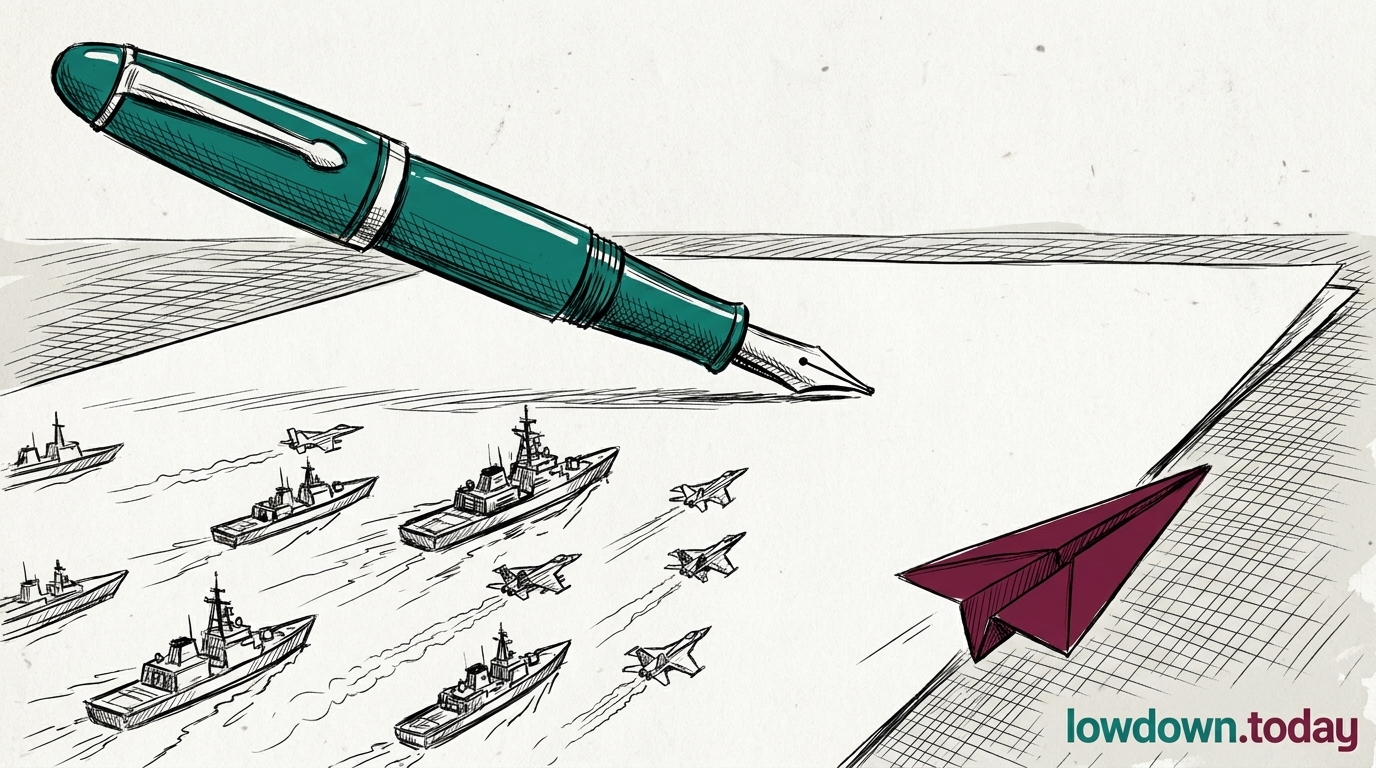
Thirty nations produced an operational Hormuz plan at UK Permanent Joint Headquarters Northwood on 22-23 April. The White House's two-tier ceasefire leaves European, Asian and Gulf-flagged shipping outside the cover.

ConflictDeveloping
Key takeaway

Coalition plan is ready; ceasefire cover is not, and Europe's flagged hulls carry the exposure.

Thirty nations sent military planners to the UK Permanent Joint Headquarters at Northwood on 22-23 April 2026 to translate the 51-nation Paris posture into an operational Strait of Hormuz plan covering warships, armed convoy escorts, mine-hunting drones, radar coverage and intelligence-sharing 1. The Northwood summit itself opened on 22 April . No participating nation published rules of engagement, and the deployment trigger remains "as soon as conditions permit, following a sustainable ceasefire."

The White House confirmed a two-tier ceasefire ruling that explicitly excludes European, Asian and Gulf-flagged shipping from ceasefire cover regardless of escort architecture. Saudi Arabia and the Gulf Cooperation Council (GCC) still sit off the Coalition paper despite Riyadh's welcome of the 21 April ceasefire extension. Every European, Asian or Gulf-flagged vessel in the strait operates without the umbrella the paper would otherwise extend, even when sailing inside a Coalition convoy.

Allied exclusion makes the Northwood architecture coercive of allies as much as of Iran. The Hormuz plan exists on paper at Northwood; the ceasefire that would activate it does not. France, the United Kingdom and the other 28 participants have committed hulls and radar to a framework the United States controls the trigger on, and US reading of ceasefire cover decides which of their hulls are covered when a mine-layer breaks for open water.

The Pentagon email leaked on 24 April closes the loop. European capitals that declined the Iran-campaign ABO request are the same capitals that now watch their flagged shipping sit outside the ceasefire bubble. Article 42.7 of the EU treaty, the mutual-defence clause raised at the Cyprus summit, is the institutional counterweight, but it reaches the flag rather than the cargo, and the cargoes are already at sea.

Deep Analysis

In plain English

Thirty countries sent military planners to Northwood, the UK's military command headquarters outside London, to turn the paper promise from the 51-nation Paris conference into an actual military plan: which warships, which drone mine-hunters, which radar systems, and who shares intelligence with whom. Activation requires a 'sustainable ceasefire': no government or coalition has published a definition of that term, and the US attended neither the Paris conference nor the Northwood summit. Thirty countries have agreed on paper how to police Hormuz after the war, but the deployment clock cannot start until someone else writes the ceasefire text that triggers it, using a legal framework Washington did not help draft.

What could happen next?
  • Precedent

    Rules of engagement drafted at Northwood by UK and French officers under UNCLOS transit-passage doctrine will form the legal baseline for Hormuz management post-war, creating a multilateral framework any subsequent US arrangement must negotiate against rather than replace unilaterally.

First Reported In

Update #78 · Allies flagged, adversaries listed, nothing signed

GOV.UK· 24 Apr 2026
Read original
Different Perspectives
International human rights monitors (NetBlocks, IHR, Hengaw)
NetBlocks recorded 1,704 cumulative hours of near-total internet blackout for roughly 90 million Iranians on Day 74, while IHR documented ongoing executions under emergency provisions. These organisations are the only active monitoring windows into a civilian population cut off from the global internet for 71 consecutive days.
UK / France coalition
The Royal Navy confirmed HMS Dragon's Hormuz deployment on its own website on 11 May, converting a press-reported presence into declared force posture; UK and French defence ministers hosted a coalition meeting the same day. Britain and France are now the only named contributors to a Hormuz escort mission all five allies Trump originally asked had declined.
Saudi Aramco / Gulf producers
Saudi Aramco CEO Amin Nasser warned on 11 May that a Hormuz closure could remove 100 million barrels of weekly supply from global markets (roughly 15 million barrels per day for a week), a figure that dwarfs any OPEC+ swing capacity. The warning functions as both a price-floor signal and a public pressure on Washington to protect transit.
Beijing / Chinese Government
China has not publicly acknowledged the four Hong Kong-registered entities designated on 11 May or extended MOFCOM's Blocking Rules cover to HK-domiciled firms. Xi Jinping hosts Trump on 14–15 May having already de-risked state-bank balance sheets via NFRA's quiet loan halt, entering the summit partially compliant before any negotiation.
Tehran / Iranian Government
Foreign Minister Araghchi described Iran's 10-point counter-proposal as 'reasonable and responsible' via spokesman Baqaei on 11 May, and widened the mediator pool by meeting Turkish, Egyptian, and Dutch counterparts in a single day. Tehran is buying procedural runway while Trump's verbal rejection went unmatched by any written US counter.
Trump White House
Trump White House
Trump called the ceasefire 'on massive life support' and dismissed Iran's 10-point counter-proposal as 'a piece of garbage' on 11 May, while departing for Beijing two days later with no signed Iran instrument to show Congress. The verbal maximum and the paper void coexist: the administration is running a legal pressure campaign through Treasury while the president free-lances the rhetoric.