Skip to content
Briefings are running a touch slower this week while we rebuild the foundations.See roadmap
Iran Conflict 2026
29APR

Iran publishes mine charts converting Hormuz reopening into IRGC corridor

2 min read
09:17UTC
ConflictDeveloping
Key takeaway

Hormuz reopening produced 4 ships and mine charts, not free passage

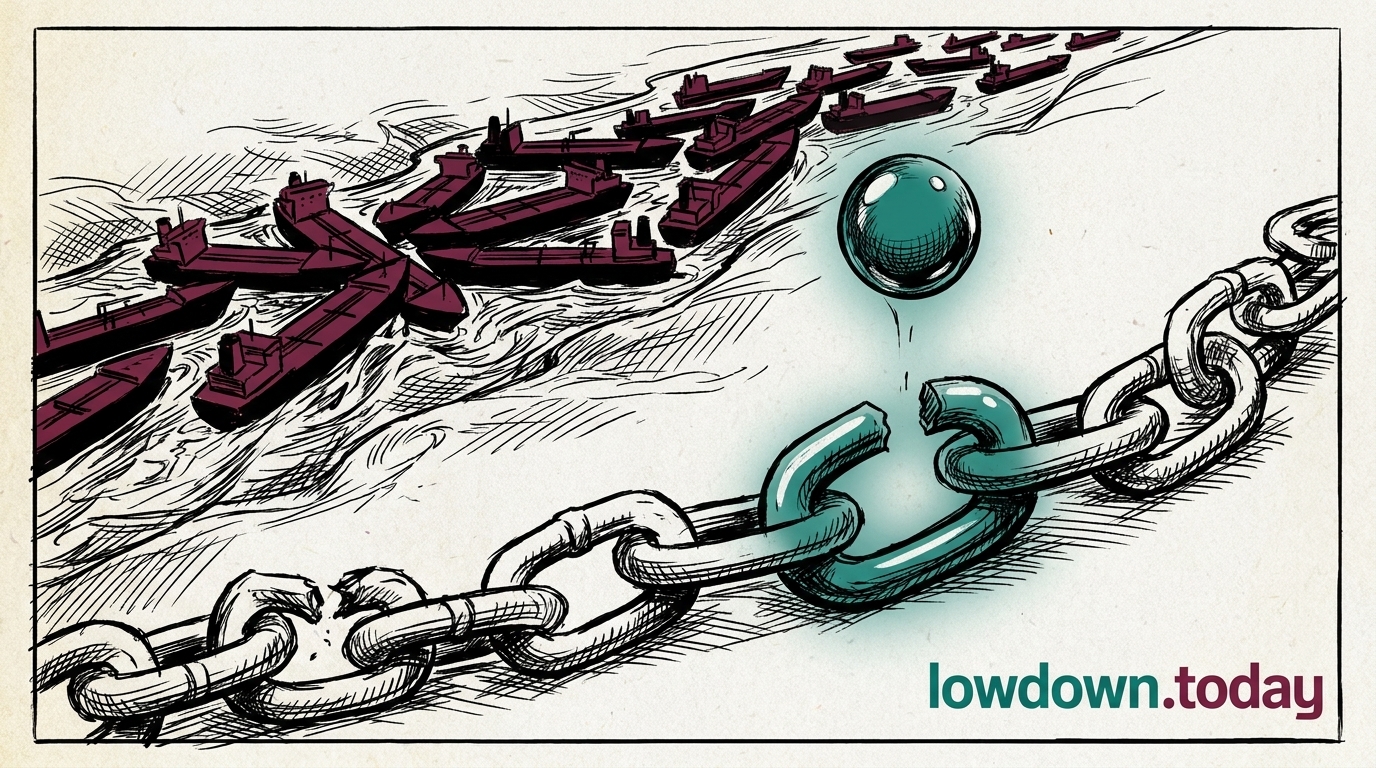
Donald Trump promised a 'COMPLETE, IMMEDIATE, and SAFE OPENING' of the Strait of Hormuz. On ceasefire Day 1, Kpler counted four bulk carriers transiting the strait. Zero crude tankers. Zero LNG carriers. More than 800 vessels remain stuck in the Persian Gulf 1.

The pre-war baseline was 135 transits per day. Iran's toll system, legislated in late March , had lifted traffic to 20 per day across 11 flag states by 5 April . The ceasefire cut that to four. Fewer ships crossed on Day 1 than on any day of the blockade.

ISNA and Tasnim, both linked to the IRGC, published maritime charts on 9 April showing a 'danger zone' over the main Traffic Separation Scheme lanes, dated from 28 February to 9 April 2. The charts direct all vessels to corridors near Larak Island under IRGC naval control 3. The implication: the main shipping lanes are mined. The mines, real or implied, force all traffic through Iran-controlled corridors.

Trump's two-week pause promised SAFE passage. The IRGC's charts promise the opposite: passage is SAFE only where Iran says it is.

Deep Analysis

In plain English

Trump said the strait was reopening. On Day 1, four cargo ships got through, zero oil tankers. Iran published charts showing the main shipping lanes are too dangerous and ships must use routes Iran controls. Eight hundred ships are stuck waiting. The reopening gives Iran more control, not less.

Deep Analysis
Root Causes

Iran's toll legislation in late March codified the blockade before any ceasefire. The mine charts are the physical enforcement layer of a legal framework already in place.

First Reported In

Update #63 · Ceasefire redistributes the war, not ends it

ISNA / Tasnim· 9 Apr 2026
Read original
Different Perspectives
India (BRICS chair / S. Jaishankar)
India's BRICS chair draft communique frames the Iran conflict as a matter of 'safe, unimpeded maritime flows', a formula explicitly neutral on Iran's 'no obstacles' claim and short of endorsing IRGC maritime doctrine. Delhi has maintained separate tracks: a demarche on Iranian tanker firings at Indian-crewed vessels, silence on OFAC designations naming Indian firms.
International Energy Agency
The IEA's May 2026 Oil Market Report quantified the closure at 14.4 million barrels per day shut in, more than one billion barrels of cumulative supply loss, and a 246-million-barrel inventory draw in eight weeks, five times the monthly rate of the 2022 SPR release. The IEA projects a deficit through Q4 2026 even if Hormuz reopens in June.
Pakistan (mediating channel)
Pakistan's intermediary channel between Washington and Tehran remains active despite Trump's 'totally unacceptable' rebuff of Iran's 10-point MOU reply on 11 May. Islamabad carries the only direct US-Iran track and the only channel with both civilian and military buy-in on the Iranian side, but has not convened a second Islamabad round.
Mojtaba Khamenei / IRIB
Iran's state broadcaster reported on 14 May that the Supreme Leader has issued 'new and decisive directives' for military operations, the first such signal since the war began. Mojtaba has not appeared publicly since 28 February; the directives are paper instruments, not verbal statements.
Chinese Ministry of Foreign Affairs
Beijing's official summit readout mentioned 'the Middle East situation' alongside the Ukraine crisis and the Korean Peninsula, without naming Iran or specifying any Iranian commitment. Chinese state media has not published the three red lines Trump described.
White House / Trump administration
Trump told Fox News from Beijing that Xi had committed to three Iran red lines: no nuclear weapon, an open Hormuz, no military equipment supplied to Tehran. He described the summit as 'a big statement'. The White House issued its own readout confirming those commitments; the Chinese Ministry of Foreign Affairs readout did not.