Skip to content
Iran Conflict 2026
21APR

Trump tells Bloomberg extension 'highly unlikely'

3 min read
10:51UTC

Lowdown Bureau / Diplomatic. The president set a verbal deadline to Bloomberg while his own press secretary denied a written US extension request.

ConflictDeveloping
Key takeaway

The Bloomberg deadline is the most precise thing Trump has said about Iran this week and still carries no document.

Donald Trump told Bloomberg that extending the Iran ceasefire was 'highly unlikely' without a deal, and that expiry fell 'Wednesday evening Washington time'. The remark is the clearest presidential commitment to the Wednesday deadline since the ceasefire was announced on a Truth Social post, and the first time the White House has assigned the deadline a precise hour.

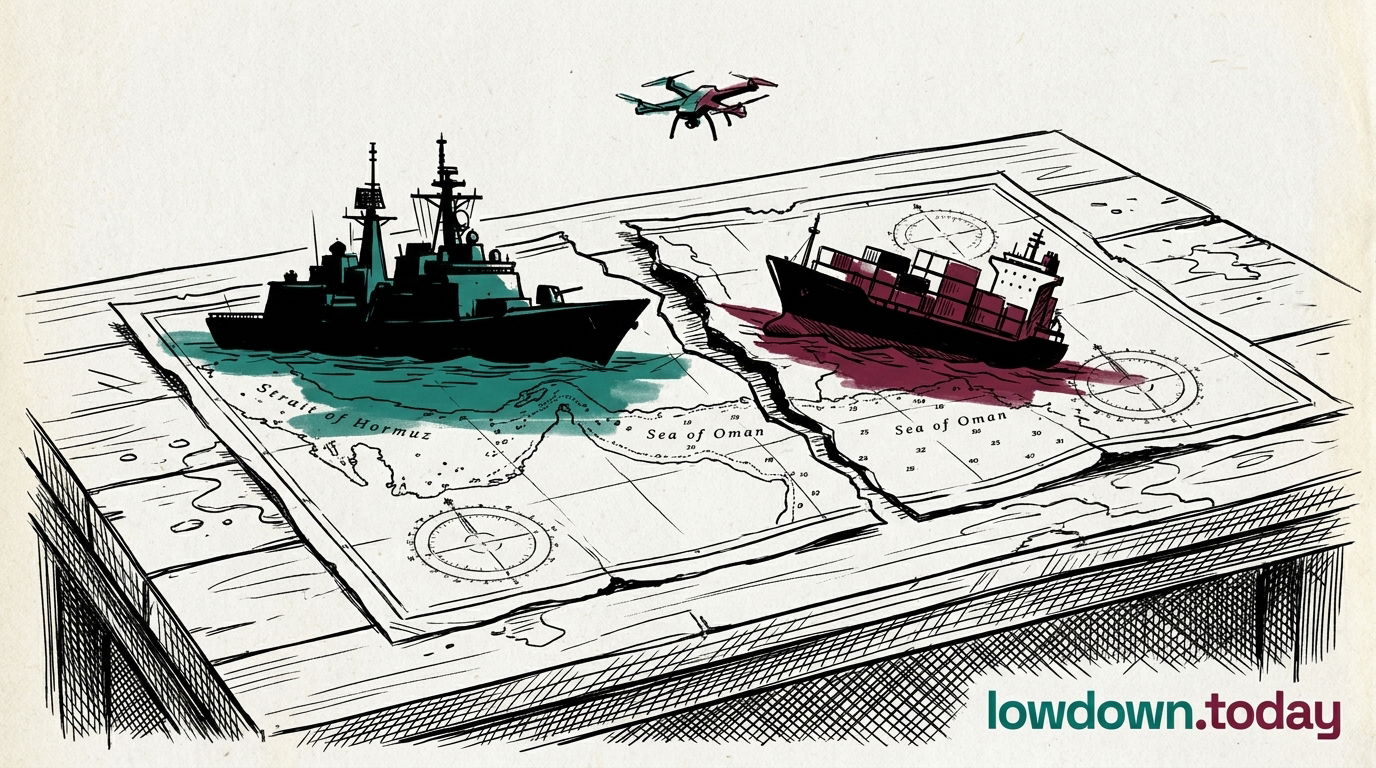
Two kinetic events now sit behind the verbal deadline. The USS Spruance fired into the Touska's engine room overnight, US Marines boarded the vessel, and Iranian state media claimed drone attacks on American Navy ships the following morning. Trump's 'Wednesday evening' line trails both.

The signed White House record runs the other way. Press secretary Karoline Leavitt had already denied, before the Bloomberg interview, that the United States formally requested the 60-day extension regional officials briefed to Reuters and the Associated Press last week . No formal request went on paper; no formal refusal has either. Abbas Araghchi told Pakistani FM Ishaq Dar on Sunday that Iran is 'taking all aspects into consideration' before deciding on talks. Vice President JD Vance's scheduled Islamabad trip on Tuesday is the only diplomatic event between the verbal deadline and its passing.

Through fifty-two days of war, the pattern has held. Trump's public posture on Iran runs entirely through remarks, interviews and social posts. The Federal Register has carried zero Iran-tagged executive text since the war began. The Bloomberg line is the deadline the press will quote; Washington's signed ledger for the week consists of an OFAC designation that named Indian nationals and five domestic-energy instruments. By the architecture of the presidency's own publications, the deadline exists in remarks and nowhere else.

Deep Analysis

In plain English

The ceasefire between the US and Iran expires on Wednesday 22 April at Washington time. Trump told Bloomberg on 20 April that extension was 'highly unlikely' without a deal, and set the expiry time as 'Wednesday evening'. Meanwhile, his press secretary denied that the US had even formally asked for an extension; contradicting reports from unnamed regional officials who told international news agencies the two sides had agreed in principle to extend it. This matters because there is no signed document for this ceasefire. The entire arrangement exists on verbal assurances and media reports. With no legal instrument to extend, 'extension' in practice means both sides simply not resuming hostilities; which is exactly what both did for the previous 52 days without a signed agreement.

Deep Analysis
Root Causes

The contradiction between Trump's 'highly unlikely' statement and Leavitt's denial of a formal extension request reflects a structural feature of the Trump administration's Iran approach: all instruments are verbal and all commitments are deniable.

The White House has produced zero signed Iran executive instruments in 52 days (ID:2591). A press secretary denial of an extension request is only contradictory if a written request existed; with no document, Leavitt can accurately deny a formal request while unnamed regional officials accurately describe an informal understanding.

The ceasefire's informality creates a parallel structural problem for markets: the absence of a signed document means there is no legal mechanism by which an extension can be 'official'. Both sides extending by simply not resuming hostilities is indistinguishable from an informal extension; which is itself indistinguishable from the previous 52 days of undocumented ceasefire operation.

What could happen next?
  • Risk

    Trump's 'highly unlikely' formulation, combined with the Leavitt denial, removes the verbal scaffolding that has sustained the ceasefire since 30 March; without a new signal by Wednesday, markets will price a return to active hostilities.

  • Consequence

    The Leavitt denial creates a documented White House record that the US did not formally request extension; relevant to any subsequent War Powers Resolution dispute about who bears legal responsibility for the ceasefire lapse.

First Reported In

Update #75 · Ceasefire ends in the water, a day early

CNN· 21 Apr 2026
Read original
Different Perspectives
Global South governments (Indonesia, Brazil, South Africa)
Neutrality was possible when the targets were military. 148 dead schoolgirls made it impossible — no government can explain that away to its own citizens.
Trump administration
Oscillating between claiming diplomatic progress and threatening escalation, while deploying additional ground forces to the Gulf.
Pakistan government
Pakistan government
Positioning as indispensable mediator by confirming indirect talks, but unable to bridge the substantive gap between both sides' incompatible demands.
Israeli security establishment
Fears a rapid, vague US-Iran agreement that freezes military operations before the IDF achieves what it considers full strategic objectives. A senior military official assessed the campaign is 'halfway there' and needs several more weeks.
Iraqi government
Iraqi government
Iraq's force majeure is the position of a non-belligerent whose entire petroleum economy has been paralysed by a war between others — storage full, exports blocked, production being cut with no timeline for resumption.
Russia — Ambassador Vassily Nebenzia
Moscow calibrated its position between Gulf states and Iran: abstaining on Resolution 2817 rather than vetoing it, signalling it would not block protection for Gulf states, while refusing to endorse a text that ignores the US-Israeli campaign it regards as the conflict's proximate cause. Russia proposed its own ceasefire text — which failed 4-2-9 — allowing Moscow to claim the peacemaker role while providing Iran with satellite targeting intelligence, a duality consistent with its approach in Syria.