Skip to content
Briefings are running a touch slower this week while we rebuild the foundations.See roadmap
Iran Conflict 2026
21APR

Trump Replaces Own Deadline With Fourth Ultimatum

2 min read
10:51UTC

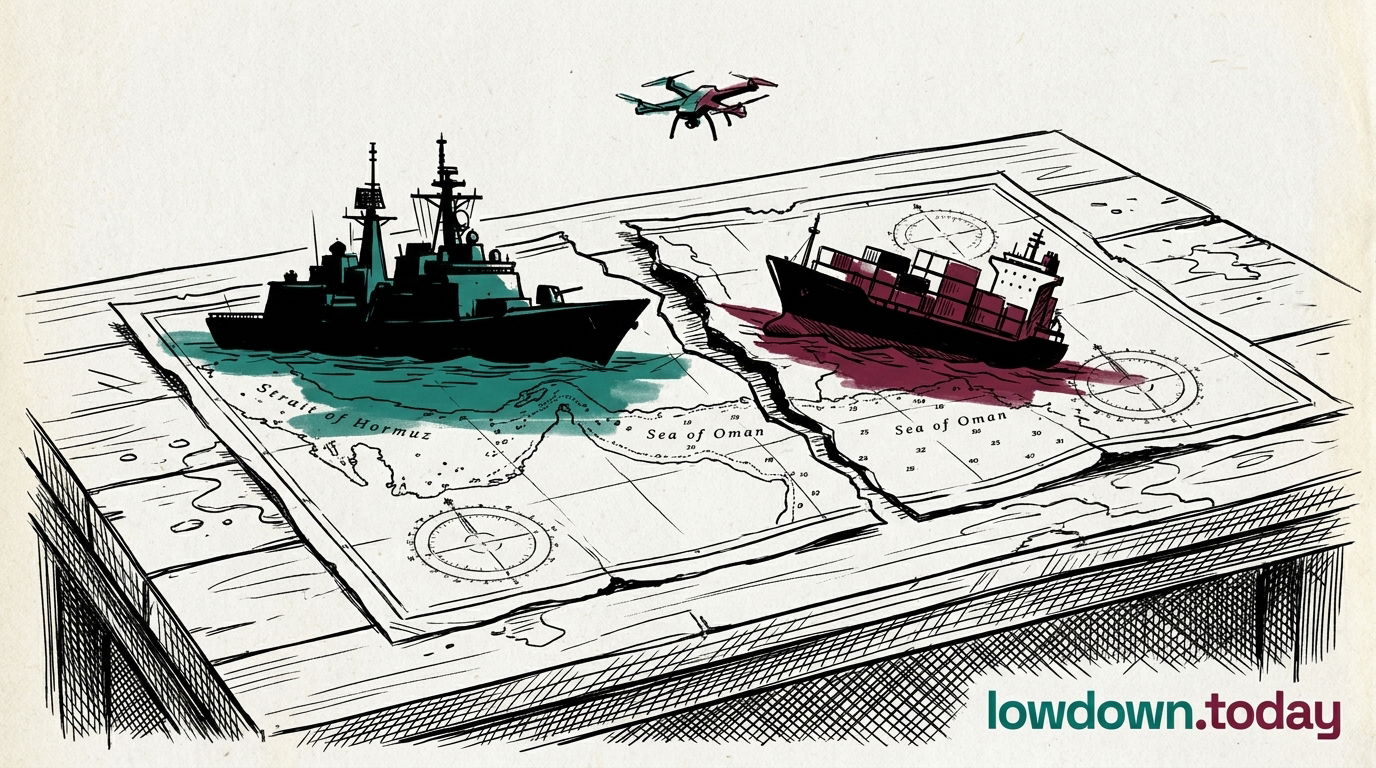
The 6 April power-grid threat has been displaced by a 48-hour Hormuz demand expiring Monday. It is the fourth reformulation in six weeks.

ConflictAssessed
Key takeaway

Four deadlines in six weeks with zero enforcement has exhausted the threat's credibility.

Donald Trump issued a new 48-hour Hormuz ultimatum via Truth Social on 4 April, superseding his own 6 April power-grid deadline : "Time is running out, 48 hours before all Hell will reign down on them." The new expiry is Monday 7 April. 1

The threat changed shape again. The March deadline targeted 15 identified power grid nodes. The April formulation threatens power plants, oil facilities, and "possibly all desalination plants." The 16 March deadline was extended to 23 March. The 23 March deadline was extended to 6 April. The 6 April deadline was displaced, not extended, by an entirely new ultimatum issued 24 hours before its expiry. Four coercive ultimatums in 42 days, none acted upon.

Ceasefire talks are at a "dead end" per the Wall Street Journal on 3 April. 2 Iran refused to meet US officials in Islamabad. Iran's conditions (reparations, US base withdrawal, guarantees against future attacks) and Washington's single demand (reopen Hormuz) share no overlap. General Aliabadi dismissed Trump as "helpless, nervous, unbalanced and stupid." The deadline mechanism no longer functions as coercive leverage. It functions as domestic political communication.

Deep Analysis

In plain English

In the past six weeks, the US president has set four separate deadlines for Iran to reopen a critical shipping lane, each time threatening to attack Iranian infrastructure if the deadline was not met. None of the four deadlines has been enforced. This is a problem for whoever issues the next threat. In diplomacy, a threat only works if the other side believes you will actually do it. Four unanswered threats suggest you might not, which makes the fifth threat easier to ignore.

What could happen next?
  • Consequence

    The credibility of US coercive diplomacy toward Iran has been materially degraded by four unenforced ultimatums. Restoring it requires either enforcement or a fundamentally different coercive instrument.

First Reported In

Update #59 · Day 37: A Ground War Inside Iran That Nobody Will Name

Jerusalem Post· 5 Apr 2026
Read original
Different Perspectives
Israel
Israel
The IDF struck a Lebanese army unit on 6 June, killing a colonel, and privately told Moscow that shelling near Bushehr was accidental, per Putin's SPIEF disclosure. Israel is advancing in Lebanon past an unenforced ceasefire text while maintaining a back-channel to Russia on nuclear-site deconfliction.
Lebanon
Lebanon
President Aoun told CNN on 5 June that Iran uses Lebanon as a bargaining chip and urged Hezbollah toward diplomacy; on 6 June an IDF strike killed a Lebanese army colonel on the Khardali-Nabatieh road. The Lebanese state is publicly rejecting Iranian tutelage while the army sustains casualties from Israeli fire and the Washington framework remains unenforced.
Bahrain
Bahrain
Bahrain's US Fifth Fleet headquarters was among the targets in the 5-6 June two-country salvo; its PAC-3 magazine stands at 87 per cent depletion with an 18-month resupply gap and no comparable arms sale has been announced. The state is defending a critical US regional command on a thinning interceptor stock.
Kuwait
Kuwait
Kuwait received a $1.98bn US counter-drone sale approval on the same day IRGC missiles targeted its bases; it expelled two Iranian diplomats on 4 June and filed a formal protest. The arms approval gives Kuwait a future capability but leaves a 6-18 month delivery gap that the salvo tempo is already pressing.
Russia
Russia
Putin reaffirmed Russia's offer to hold Iran's 440.9 kg HEU at SPIEF on 6 June, said Russia is not arming Iran, and disclosed that both the US and Israel privately told Moscow that shelling near Bushehr was accidental. The restatement casts Moscow as the only remaining mediator both sides call, a position serving Russian interests whatever the nuclear file produces.
Iran
Iran
The IRGC, per Iranian state media, fired seven ballistic missiles at US bases in Kuwait and Bahrain, the largest two-country salvo of the war, and framed the launches as lawful retaliation; Foreign Minister Araghchi rejected Aoun's bargaining-chip accusation and Velayati warned Beirut against diplomatic naivety. Tehran has sent no HEU counter-proposal since Araghchi confirmed no progress on 4 June.