Skip to content
Briefings are running a touch slower this week while we rebuild the foundations.See roadmap
Iran Conflict 2026
20APR

Istanbul Talks End in an Hour, No Territory

3 min read
10:10UTC

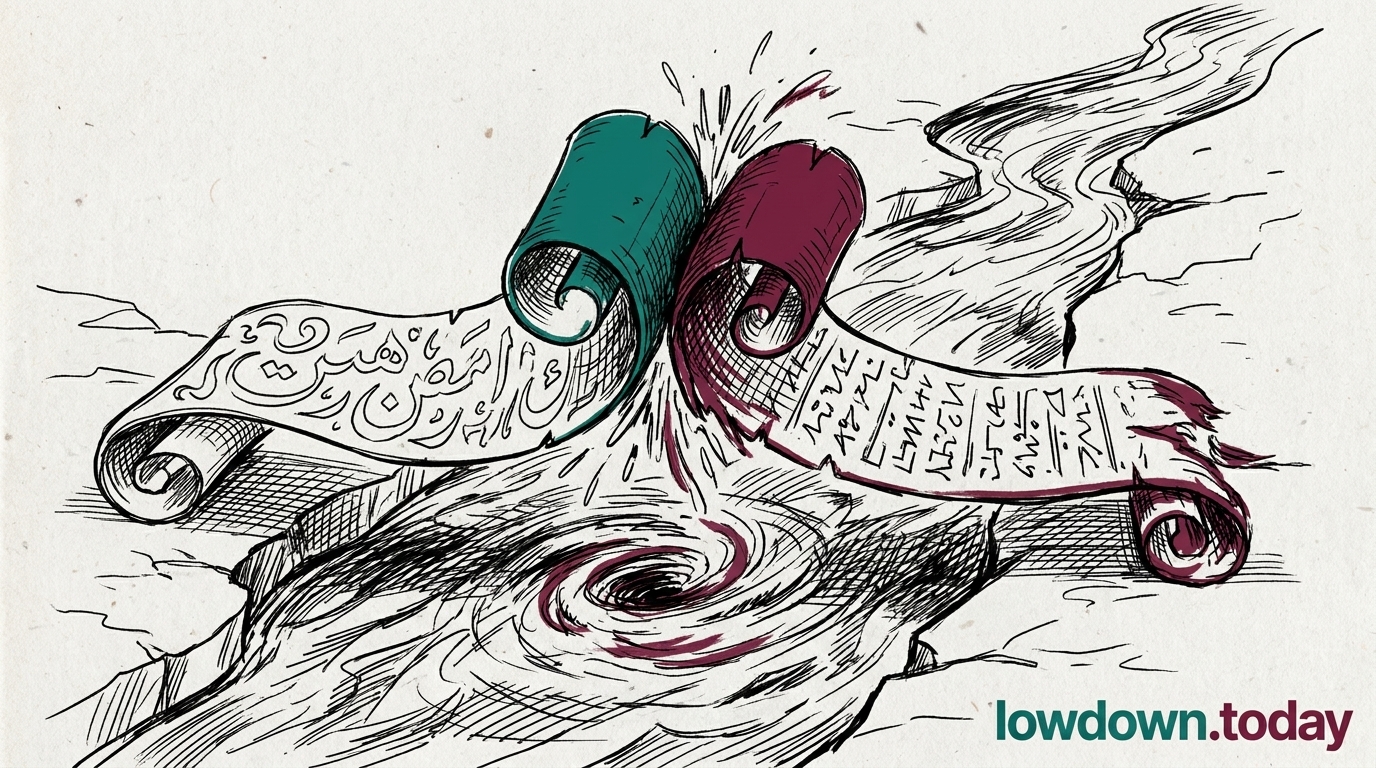
Russia and Ukraine met face to face for the first time since March 2022 on Saturday 16 May, agreed a 1,000-prisoner deal at Dolmabahce Palace, and closed inside the hour with Moscow's territorial demand untouched.

ConflictDeveloping
Key takeaway

Russia accepted Istanbul because the venue lets the territorial demand stay public at no cost on the table.

Russia and Ukraine opened direct talks at the Dolmabahce Palace in Istanbul on Saturday 16 May 2026 under Turkish hosting and closed them inside the hour. The delegations signed a 1,000-for-1,000 prisoner exchange, executed a 205-for-205 first tranche on 15-16 May, and parted without movement on Moscow's standing precondition: full Ukrainian withdrawal from Donetsk, Luhansk, Zaporizhzhia and Kherson before any ceasefire 1.

Volodymyr Zelenskyy met Recep Tayyip Erdogan in Ankara for nearly three hours on Friday 15 May, declined to attend the Istanbul session personally, and dispatched Defence Minister Rustem Umerov to lead the Ukrainian team. Russia sent Putin aide Vladimir Medinsky, the same official who led Moscow's failed 2022 Istanbul track. The format Erdogan brokered is bilateral, runs without Washington in the room, and produced only the symbolic deliverable Moscow could afford to part with.

Trump's 9-11 May three-day ceasefire templates had collapsed without any signed instrument . Putin called the war 'coming to an end' on 9 May while Peskov re-stated that any summit requires a pre-finalised treaty . The 1,000-prisoner swap itself had been blocked at the announcement stage when Putin denied Ukraine had submitted a list . Eight days later the same deal was signed in person, 205 each side walked free on the 15-16 May tranche, 795 each side remain 2.

Moscow accepted Istanbul because the venue costs it nothing on territory and lets Putin perform engagement to domestic and international audiences while the maximalist demand stays public. Medinsky's reappointment matters: in 2022 his draft sought structural disarmament of Ukrainian forces and constitutional change. Returning him to the table without changing the brief signals Moscow has not updated the text. A second meeting has been signalled but no date is set as of Friday 22 May, and each side has agreed to exchange written ceasefire proposals in advance.

Deep Analysis

In plain English

Russia and Ukraine sat in the same room for the first time in three years on Saturday 16 May. They met at a palace in Istanbul, Turkey, spent about an hour together, agreed to swap 1,000 prisoners, and left. No agreement was reached on stopping the fighting. Russia's condition for any ceasefire is that Ukraine must hand over four regions Russia claims to own, including areas Ukraine still controls. Ukraine says it will not accept that. The talks were hosted by Turkey's president Erdogan, and Washington sent no representative. Both sides agreed to put their ceasefire ideas in writing before a second meeting. No date for that second meeting has been set.

Deep Analysis
Root Causes

The 2022 Istanbul collapse created a bilateral template Moscow can re-enter without legitimising the trilateral US-Russia-Ukraine geometry Kirill Dmitriev has been building in Washington. That architecture matters: Putin can perform engagement in Istanbul while maintaining that a Washington-brokered format would require recognising US mediation authority.

The economic floor matters separately. Russia's Q1 deficit overshoot and the refinery campaign's drag on fuel supply create a window in which being seen to talk is marginally cheaper than refusing. But agreeing to anything written remains too expensive domestically: the four-region withdrawal precondition is the domestic political anchor the Kremlin cannot remove without a larger face-saving construct.

What could happen next?
  • Consequence

    Moscow gains a 'peace talks' news cycle that complicates Western pressure to accelerate arms deliveries before the NATO Ankara summit on 7-8 July.

    Short term · Assessed
  • Risk

    If no second meeting date is set by mid-June, the Istanbul format will be retrospectively read as a single-session photo opportunity, removing Erdogan's mediation leverage and pushing pressure back onto Washington.

    Short term · Reported
  • Precedent

    The bilateral format without Washington sets a template Moscow will insist on for any subsequent round, structurally excluding the US from the negotiating geometry Putin finds most threatening.

    Medium term · Reported
First Reported In

Update #17 · Istanbul talks, refineries dark, deficit overruns

US News / Reuters· 22 May 2026
Read original
Different Perspectives
Israel
Israel
IDF Chief Eyal Zamir declared on 3 June there was no ceasefire for his forces, and strikes killed at least 10 civilians and one Israeli soldier on 4 June. The IDF killed Hezbollah's chief engineer and warned three south Lebanon villages to evacuate on 5 June, advancing into ground the unsigned Washington framework has not caught.
Hezbollah / Lebanon
Hezbollah / Lebanon
Naim Qassem rejected the Washington Lebanon framework on 4 June as "absurd, humiliating and insulting", blocking a ceasefire instrument that required Hezbollah to withdraw north of the Litani before any Israeli withdrawal. Over one million Lebanese remain displaced; the framework's collapse prolongs that toll.
Iran
Iran
Foreign Minister Araghchi publicly coupled the Lebanon ceasefire to the Iran-US nuclear track on 4 June, carrying IRGC authority rather than his own civilian mandate. The IRGC delegation has sent no HEU counter-proposal since Araghchi confirmed no progress that same day; Mojtaba Khamenei's 21 May order to keep the 440.9 kg stockpile inside Iran remains operative.
United States
United States
Rubio placed the Iran-US deal at 95 per cent complete on 4 June while the administration signed no Iran instrument and OFAC designated only Cuban targets. Trump separately disclosed and rejected an airlift plan to collect Iran's HEU stockpile, claiming the material is "entombed", a claim the IAEA cannot verify.
China
China
Beijing's MOFCOM Blocking Rules constrain OFAC enforcement on the mainland; China has not corroborated Trump's verbal account of any bilateral summit, and the rial's failure to hold its Rubio bounce, combined with the IRGC's stablecoin rail closure, increases Chinese yuan-denominated oil-payment exposure through Hormuz.
Bahrain
Bahrain
The IRGC struck Bahrain on 3 June as its sirens sounded and its PAC-3 magazine neared exhaustion; excluded from Rubio's 2 May emergency resupply, Bahrain received a 50-round Federal Register notice on 1 June on an 18-month delivery timeline, meaning it is defending the US Fifth Fleet headquarters on the last rounds it has.