Skip to content
You can now search across every topic, entity and event.What's new
Iran Conflict 2026
18APR

Trump threatens new target groups

2 min read
14:57UTC

A Truth Social post expands stated US war aims to unnamed categories of targets — language without precedent in modern presidential rhetoric and with direct implications under the laws of war.

ConflictDeveloping

President Trump posted on Truth Social on Saturday morning: "Today Iran will be hit very hard! Under serious consideration for complete destruction and certain death, because of Iran's bad behavior, are areas and groups of people that were not considered for targeting up until this moment in time." Bloomberg ran the headline: "Trump Says US May Target New Parts of Iran." The phrase has no precedent in modern US presidential targeting rhetoric. Prior targets in this campaign have been military: IRGC bases, missile sites, naval vessels, air defences, command infrastructure.

The statement extends a trajectory documented across eight days. Trump demanded unconditional surrender on 5 March , then issued immunity-or-death ultimatums directly to IRGC commanders via social media . CENTCOM was subsequently directed to "dismantle the Iranian regime's security apparatus" — a war aim encompassing the IRGC, Basij, MOIS, and internal security forces , materially different from the campaign's opening framing of nuclear facilities and missile infrastructure. Each step broadened the stated objective. None was accompanied by a diplomatic mechanism to give it operational meaning. Foreign Minister Araghchi publicly closed the door on negotiations . The Egypt-Turkey-Oman mediation has produced no confirmed participants. Congress has rejected war authorisation in both chambers — 212–219 in the House and 47–53 in the Senate .

"Areas" not previously considered could mean cultural heritage sites, civilian government buildings, or infrastructure sustaining the civilian population — power grids, water treatment, telecommunications. "Groups of people" could refer to remaining IRGC leadership, civilian government officials, or religious figures. The United States is not party to Additional Protocol I of the Geneva Conventions but is bound by customary International humanitarian law, including the principle of distinction — the requirement to differentiate between military objectives and civilian objects. The DoD Law of War Manual, which governs US forces, prohibits attacks directed at the civilian population as such. Commanders who receive orders derived from this statement must evaluate them against these requirements. Under the Uniform Code of Military Justice, personal criminal liability attaches to service members who knowingly execute unlawful orders.

Trump separately cast Pezeshkian's televised apology as a form of surrender. Pezeshkian explicitly rejected the unconditional surrender demand, calling it "a dream that they should take to their grave." The forces Trump now threatens to target more expansively are the same forces Iran's own civilian president cannot control — the IRGC's 31 autonomous provincial commands continued striking Dubai, Saudi oil facilities, and Bahrain within hours of Pezeshkian's halt order. Widening the target set does not resolve the command fragmentation that makes negotiated de-escalation difficult. It compounds the problem by eliminating whatever remains of the institutional structure a future interlocutor would need to enforce a Ceasefire.

First Reported In

Update #26 · President orders halt; IRGC ignores him

Bloomberg· 7 Mar 2026
Read original
Causes and effects
This Event
Trump threatens new target groups
The statement extends a documented rhetorical escalation from military strikes through unconditional surrender demands to undefined targeting categories potentially encompassing civilian populations, creating legal obligations for US military commanders to evaluate resulting orders against the DoD Law of War Manual and the principle of distinction.
Different Perspectives
Hengaw and Iranian protest detainees
Hengaw documented three secret executions of protest-linked detainees at Isfahan and Karaj on 15 and 16 July, including Mohammad Amini Dehaghani, hanged over a January arson charge with no public trial record. Tehran is carrying out capital punishment against 2026 protesters while global attention stays fixed on the war with the US.
Russia
Russia
OFAC named Moscow aviation firm Avratek OOO and its principals Mariya Selina and Vadim Druzhbin directly for the first time in this war's Iran arms track, under an Executive Order 13382 designation issued 15 July. The designation converts years of rhetorical claims about Russian arms supply to Iran into named, sanctionable individuals and a documented company.
Bahrain
Bahrain
Bahrain sounded air-raid sirens during Iran's 14 July Gulf-wide barrage and was struck again in the 16 July Artesh claim against Sheikh Isa air base, home to the US Fifth Fleet. Manama's air-defence stocks were already reported near-exhausted before this second strike claim against the same base in a week.
Kuwait
Kuwait
Kuwait's armed forces intercepted the drones Iran's Army claimed against Ali Al Salem air base on 16 July and separately reported intercepting missiles and drones in Iran's Gulf-wide barrage on 14 July. Kuwait now absorbs strikes from two rival Iranian commands while hosting Camp Arifjan, the US logistics base Iran also claims to have destroyed.
Iran (Artesh and IRGC)
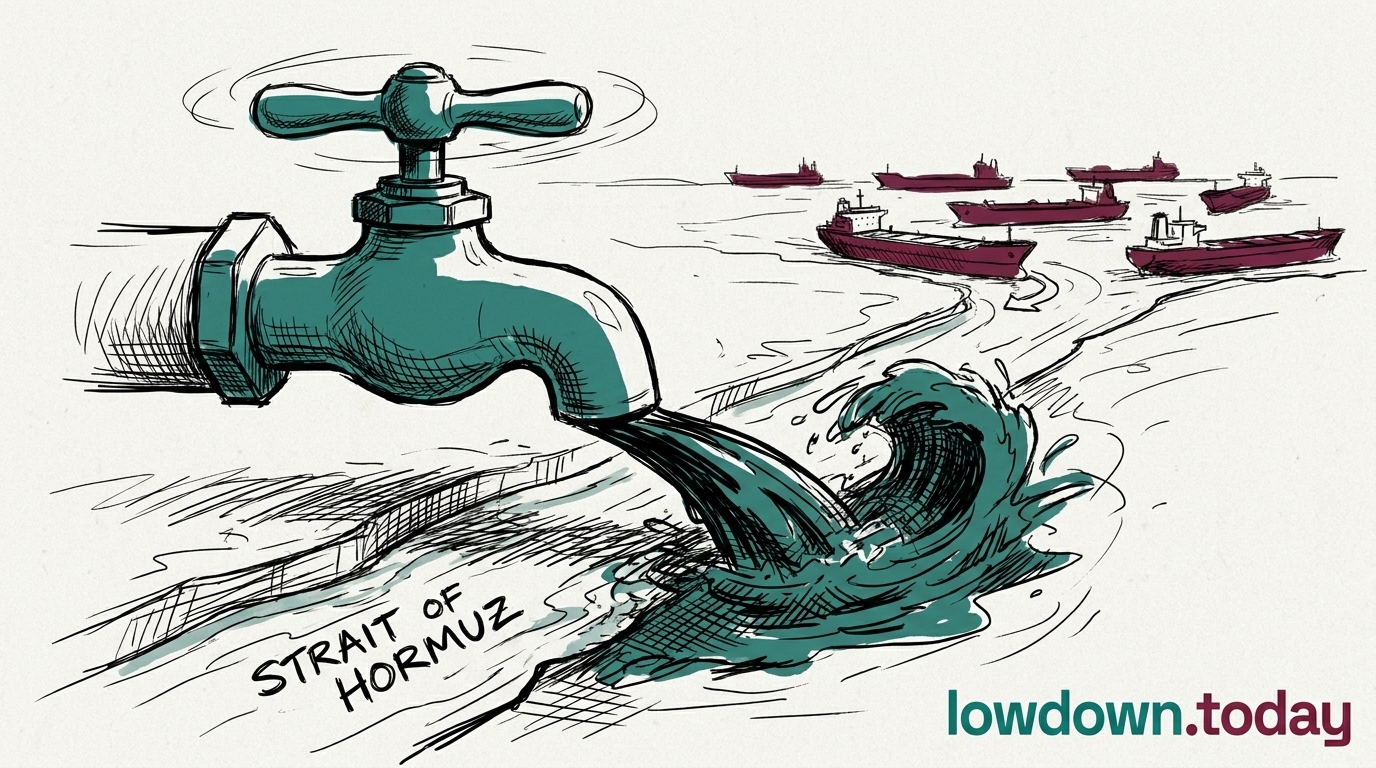
Iran's regular Army claimed the 16 July drone strikes on Kuwait's Ali Al Salem and Bahrain's Sheikh Isa air bases under its own banner, Operation Saeqeh phase ten, while the IRGC separately claimed a mine strike closing Hormuz on 18 July. Two Iranian institutions are now claiming parallel operations, with neither claim confirmed by Kuwait, Bahrain or CENTCOM.
United States
United States
CENTCOM bombed the interior cities of Ahvaz and Yazd for the first time overnight into 17 July, Marines began boarding vessels including the tanker Wen Yao, and Treasury let General License X1 lapse at 12:01am the same day. Washington closed every remaining channel for de-escalation without a new executive action, a posture of attrition rather than a wind-down.





