Skip to content
Iran Conflict 2026
18APR

Iran rejects talks; Oman channel only

3 min read
14:57UTC

Trump says he will 'eventually' engage. Iran formally rejected his outreach. Both are quietly signalling through intermediaries that the door is not closed.

ConflictDeveloping
Key takeaway

The Oman back-channel replicates the proven JCPOA negotiation architecture, but the gap between Iran's 'mediated de-escalation' offer and the US demand for direct talks — under active military operations — compresses a timeline that historically requires months, not weeks.

The Atlantic reported that President Trump has agreed to speak to Iran's interim governing council. A White House official told PBS that Iran's new leadership "suggests openness to talks." Trump stated he is "eventually" willing to engage. These are the first concrete indications of a potential bilateral channel since Iranian officials formally rejected Trump's ceasefire outreach , telling NBC News and Al Jazeera that the June 2025 Ceasefire was a "strategic error" that gave the US and Israel eight months to rearm.

Tehran's position is more layered than the public rejection suggests. Ali Larijani, senior adviser to the interim council, has twice refused negotiations with Washington . But Iran's foreign minister simultaneously told his Omani counterpart that Tehran is "open to serious de-escalation efforts" — drawing a line between direct bilateral engagement with the US (rejected) and mediated de-escalation through intermediaries (open). The distinction maps onto existing diplomatic architecture. Oman hosted the secret US-Iran negotiations in 2012–2013 that produced the framework for the JCPOA nuclear agreement — talks that remained hidden from senior State Department officials for months. The Omani channel has precedent and institutional memory.

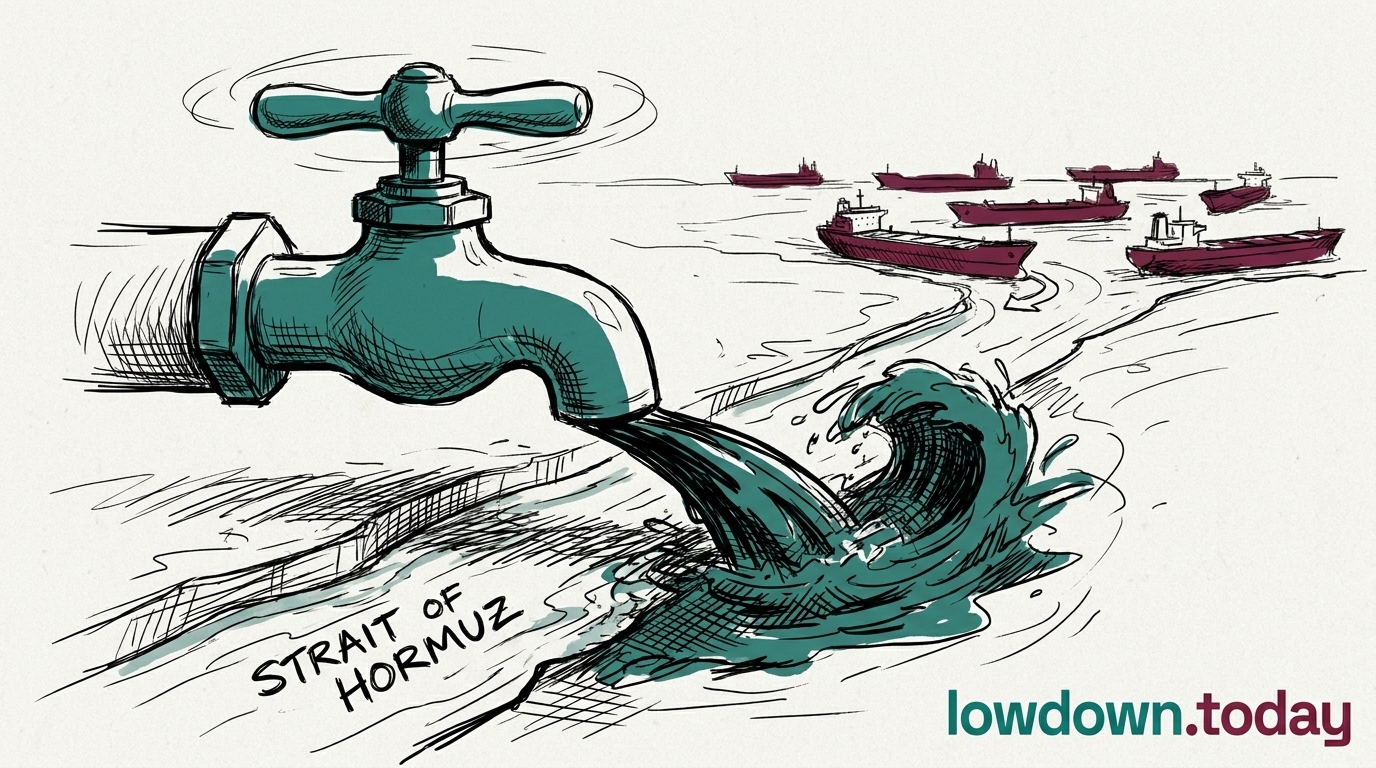
Trump's approach — maximum military pressure paired with a visible off-ramp — follows his first-term North Korea template. Between August 2017 ("fire and fury like the world has never seen") and June 2018 (the Capella Hotel, Singapore), Trump moved from threatened annihilation to a bilateral summit. That summit produced a brief joint statement and no verified denuclearisation; North Korea's nuclear and missile programmes have expanded since — SIPRI's 2024 assessment estimated roughly 50 warheads, up from approximately 20 at the time of the summit. The question is whether the Iran track follows the same arc — escalation as leverage for a summit that produces optics rather than structural change — or whether the scale of destruction across 24 provinces , with 787 Iranian dead and the Strait of Hormuz effectively closed , has made a symbolic outcome insufficient for either side.

The thresholds for movement remain unmet. Six US service members are dead — below the level that has historically forced American presidents to accelerate withdrawal. Oil at $85–90 per barrel has not yet translated into the domestic petrol price spike that generates political pressure in Washington. Iran's interim leadership faces a different calculation: without nuclear deterrence, continued attrition against US and Israeli air power is a longer path to the same defeat. The European Council on Foreign Relations assessed the conflict as having no viable exit on current terms . UN Secretary-General Guterres has called for "a way out" . Neither the Omani backchannel nor Turkey's mediation offer has produced a formal process. Both sides are signalling willingness to talk. Neither has moved to a position the other can accept.

Deep Analysis

In plain English

Both the US and Iran are publicly refusing to talk directly to each other, but both are quietly using Oman as a go-between — exactly as they did when secretly negotiating the 2015 Iran nuclear deal. The critical difference is that missiles are flying simultaneously, and the economic pressure on Europe means the world has weeks, not months, before an energy supply crisis that could force a resolution or force a collapse.

Deep Analysis
Synthesis

Iran's simultaneous public rejection and private openness through Oman is its practised, consistent negotiating method — not a sign of internal confusion or mixed signals. The JCPOA, multiple prior prisoner exchanges, and the 2013 back-channel all followed this exact pattern. The novel question is whether Iran's interim council possesses sufficient domestic authority to convert a private Omani signal into a binding commitment, given that the IRGC — which opposed the 2015 deal — may now hold more de facto power than before the conflict began.

Root Causes

Iran's interim leadership faces a structural constraint not explicit in the body: any new agreement must be visibly distinct from the June 2025 ceasefire — which Iranian officials publicly characterised as a strategic error — to avoid the charge of repeating the same mistake under worse conditions. This limits the viable deal space to arrangements that include something the 2025 agreement lacked: binding sanctions relief, nuclear programme concessions, or enforceable security guarantees.

What could happen next?
1 meaning1 risk1 consequence1 opportunity1 precedent
  • Meaning

    Oman currently represents the only active diplomatic infrastructure between the US and Iran; its success or failure is the sole near-term ceasefire pathway.

    Immediate · Assessed
  • Risk

    The structural gap between Iran's 'mediated de-escalation' offer and the US demand for direct talks may be unbridgeable through Oman alone while active military operations continue.

    Short term · Assessed
  • Consequence

    If Oman mediation fails, no alternative third-party mechanism is currently identified, leaving the conflict without a functional diplomatic off-ramp.

    Short term · Suggested
  • Opportunity

    Iran's private openness to Oman creates a ceasefire pathway that does not require either side to make public concessions — lowering the domestic political cost of any agreement on both sides.

    Short term · Assessed
  • Precedent

    A ceasefire brokered through Oman rather than the UN Security Council would further consolidate the Gulf state's role as the primary US-Iran crisis management channel, bypassing multilateral institutions entirely.

    Long term · Suggested
First Reported In

Update #16 · 165 girls buried; European gas doubles

The Hill· 3 Mar 2026
Read original
Different Perspectives
Global South governments (Indonesia, Brazil, South Africa)
Neutrality was possible when the targets were military. 148 dead schoolgirls made it impossible — no government can explain that away to its own citizens.
Trump administration
Oscillating between claiming diplomatic progress and threatening escalation, while deploying additional ground forces to the Gulf.
Israeli security establishment
Fears a rapid, vague US-Iran agreement that freezes military operations before the IDF achieves what it considers full strategic objectives. A senior military official assessed the campaign is 'halfway there' and needs several more weeks.
Iraqi government
Iraqi government
Iraq's force majeure is the position of a non-belligerent whose entire petroleum economy has been paralysed by a war between others — storage full, exports blocked, production being cut with no timeline for resumption.
Russia — Ambassador Vassily Nebenzia
Moscow calibrated its position between Gulf states and Iran: abstaining on Resolution 2817 rather than vetoing it, signalling it would not block protection for Gulf states, while refusing to endorse a text that ignores the US-Israeli campaign it regards as the conflict's proximate cause. Russia proposed its own ceasefire text — which failed 4-2-9 — allowing Moscow to claim the peacemaker role while providing Iran with satellite targeting intelligence, a duality consistent with its approach in Syria.
France — President Macron
France absorbed its first combat death in a conflict it has publicly declined to join. The killing of Chief Warrant Officer Frion in Erbil forces Macron to choose between escalating involvement and accepting casualties from the margins.