Skip to content
Briefings are running a touch slower this week while we rebuild the foundations.See roadmap
Iran Conflict 2026
3MAR

Day 4: 165 girls buried; European gas doubles

4 min read
19:05UTC

Thousands gathered in Minab for the mass funeral of 165 schoolgirls killed in the war's opening strikes, as three news organisations' identification of a US Tomahawk at the site goes unaddressed by Washington. European gas prices nearly doubled to over €60/MWh with the Strait of Hormuz and Qatar's LNG exports both shut. Lebanon's cabinet formally banned Hezbollah military activities; Hezbollah struck an Israeli airbase hours later.

Key takeaway

Each additional week of conflict accumulates leverage for Iran — not militarily, where its infrastructure is already degraded, but through energy disruption, allied distancing, and US domestic political costs that compound while Iran's marginal losses diminish.

This briefing mapped
Loading map…
Humanitarian
Domestic
Military

Thousands filled Minab's central square to bury schoolgirls aged 7 to 12 killed in the conflict's deadliest civilian atrocity. Three independent US media investigations have identified a Tomahawk cruise missile at the site; neither Washington nor Tel Aviv has addressed the findings.

Sources profile:This story draws on centre-left-leaning sources from Qatar and Türkiye
QatarTürkiye
LeftRight

Thousands attended a mass funeral in Minab's central square for 165 schoolgirls and staff killed in the Shajareh Tayyebeh elementary school strike. Iranian state television broadcast the ceremony. The conflict's deadliest single civilian atrocity was given a public face for the first time.

The funeral transforms contested casualty figures into televised political reality, forcing accountability questions onto the US Congress as war powers votes approach and allied governments distance themselves from the campaign. 

Briefing analysis

In May 2008, the Lebanese government ordered Hezbollah's private telecommunications network shut down. Hezbollah seized west Beirut within hours, routing government-allied forces. The Doha Agreement that ended the crisis granted Hezbollah veto power over government decisions — a reversal that deterred subsequent governments from challenging Hezbollah's armed status for 18 years.

The current cabinet's ban is the most direct state challenge to Hezbollah since 2008, issued by a government whose army withdrew from the Israeli advance days ago. In 2008 the constraint was Hezbollah's military superiority over the Lebanese state. That constraint has not changed — but the context has: Hezbollah's patron Iran is under direct assault, and Washington has made the ban a condition of distinguishing Lebanon from Hezbollah.

The UN's cultural and educational agency formally condemned the Shajareh Tayyebeh school strike, invoking protections for educational institutions that the striking parties have yet to acknowledge violating.

Sources profile:This story draws on neutral-leaning sources

UNESCO condemned the strike on Shajareh Tayyebeh elementary school in Minab.

UNESCO's condemnation creates a formal institutional record that future investigative bodies and accountability mechanisms can draw upon, at a time when no independent investigation has been conducted or permitted inside Iran

Sources:UN News

The Nobel laureate, shot at 15 for attending school in Pakistan, condemned the deaths of schoolgirls in Minab — framing the atrocity around civilian protection rather than entering the attribution dispute between Washington and Tehran.

Sources profile:This story draws on centre-left-leaning sources from Qatar
Qatar

Malala Yousafzai publicly condemned the killing of civilians, especially children, on X in response to the Minab school strike.

Malala Yousafzai's personal history with violence against schoolgirls gives her condemnation a moral authority that institutional statements cannot replicate, and her framing — condemning the act without naming a perpetrator — applies pressure on all parties regardless of which government bears responsibility. 

Sources:Al Jazeera

CNN, the New York Times, and NBC News independently identified a US cruise missile at the Minab school site. The Pentagon is 'looking into' the reports. The IDF claims 'no knowledge.'

Sources profile:This story draws on centre-left-leaning sources from Qatar and United States
United StatesQatar
LeftRight

The US military stated it is 'looking into' civilian harm reports from the Minab school strike. The IDF claimed 'no knowledge' of any strike in the area. Neither government has released battle damage assessment data or addressed independent media investigations identifying a US Tomahawk cruise missile at the site through geolocated footage and debris analysis.

Independent forensic evidence has outpaced official accountability for the strike that killed 165 schoolgirls. Whether the forensic record shapes congressional war powers votes expected this week depends on whether governments engage with evidence they have so far declined to address. 

The president's statement implies the post-Khamenei interim governing council has been directly targeted — the same body Washington says it wants to negotiate with.

Sources profile:This story draws on centre-left-leaning sources from Qatar and United States
QatarUnited States

President Trump stated that Iran's 'new leadership' has been struck, per Al Jazeera — implying the post-succession interim governing council has been specifically targeted.

Targeting Iran's successor leadership while seeking negotiations with it exposes a structural contradiction: the decapitation campaign may be destroying the command authority required for any negotiated exit. 

Trump says he will 'eventually' engage. Iran formally rejected his outreach. Both are quietly signalling through intermediaries that the door is not closed.

Sources profile:This story draws on centre-left-leaning sources from United States
United States

The Atlantic reported President Trump has agreed to speak to Iran's interim governing council. A White House official told PBS that Iran's new leadership 'suggests openness to talks.' Trump stated he is 'eventually' willing to engage. Iran's foreign minister separately told Oman that Tehran was 'open to serious de-escalation efforts' even as Larijani publicly rejected bilateral talks — a distinction between direct US engagement (rejected) and mediated de-escalation (open).

Behind public positions of mutual rejection, both Washington and Tehran are maintaining mediated channels through Oman — but neither has moved to terms the other can accept, and the thresholds for concession remain unmet on both sides. 

Sources:The Hill·PBS

For the first time since the civil war ended, a Lebanese government has formally declared Hezbollah's military operations illegal and demanded it surrender its weapons — ending 36 years of deliberate legal ambiguity.

Sources profile:This story draws on centre-left-leaning sources from Qatar, United States and 2 more
QatarUnited StatesLebanonFrance
LeftRight

Lebanon's emergency cabinet formally adopted a ban on all Hezbollah military and security activities as official state policy. PM Nawaf Salam confirmed the decision and the cabinet demanded Hezbollah surrender its weapons to the state. This is the first time any Lebanese government has formally banned Hezbollah military activities, revoking the 1989 Taif Agreement's exemption of Hezbollah as 'national resistance' against Israeli occupation — an exemption that has shaped Lebanese politics for 36 years.

The cabinet decision ends the legal fiction, sustained since the 1989 Taif Agreement, that Hezbollah's arsenal exists in a separate category from militia armament. The ban cannot be enforced by a military that withdrew from its own border positions, but it changes the legal baseline for every future negotiation over Lebanon's sovereignty — from UN Security Council resolutions to donor conferences to ceasefire terms. 

Hours after the cabinet demanded Hezbollah surrender its weapons, the group struck Israel's Ramat Airbase — the distance between Lebanon's legal authority and its military reality measured in minutes.

Sources profile:This story draws on centre-left-leaning sources from Qatar
Qatar

Hezbollah struck Israel's Ramat Airbase with rockets within hours of the Lebanese cabinet's formal ban on Hezbollah military activities, directly defying the cabinet decision.

Hezbollah's immediate defiance demonstrates that the Lebanese state's formal legal authority over its territory has no operational force against the country's most powerful armed actor. The strike also undermines Salam's diplomatic position with Washington, which conditioned protection from Israeli operations on Lebanese action against Hezbollah

Sources:Al Jazeera

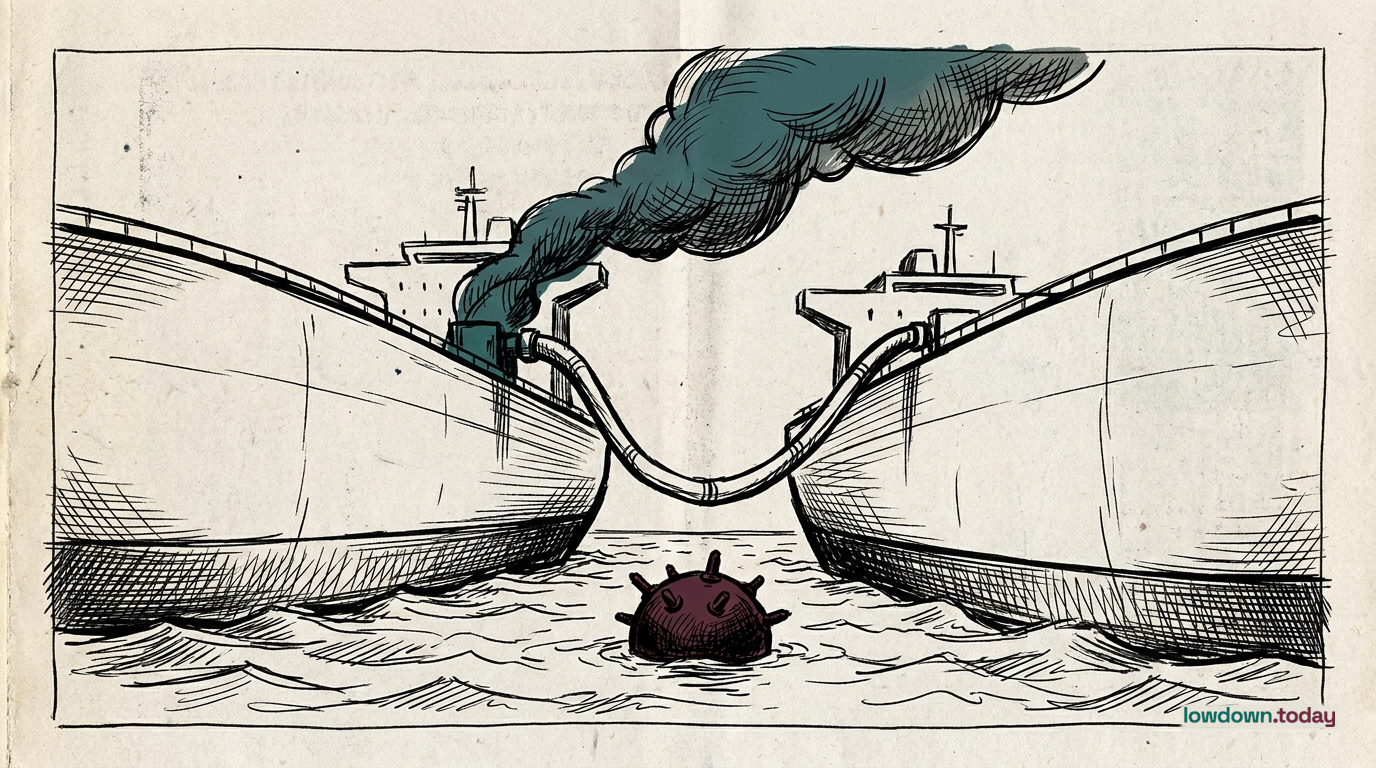
Europe spent four years replacing Russian pipeline gas with Qatari LNG. That replacement fuel is now under direct military fire, and gas prices have nearly doubled to over €60/MWh.

Sources profile:This story draws on centre-leaning sources from France, United States and 1 more
FranceUnited StatesBelgium
LeftRight

Dutch TTF gas contracts rose from the low €30s/MWh to over €60/MWh — nearly doubling in under a week. This is the second major European energy shock in four years; unlike the 2022 Russian gas cutoff which disrupted pipeline supply (peaking at €340/MWh), this disrupts LNG — the replacement fuel Europe spent four years securing.

The price surge strikes at Europe's post-2022 energy security strategy itself. Unlike the Russian gas cutoff, which disrupted one supply route, this conflict has degraded all three pillars of Gulf energy exports — production, refining, and transit — and insurance market closures mean the disruption now operates on its own institutional timeline, independent of any ceasefire. 

EU gas storage sits at 30%, below last year's level. Bloomberg estimates Europe can absorb current prices only if the conflict ends within weeks — and the insurance industry's own timeline may not cooperate.

Sources profile:This story draws on centre-leaning sources from France, United States and 1 more
FranceUnited StatesBelgium
LeftRight

EU gas storage stood at 30%, below the previous year's level at the same point. Bloomberg assessed that Europe can absorb current price levels if the conflict ends within one month; beyond that, the continent faces a genuine supply crisis heading into next winter's restocking season.

The 30% storage figure and Bloomberg's one-month window establish a concrete deadline for European energy security. Europe spent four years replacing Russian pipeline gas with Qatari LNG; this conflict strikes the replacement fuel itself, not just one supply route. If hostilities extend beyond a month, European governments face a second energy rationing crisis in four years with fewer alternatives available. 

The euro and yen fell against the dollar — currency markets pricing a structural truth: the war's economic damage concentrates on countries that buy Gulf energy, not on the country prosecuting the campaign.

Sources profile:This story draws on mixed-leaning sources from France and United States
FranceUnited States
LeftRight

The euro and yen fell against the US dollar as currency markets priced the energy exposure of import-dependent economies against a United States that produces most of its own oil.

Currency movements expose the conflict's asymmetric economic architecture. The United States, which produces most of its own oil, bears military costs but is partially insulated from energy price spikes. Import-dependent economies absorb the full impact of supply disruption without controlling the military decisions driving it. The stronger dollar amplifies their costs through commodity pricing, creating a feedback loop that widens economic divergence. 

Sources:Euronews·Axios

Emerging patterns

  • Civilian mass casualty events generating political narrative constraints on military campaign — parallels Amiriyah shelter bombing (1991) which forced coalition targeting rule changes
  • International institutional condemnation of civilian targeting accumulating
  • High-profile global figures amplifying civilian casualty narrative
  • Both US and Israel avoiding accountability for documented civilian harm despite physical evidence
  • Trump signaling military success against post-succession Iranian leadership structure
  • Diplomatic back-channel maintained alongside maximum military pressure — mirrors Trump first-term North Korea pattern of fire-and-fury rhetoric preceding eventual summit engagement
  • Lebanese state asserting sovereignty over Hezbollah for first time — creating legal architecture Washington sought while falling short of terrorist designation demand
  • Hezbollah demonstrating Lebanese government cannot constrain its military operations — immediate defiance of state authority
  • European energy supply chain disrupted at replacement source — LNG vulnerability exposed after four years of Russian gas diversification
  • European energy storage vulnerability creating time-dependent conflict pressure — one-month absorption window before systemic crisis
Different Perspectives
Lebanese emergency cabinet
Formally banned all Hezbollah military and security activities and demanded Hezbollah surrender its weapons — the first Lebanese government to revoke the 1989 Taif Agreement's exemption of Hezbollah as 'national resistance' in 36 years of post-civil-war politics.
Hezbollah
Hezbollah
Struck Israel's Ramat Airbase with rockets within hours of the Lebanese cabinet's formal ban — the most direct defiance of a government order to cease military operations in Lebanon's post-Taif history.
President Trump
President Trump
Agreed to speak to Iran's interim governing council, per The Atlantic, while simultaneously claiming to have struck that same leadership — combining military escalation and diplomatic opening within the same day's statements.
UNESCO
UNESCO
Condemned the strike on Shajareh Tayyebeh elementary school in Minab, adding the UN's principal educational and cultural agency to the institutional response to civilian harm.
Malala Yousafzai
Malala Yousafzai
The 2014 Nobel Peace Prize laureate publicly condemned the killing of civilians, especially children, adding one of the world's most recognised education advocates to the chorus of condemnation over the Minab school strike.
