Skip to content
You can now search across every topic, entity and event.What's new
Iran Conflict 2026
18APR

Russia's diesel ban sets a record crack

2 min read
14:57UTC

Alexander Novak announced a full Russian diesel export ban to 31 July on 8 July; the European diesel crack hit a record $60.17 a barrel the same day.

ConflictDeveloping
Key takeaway

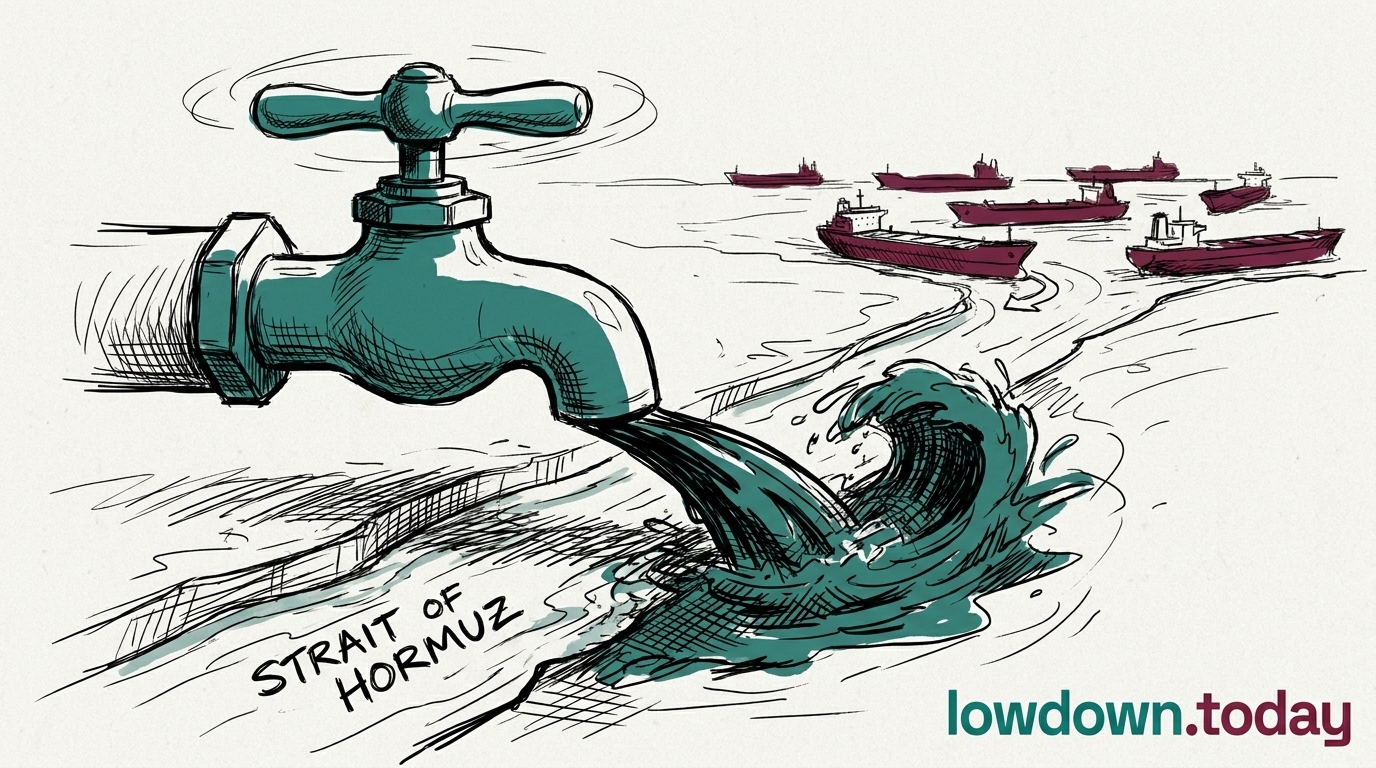
Russia's export ban, not Hormuz, drove the European diesel crack to a record $60.17 a barrel.

Deputy Prime Minister Alexander Novak announced a full Russian diesel export ban through 31 July at a meeting chaired by Vladimir Putin on Wednesday 8 July, widening an earlier producer-only restriction to the whole market after Ukrainian strikes drove Russian refinery runs to multi-year lows 1. Russian seaborne diesel and gasoil exports had already fallen 39% in June, with only a Mongolia supply deal left exempt.

The European diesel refining margin, the crack that measures the gap between diesel and the crude it is made from, hit a record $60.17 a barrel the day of the announcement, and the ICE (Intercontinental Exchange) gasoil crack pushed to a 2026 high 2. The wires read this as more Hormuz spillover. The plumbing says otherwise. EU Regulation 833/2014 already bars Russian diesel from the European pool, so the ban removes no barrel Europe was buying.

It tightens the marginal replacement barrel Europe pulls from elsewhere, and the crack blows out on supply, not on a risk premium. It lands on ARA (Amsterdam-Rotterdam-Antwerp) independent gasoil stocks already at a two-and-a-half-year low 3. The crack had held near $46 through the crude sell-off into July ; a record above $60 is the size of the blowout.

Deep Analysis

In plain English

A 'diesel crack' is the profit a refinery makes turning crude oil into diesel fuel, the difference between the two prices. On 8 July that profit hit a record $60.17 a barrel in Europe, meaning refiners are making more money than ever on every barrel of diesel they produce. The record comes because Russia, a major diesel exporter, just banned all diesel exports until the end of July, on top of Ukrainian strikes that have already knocked out much of its refining capacity. With less Russian diesel reaching world markets, European refiners can charge more for their own.

Deep Analysis
Root Causes

Ukrainian strikes have cut Russian refinery throughput to multi-year lows, and years of export controls on Western refining catalysts and turnaround parts mean damaged units cannot be repaired quickly, so Moscow has less diesel to sell even before deciding to restrict exports.

With domestic pump prices politically sensitive ahead of any repair timeline, the government is choosing to protect the internal market first and let export volumes absorb the shortfall, which is why the ban targets exports specifically rather than rationing at home.

What could happen next?
  • Consequence

    Mongolia is the only destination exempted from the ban, so any further carve-outs Moscow grants in the coming weeks would signal which buyers it is prioritising as domestic supply tightens.

First Reported In

Update #15 · Three shocks, one week, across the oil spreads

Bloomberg· 10 Jul 2026
Read original
Different Perspectives
Hengaw and Iranian protest detainees
Hengaw documented three secret executions of protest-linked detainees at Isfahan and Karaj on 15 and 16 July, including Mohammad Amini Dehaghani, hanged over a January arson charge with no public trial record. Tehran is carrying out capital punishment against 2026 protesters while global attention stays fixed on the war with the US.
Russia
Russia
OFAC named Moscow aviation firm Avratek OOO and its principals Mariya Selina and Vadim Druzhbin directly for the first time in this war's Iran arms track, under an Executive Order 13382 designation issued 15 July. The designation converts years of rhetorical claims about Russian arms supply to Iran into named, sanctionable individuals and a documented company.
Bahrain
Bahrain
Bahrain sounded air-raid sirens during Iran's 14 July Gulf-wide barrage and was struck again in the 16 July Artesh claim against Sheikh Isa air base, home to the US Fifth Fleet. Manama's air-defence stocks were already reported near-exhausted before this second strike claim against the same base in a week.
Kuwait
Kuwait
Kuwait's armed forces intercepted the drones Iran's Army claimed against Ali Al Salem air base on 16 July and separately reported intercepting missiles and drones in Iran's Gulf-wide barrage on 14 July. Kuwait now absorbs strikes from two rival Iranian commands while hosting Camp Arifjan, the US logistics base Iran also claims to have destroyed.
Iran (Artesh and IRGC)
Iran's regular Army claimed the 16 July drone strikes on Kuwait's Ali Al Salem and Bahrain's Sheikh Isa air bases under its own banner, Operation Saeqeh phase ten, while the IRGC separately claimed a mine strike closing Hormuz on 18 July. Two Iranian institutions are now claiming parallel operations, with neither claim confirmed by Kuwait, Bahrain or CENTCOM.
United States
United States
CENTCOM bombed the interior cities of Ahvaz and Yazd for the first time overnight into 17 July, Marines began boarding vessels including the tanker Wen Yao, and Treasury let General License X1 lapse at 12:01am the same day. Washington closed every remaining channel for de-escalation without a new executive action, a posture of attrition rather than a wind-down.