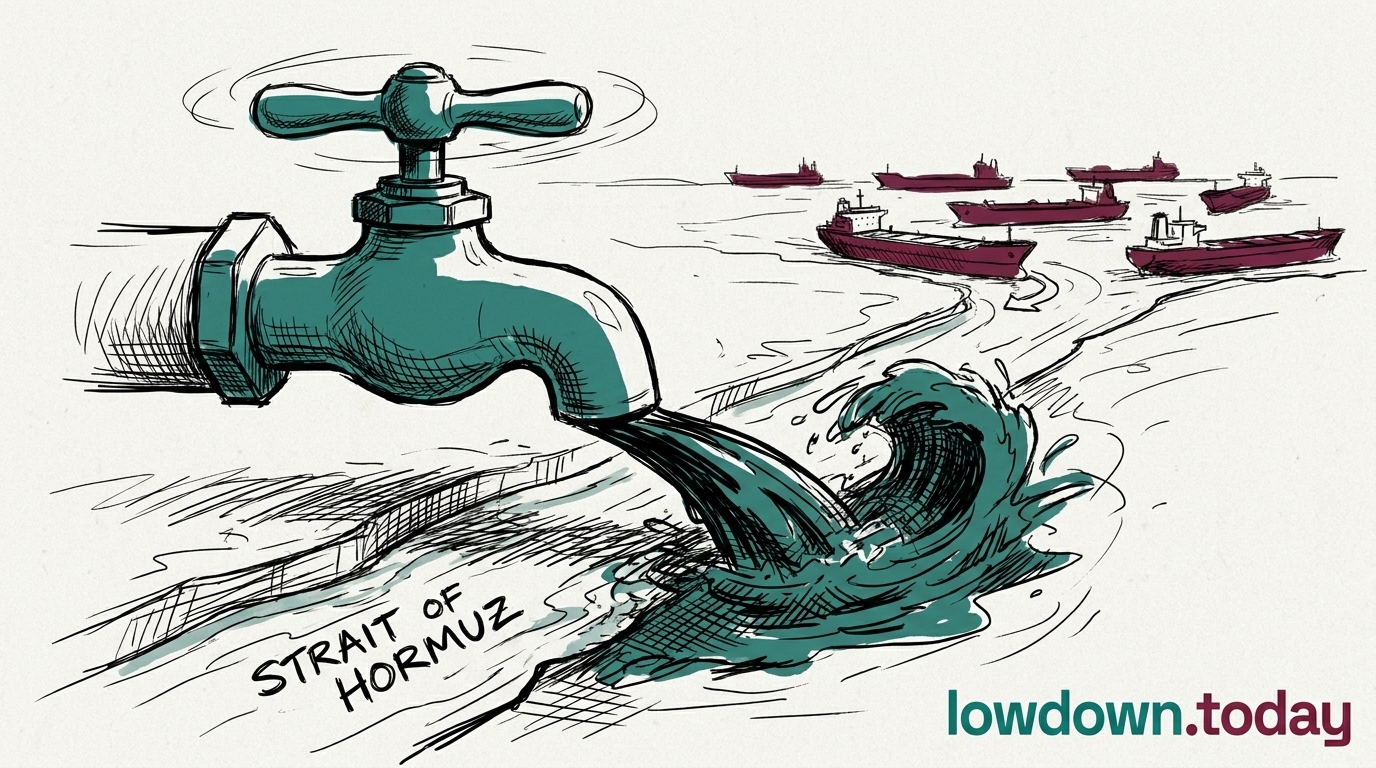
Ebrahim Rezaei, spokesman for Iran parliament's national security committee, told Iranian media that Tehran will not agree to extend the ceasefire unless the extension includes Iranian control of the Strait of Hormuz1. AP and Bloomberg reported an "in-principle" two-week extension based on unnamed regional mediators. White House press secretary Karoline Leavitt confirmed that Washington had not formally requested an extension: "The US has not formally requested a ceasefire extension." No signed text has been published.
The wire reporting rests on unnamed mediators; the Iranian parliamentary track is on the record through Rezaei. In Iranian decision-making under wartime Mojtaba Khamenei, a precondition stated publicly by the National Security Committee spokesman is a harder ceiling than an unattributed mediator claim, because the latter cannot be ratified through the institutional chain the former represents. Asim Munir's Tehran shuttle secured monitoring movement through the general-officer channel, but monitoring is not the ceasefire instrument.
Tasnim News Agency characterised Reuters and AP sourcing on the extension as "psychological operations by the American negotiating team". Tehran used the same register to deny the Day 3 enrichment-ban claim and the Day 40 Hormuz reopening claim, which places the in-principle extension story inside the Iranian state media bucket for hostile messaging rather than diplomacy. Rezaei's precondition and the Trump-stated US blockade posture cannot both be satisfied by Tuesday evening.


