Skip to content
You can now search across every topic, entity and event.What's new
Iran Conflict 2026
18APR

China warns Iran: spare tankers and LNG

4 min read
14:57UTC

China moved from general calls for restraint to direct negotiations with Tehran, pressing Iran not to attack oil tankers, gas carriers, or Qatari LNG facilities — the infrastructure that feeds 30% of China's imported natural gas.

ConflictDeveloping
Key takeaway

China's move breaks the US-versus-Iran binary and confronts Tehran with the prospect of losing its primary oil customer and sanctions lifeline simultaneously with its military campaign.

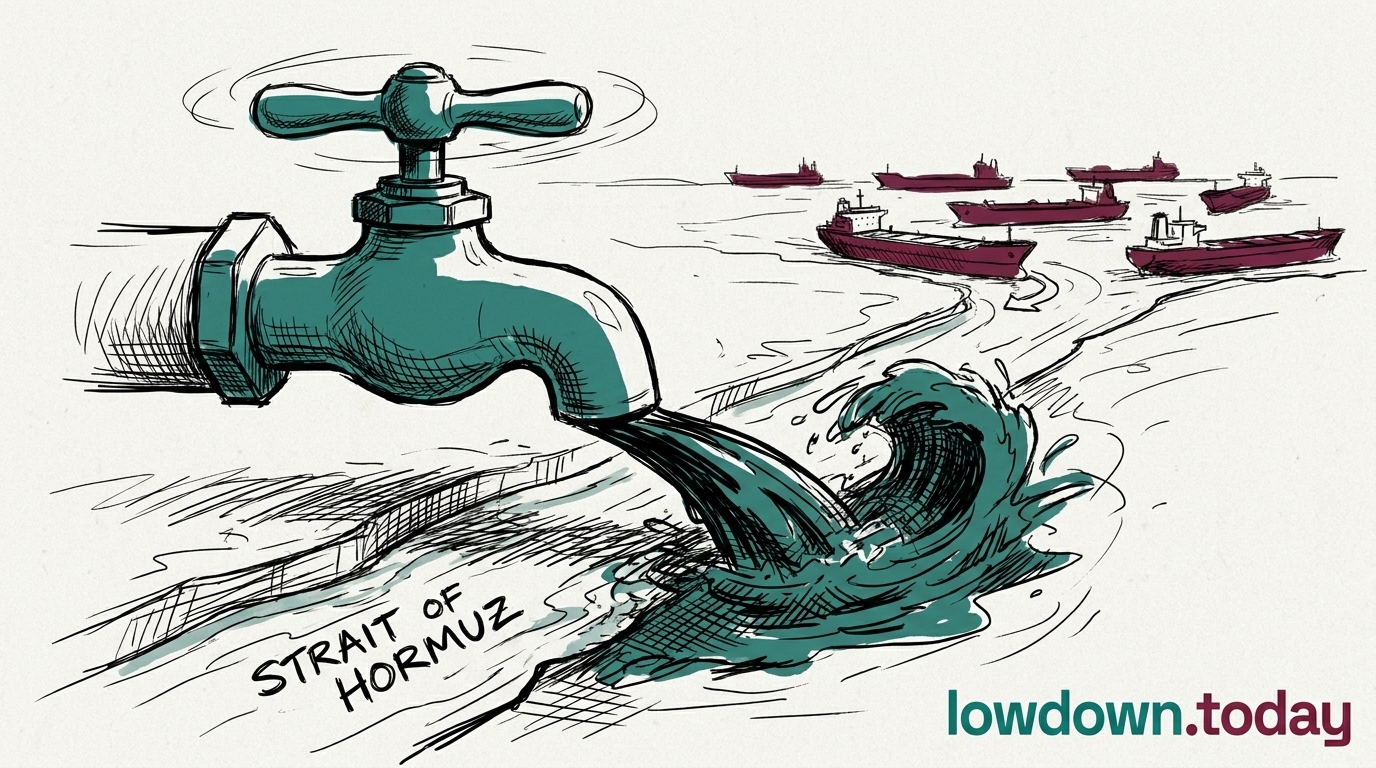
Bloomberg reported Wednesday that China entered direct negotiations with Tehran, pressing Iran specifically not to attack oil tankers, gas carriers, or Qatari LNG export facilities in the strait of Hormuz. China's MFA spokesperson Mao Ning stated Beijing 'urges all parties to stop military operations at once, avoid further escalation, keep shipping routes in the strait of Hormuz safe, and prevent further impact on the global economy.' Previous Chinese statements on the conflict were general appeals for calm. This is a different category of engagement: Beijing named the specific infrastructure it wants protected and opened bilateral talks to secure that outcome.

The trigger is direct and quantifiable. Qatar supplies approximately 30% of China's imported LNG. When Iranian drones struck Ras Laffan on Monday and QatarEnergy halted all production , Asian LNG spot prices rose 39% . European gas nearly doubled within the week . China, the world's largest crude oil importer, receives roughly 60% of Gulf oil exports. Strait of Hormuz traffic has fallen 80% and faces complete commercial shutdown after the P&I insurance deadline on Thursday. Every day the strait remains contested costs Beijing in both energy supply and price.

China's leverage over Iran is large but conditional. Beijing has been Tehran's largest oil customer for over a decade, purchasing an estimated 1.2 to 1.5 million barrels per day through intermediaries and ship-to-ship transfers designed to circumvent Western sanctions. That revenue — worth roughly $35–45 billion annually at current prices — is Iran's single largest source of hard currency. If Beijing conditions continued purchases on Iranian targeting restraint around Gulf energy infrastructure, Tehran faces a choice between military strategy and fiscal viability under wartime conditions.

But Beijing's own exposure limits its room to escalate the pressure. China cannot replace Gulf oil and gas imports on short notice, and its dependency creates urgency that Tehran can read plainly. China's intervention is self-interested, and both sides know it. The deeper question is whether Iran's military command structure — portions of which may be operating outside central government direction, according to Iran's own foreign minister — retains enough coherence to respond to Chinese pressure even if Iran's political leadership wished to. Beijing can negotiate with Araghchi. It is less clear that Araghchi can deliver the IRGC.


Deep Analysis

In plain English

China is the world's largest buyer of oil and gas, and a huge share of what it buys comes from the Gulf — including nearly a third of its gas from Qatar alone. When fighting threatens to cut off those supplies and drives up prices for Chinese factories and households, Beijing can no longer afford to issue polite calls for calm. It is now telling Iran directly: stop attacking the ships and facilities that carry our fuel. This matters because China is also Iran's economic lifeline — it buys the Iranian oil that Western sanctions have made unsellable to anyone else. Tehran ignoring Chinese pressure risks losing that lifeline at exactly the moment it needs it most.

Deep Analysis
Synthesis

China's move effectively ends the framing of this conflict as a bilateral US-Iran confrontation. Tehran now faces simultaneous military pressure from the US and economic pressure from China, its two most consequential external relationships — a combination without modern precedent. More significantly, if China succeeds in extracting Iranian restraint on specific infrastructure, it will have demonstrated that Beijing possesses coercive leverage over Iran that Washington does not, reshaping the post-conflict hierarchy of influence in the Gulf.

Root Causes

China's 25-year Comprehensive Strategic Partnership with Iran (signed March 2021) was premised on Iranian energy exports continuing uninterrupted; the conflict has converted Beijing's largest strategic energy supplier into its largest supply-chain risk. China's 'non-interference' doctrine has always contained an implicit exception when state-owned enterprises — Sinopec, CNOOC, CNOOC's LNG divisions — face direct contractual losses, and that exception has now been triggered.

Escalation

China's entry as an active pressure point introduces a fork: if Iran complies, it accepts operational constraints from a non-Western power, which is a different kind of sovereignty concession than yielding to US pressure and could be managed domestically. If Iran ignores Chinese pressure, it signals to markets and governments that no diplomatic channel remains open, removing the last brake on further escalation and likely triggering harder Chinese economic measures.

What could happen next?
1 meaning1 consequence1 risk1 opportunity1 precedent
  • Meaning

    Beijing's willingness to apply direct bilateral pressure on Tehran marks the effective end of the China-Iran-Russia axis as a cohesive bloc insulated from internal tensions — each party is now acting primarily in its own immediate economic interest.

    Immediate · Assessed
  • Consequence

    If Iran ignores Chinese pressure, Beijing will face a credibility and economic crisis simultaneously, likely forcing harder measures — including possible reduction of Iranian crude purchases — that would significantly constrain Tehran's war-financing capacity.

    Short term · Suggested
  • Risk

    IRGC hardliners may interpret Chinese pressure as evidence of coordinated US-China containment, reinforcing the narrative that Iran faces existential encirclement and must escalate rather than negotiate.

    Immediate · Suggested
  • Opportunity

    China's unique position as Iran's primary oil customer gives it coercive leverage no Western power possesses; successful Chinese mediation would establish Beijing as an indispensable Gulf crisis manager, advancing its strategic positioning in the region at US expense.

    Medium term · Suggested
  • Precedent

    Documented direct Chinese bilateral pressure on Iran to modify active military operations would be the first such instance on record, permanently revising assumptions about the operational limits of the China-Iran strategic partnership.

    Long term · Assessed
First Reported In

Update #18 · First Iranian warship sunk since 1988

Bloomberg· 4 Mar 2026
Read original
Causes and effects
This Event
China warns Iran: spare tankers and LNG
China's intervention changes the conflict's diplomatic structure. Beijing is Iran's largest oil customer, purchasing an estimated 1.2 to 1.5 million barrels per day through intermediaries that circumvent Western sanctions. That economic relationship — never previously deployed to constrain Iranian military operations in real time — is now being leveraged with specificity that amounts to a conditional threat.
Different Perspectives
Hengaw and Iranian protest detainees
Hengaw documented three secret executions of protest-linked detainees at Isfahan and Karaj on 15 and 16 July, including Mohammad Amini Dehaghani, hanged over a January arson charge with no public trial record. Tehran is carrying out capital punishment against 2026 protesters while global attention stays fixed on the war with the US.
Russia
Russia
OFAC named Moscow aviation firm Avratek OOO and its principals Mariya Selina and Vadim Druzhbin directly for the first time in this war's Iran arms track, under an Executive Order 13382 designation issued 15 July. The designation converts years of rhetorical claims about Russian arms supply to Iran into named, sanctionable individuals and a documented company.
Bahrain
Bahrain
Bahrain sounded air-raid sirens during Iran's 14 July Gulf-wide barrage and was struck again in the 16 July Artesh claim against Sheikh Isa air base, home to the US Fifth Fleet. Manama's air-defence stocks were already reported near-exhausted before this second strike claim against the same base in a week.
Kuwait
Kuwait
Kuwait's armed forces intercepted the drones Iran's Army claimed against Ali Al Salem air base on 16 July and separately reported intercepting missiles and drones in Iran's Gulf-wide barrage on 14 July. Kuwait now absorbs strikes from two rival Iranian commands while hosting Camp Arifjan, the US logistics base Iran also claims to have destroyed.
Iran (Artesh and IRGC)
Iran's regular Army claimed the 16 July drone strikes on Kuwait's Ali Al Salem and Bahrain's Sheikh Isa air bases under its own banner, Operation Saeqeh phase ten, while the IRGC separately claimed a mine strike closing Hormuz on 18 July. Two Iranian institutions are now claiming parallel operations, with neither claim confirmed by Kuwait, Bahrain or CENTCOM.
United States
United States
CENTCOM bombed the interior cities of Ahvaz and Yazd for the first time overnight into 17 July, Marines began boarding vessels including the tanker Wen Yao, and Treasury let General License X1 lapse at 12:01am the same day. Washington closed every remaining channel for de-escalation without a new executive action, a posture of attrition rather than a wind-down.



