Skip to content
Briefings are running a touch slower this week while we rebuild the foundations.See roadmap
Iran Conflict 2026
15APR

UK reopens War Book, hosts 30-nation Hormuz meet

4 min read
09:40UTC

The UK's Chief of the Defence Staff confirmed Whitehall is rebuilding the Cold War Government War Book, citing the Iran conflict as a driver alongside Ukraine. Three days later the MoD hosted 30 nations at Northwood to plan the Strait of Hormuz.

ConflictDeveloping
Key takeaway

The War Book is back; the planning conference it runs alongside is about Hormuz, not Moscow.

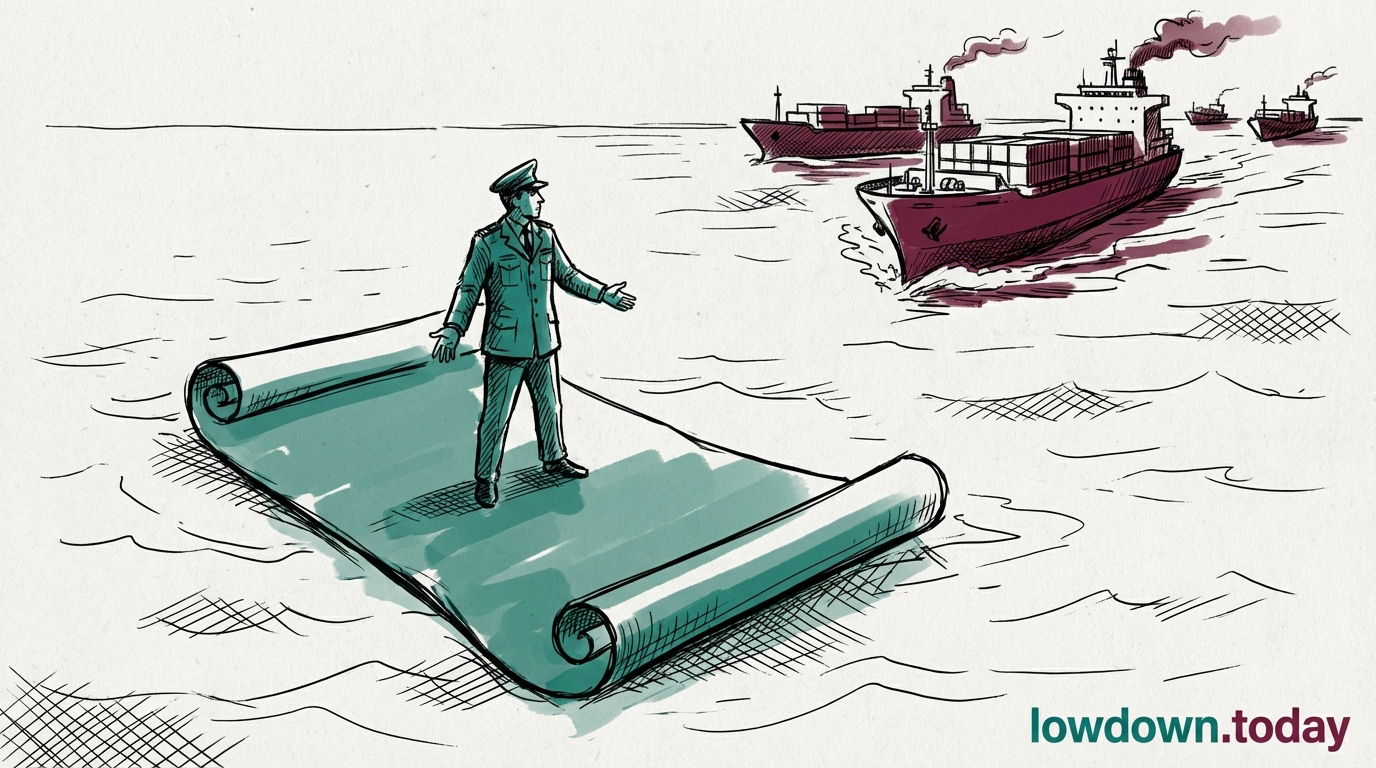
Air Chief Marshal Sir Richard Knighton, the UK's Chief of the Defence Staff since September 2025, told Sky News at the London Defence Conference on Friday 10 April that Whitehall is rebuilding the Government War Book, a Cold War civil-mobilisation framework covering military, police, industry and hospitals that was scrapped in the early 2000s 1. Knighton cited "the ongoing conflict between the US, Israel and Iran" as a driver alongside Ukraine. The Cabinet Office leads the framework, coordinating the military, police, industry and NHS trigger chains. On Wednesday 22 April the Ministry of Defence hosted a 30-nation Strait of Hormuz military planning conference at Permanent Joint Headquarters Northwood in Middlesex, the UK's operational command centre, co-chaired by Defence Secretary John Healey with France; the remit covered mine clearance, freedom of navigation and protection of merchant shipping 2. The MoD statement did not mention Ukraine or Russia.

The Ukraine supply line continues to run separately. On 15 April the MoD confirmed cumulative UK drones supplied to Ukraine had crossed 120,000 units and announced a £900 million contract for Army Apache and RAF Chinook maintenance. The 22 April Northwood planning did not touch it.

Two serving and former officers publicly graded the procurement base underneath as thin. General Sir Richard Barrons, former commander of Joint Forces Command, told CNBC on 22 April that "today's army can frankly do one very small thing" 3. The same report cited a £28 billion decade-long funding gap and the Ajax armoured vehicle programme's record of £6.3 billion spent against 165 of 589 vehicles delivered. Lord Robertson, commissioned by Prime Minister Starmer to review the armed forces, accused the government of "corrosive complacency". The Civil Contingencies Act 2004 and associated emergency-powers statutes have not been exercised against anything resembling the threat mix Knighton is now citing. Two allies moved on the same Wednesday: Berlin published a Russia-facing doctrine naming the Bundeswehr's 2029 readiness deadline on the same day Whitehall's operational HQ ran The Gulf scenario. The Germany-Ukraine €4bn defence package signed on 14 April set the procurement baseline Pistorius now frames doctrinally; Britain has reopened a civil-mobilisation binder across a £28 billion funding gap.

Deep Analysis

In plain English

The Government War Book is a British planning document, last maintained during the Cold War, that sets out what the government would do in a major national emergency: how to requisition hospitals, direct industry, deploy police, and mobilise the military. It was scrapped in the early 2000s when planners assumed large-scale war in Europe was no longer a realistic scenario. Air Chief Marshal Sir Richard Knighton, the UK's top military officer, announced on 10 April that Britain is rebuilding it. Twelve days later, the UK hosted representatives from 30 countries at its operational command centre in Northwood, north of London, to plan how to keep the Strait of Hormuz open: the narrow waterway through which a fifth of the world's oil passes. Both moves signal that the UK is treating multi-front military contingency as a live planning requirement, not a theoretical one.

Deep Analysis
Root Causes

The War Book's abandonment in the early 2000s reflected a structural assumption: that NATO collective defence made national mobilisation planning redundant, since any large-scale conflict would involve allied burden-sharing. Russia's 2022 full-scale invasion exposed that assumption as incorrect not because NATO failed but because the timeline for allied mobilisation (weeks to months) and the timeline for a rapid Russian fait accompli (days) are incompatible.

The Hormuz planning conference at Northwood reflects a second structural gap: the UK's carrier strike group was not available for Middle East deployment for three weeks after hostilities began between the US, Israel, and Iran, because HMS Prince of Wales was in refit. A single carrier nation lacks redundancy. The 30-nation conference format attempts to aggregate capability that no single European navy retains independently.

First Reported In

Update #14 · Kyiv's Druzhba gambit unlocks €90bn loan

Sky News· 24 Apr 2026
Read original
Causes and effects
This Event
UK reopens War Book, hosts 30-nation Hormuz meet
Britain is reactivating a Cold War civil mobilisation framework while its operational headquarters runs an Iran scenario, revealing which theatre Whitehall is actually planning for.
Different Perspectives
Iran human rights monitors (Amnesty International, Iran HRM, Hengaw)
Monitors documented 30 women held on capital moharebeh charges in a basement prison ward, Benyamin Naqdi's death sentence with a forced-confession broadcast, and 39 political executions since February. Iran's security courts have processed protest cases at uninterrupted wartime tempo regardless of the diplomatic track.
Lloyd's of London (war-risk underwriters)
Lloyd's held its Hormuz war-risk designation at $10-14 million per voyage while Brent fell 19%, maintaining a structural divergence from futures pricing. Underwriters require a UN Security Council resolution or government certification letter, not diplomatic optimism, before de-listing the strait.
Oman (Sultan Haitham's government)
Muscat issued a mine alert in its own territorial waters while denying any Hormuz toll plan after US Treasury threatened sanctions. A suspected mine in Omani waters on the same weekend as US financial pressure forces Muscat to demonstrate sovereignty without appearing to choose sides.
China (PRC)
China (PRC)
Beijing sent scholars rather than its defence minister to Shangri-La for the second year running and addressed Taiwan and multilateralism without mentioning Iran. China maintains its bilateral energy corridor protection with Tehran while refusing the diplomatic exposure of a public position at multilateral forums.
Iran Supreme National Security Council
The SNSC framed the unsigned MOU as a 10-point Iranian victory with enrichment already recognised, and the foreign ministry rejected Trump's nuclear conditions within hours. Tehran treats each unsigned day as validation that Iran has retained its stockpile without surrendering it.
Trump administration (CENTCOM/White House)
Trump posted three non-negotiable public conditions while CENTCOM disabled a commercial ship and Hegseth threatened resumed strikes from Singapore. The administration treats the unsigned MOU as leverage to extract maximum Iranian concessions before any ceasefire instrument is committed to paper.