Skip to content
You can now search across every topic, entity and event.What's new
Iran Conflict 2026
10APR

Enrichment gap blocks any nuclear text

3 min read
08:05UTC

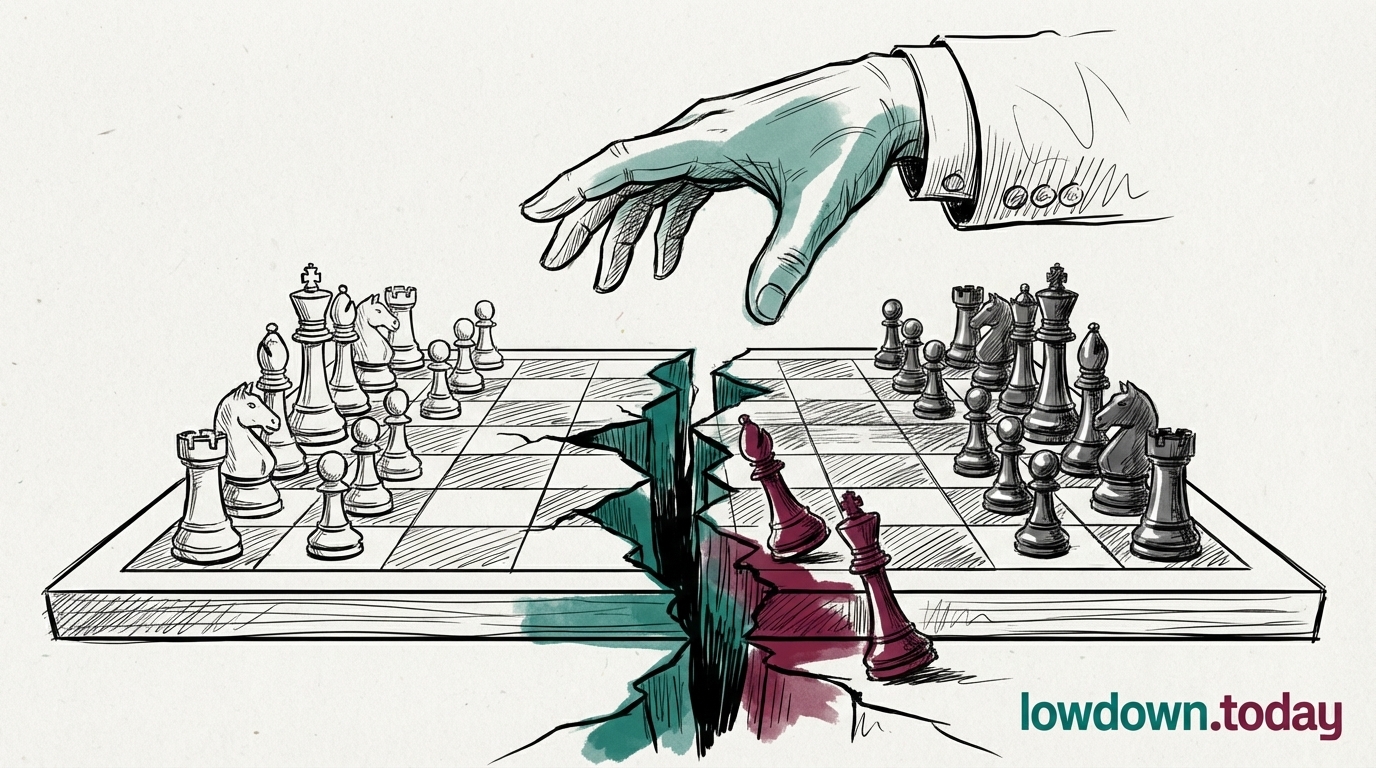
Iran's 10-point plan claims a right to enrichment; the US demands zero. The gap is publicly irreconcilable.

ConflictDeveloping
Key takeaway

Both sides published irreconcilable enrichment positions with no verification architecture to bridge the gap.

Iran tabled a 10-point plan at Islamabad listing "acceptance of enrichment" as non-negotiable. The United States tabled a 15-point plan demanding a zero nuclear weapons commitment, removal of Iran's HEU stockpile from the country, limits on defence capabilities, and unconditional Hormuz reopening. Donald Trump posted that "there will be no enrichment of Uranium" ; Iran's plan explicitly claims the right to it.

Sanam Vakil, Chatham House's Middle East and North Africa director, assessed that Iran is "unlikely" to surrender its HEU stockpile and that downblending to lower enrichment levels is the realistic floor for any deal. Iran's Foreign Minister Abbas Araghchi had publicly offered downblending on CBS in March, but Islamabad's US demands went further: full removal of the material from Iranian territory.

The last verified stockpile figure is 440.9 kg of uranium enriched to 60%, recorded by the IAEA (International Atomic Energy Agency) in September 2025, before the strikes. At 60% purity, that quantity requires relatively modest further enrichment to reach weapons-grade; the IAEA defines a "significant quantity" for a single device at 25 kg of 90%-enriched uranium. Since the Majlis voted 221-0 to suspend all IAEA cooperation on 3 April , no independent verification has been possible.

The Arms Control Association assessed in March that US negotiators were "ill-prepared for serious nuclear negotiations." The JCPOA (Joint Comprehensive Plan of Action) took 20 months of structured talks with continuous IAEA access to bridge a comparable enrichment gap. Islamabad attempted the same in two days, without inspectors.

Deep Analysis

In plain English

Enriched uranium is nuclear fuel. You enrich it a little (3-5%) and it powers a reactor. You enrich it a lot (90%+) and you can make a bomb. Iran is enriching to 60%, which is well above reactor grade and much closer to weapons grade than is comfortable. The US wants Iran to hand over this stockpile and never enrich again. Iran says that enriching uranium is its sovereign right, like any country operating nuclear power. The two positions are like arguing whether someone should be allowed to own a gun: one side says no guns at all, the other says guns are a constitutional right. The extra complication is that the international inspectors who would verify any deal, the IAEA, have been banned from Iran since early April. So even if both sides agreed on something, there is currently no one to check whether Iran is doing what it promised.

Deep Analysis
Root Causes

Iran's enrichment programme is not purely a weapons issue, it is tied to domestic electricity generation ambitions and to a sovereignty narrative built over 20 years of sanctions. Accepting zero enrichment would require Iran's leadership to abandon a national project that predates the current conflict by decades.

The IAEA monitoring blackout since the Majlis vote of 3 April means any enrichment concession Iran makes cannot be verified by a neutral third party. Without verified downblending, the US cannot make a political case domestically that a deal has worked. The monitoring gap is therefore a prerequisite problem, not a technical footnote.

The post-strike status of the 440.9 kg stockpile is unknown. If strikes have degraded or destroyed some portion of it, Iran may be offering to 'downblend' material it no longer holds in its pre-strike form, a concession with less strategic cost than it appears.

What could happen next?
  • Risk

    The Majlis 221-0 vote suspending IAEA cooperation means any nuclear concession Iran makes cannot be verified, removing the technical foundation for a deal that would satisfy US domestic and Congressional scrutiny.

    Immediate · High
  • Consequence

    Iran's public 10-point plan listing enrichment as non-negotiable has created a domestic accountability problem: any Iranian delegation that walks back enrichment rights now faces parliamentary backlash, shrinking the negotiating space even if leadership privately wanted to move.

    Short term · High
  • Opportunity

    Araghchi's March downblending offer and the Oman FM's 'irreversible fuel conversion' claim suggest a middle position exists if both sides can find face-saving language, a JCPOA-style 'limited enrichment under monitoring' framework could provide that cover.

    Medium term · Medium
First Reported In

Update #66 · Islamabad collapses: 10 days to expiry

Times of Israel· 12 Apr 2026
Read original
Different Perspectives
Oil market and P&I insurers
Brent cleared $87 intraday only once CENTCOM's blockade became physical rather than declared, even though P&I Clubs had already excluded Hormuz war risk a week earlier on 7 July: capital hedged ahead of enforcement, but prices moved only after it.
UAE reporting
UAE reporting
UAE reporting placed the Omani tanker deaths at one seafarer against the International Maritime Agency's count of two, the first time in this war that a Gulf state's casualty figures have diverged from an international monitor's.
Jordan
Jordan
Iranian strikes reached Jordan again on 14 July as part of the Gulf-wide retaliation for the Hormuz blockade, extending the conflict's geographic footprint to a state with no direct stake in the strait itself.
Bahrain
Bahrain
Bahrain sounded air-raid sirens on 14 July during Iran's Gulf-wide retaliation, the same day CENTCOM's blockade order and fourth night of strikes pushed the conflict's physical reach into the wider Gulf littoral.
Kuwait
Kuwait
Kuwait intercepted Iranian missiles and drones on 14 July as Tehran's blockade retaliation reached Gulf states beyond Iran's immediate shoreline, confirming Kuwaiti airspace now sits inside Iran's retaliatory envelope.
Oman
Oman
Oman absorbed the war's first tanker casualties in its own waters on 14 July, with two supertankers disabled and seafarers killed, putting the sultanate's shipping lanes directly in the path of the blockade fight for the first time.