Skip to content
Briefings are running a touch slower this week while we rebuild the foundations.See roadmap
Iran Conflict 2026
6APR

Lebanon clause splits three signatories on day one

2 min read
09:43UTC

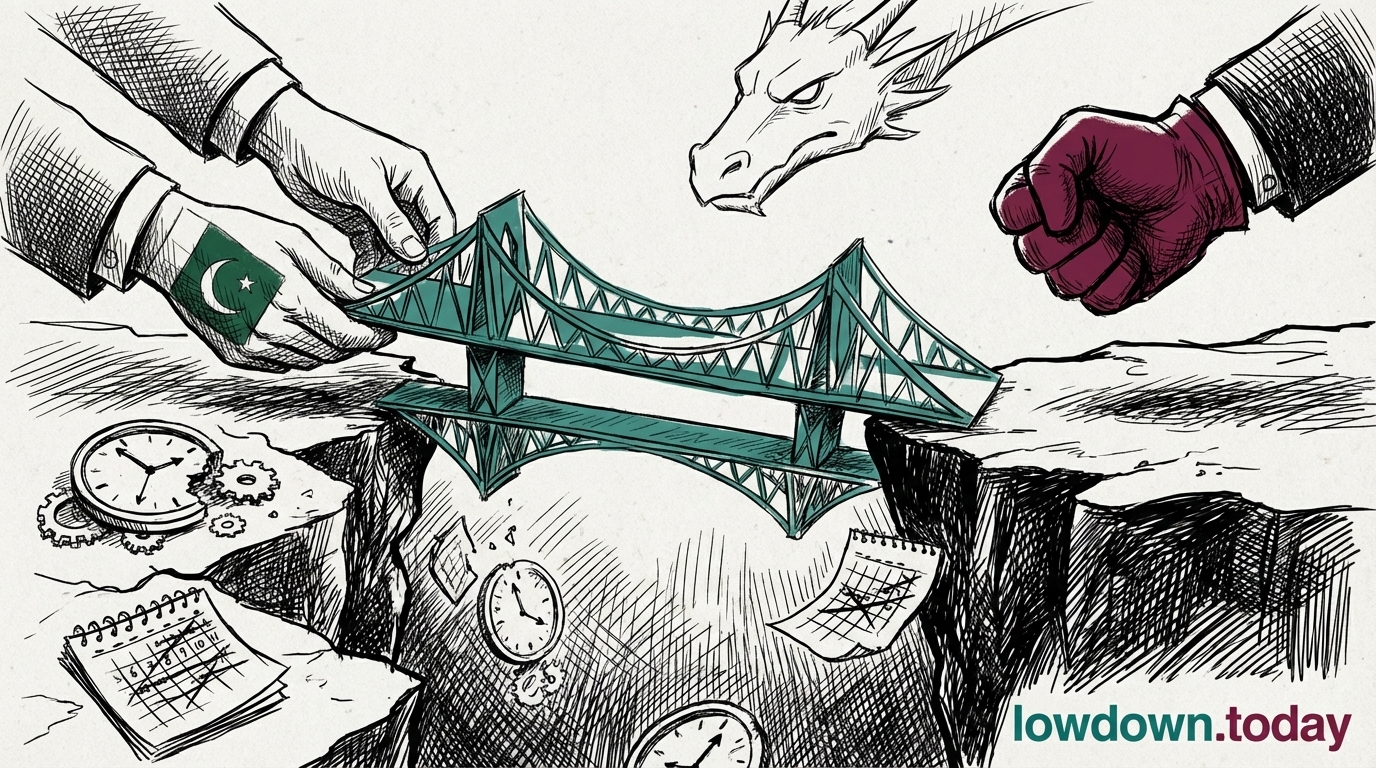
Iran says yes, Israel says no, Pakistan says yes — three primary parties describe the same deal three ways.

ConflictDeveloping
Key takeaway

Three signatories signed three different deals on the same day; Friday's Islamabad meeting must reconcile them.

The Lebanon question matters operationally because Hezbollah's 5 April precision anti-ship cruise missile against an Israeli warship was the most significant capability escalation of the Lebanese front. If Israel's reading prevails, IDF (Israel Defense Forces) operations on Lebanon resume inside the two-week window while Iran honours the Hormuz coordination protocol. If Iran's reading prevails, Israel must halt operations in a theatre Netanyahu's office has explicitly excluded.

The Islamabad Accord that Pakistan announced on 6 April was the framework Trump's deadline rhetoric leaned on for cover. Briefing #61 documented that the framework was unveiled over a dead diplomatic channel after Qatar refused mediation and Iran rejected the venue. Today's contradiction is the second structural problem: the deal exists as text only on each signatory's separate version of the page.

Deep Analysis

In plain English

Three countries signed the same ceasefire on the same day and gave three different answers to whether it includes Lebanon. Iran says yes. Israel says no. Pakistan says yes. The first thing the diplomats meeting in Islamabad on Friday have to fix is which one is right, otherwise Israel can keep bombing Lebanon while Iran honours Hormuz.

Deep Analysis
Synthesis

Day-1 ambiguity is the deal's load-bearing flaw.

Root Causes

The deal was constructed to be signable rather than precise. Each signatory needed a domestic framing that justified signing. The Lebanon ambiguity was the price of Israeli participation.

Escalation

Asymmetric risk. If Israel resumes Lebanon operations under its carve-out, Hezbollah retaliation could collapse the ceasefire through a Lebanese vector even while Iran honours Hormuz.

What could happen next?
  • Risk

    Lebanese-front escalation could collapse the Iran ceasefire.

  • Consequence

    Pakistan's diplomatic credibility depends on producing a unified text by Friday.

First Reported In

Update #62 · Two victories, two different lists

Middle East Eye· 8 Apr 2026
Read original
Different Perspectives
Gulf shipping and insurance markets
With Hormuz and Bab el-Mandeb both hostile at once, war-risk underwriters face their first dual-chokepoint pricing problem; the rerouting hedge that absorbed one closure is gone for Israeli-linked hulls. Any deal that reopens Hormuz without a Houthi stand-down clause delivers only partial shipping relief.
Russia and China
Russia and China
Russia and China met IAEA chief Grossi jointly in Geneva on 5 June to coordinate an advance blocking position against Washington's censure resolution, the first documented instance of proactive pre-session obstruction rather than reactive post-vote dissent. Beijing's move came four days after OFAC designated Shanghai Qianye Energy under Iran energy sanctions.
Saudi Arabia
Saudi Arabia
Saudi Arabia was left out of the emergency $4.01 billion Patriot waiver Qatar received on 2 May as its own PAC-3 stocks ran near-empty from intercepting Iranian salvoes over Aramco facilities. Riyadh is on a standard 18-month FMS queue behind a production line booked through 2030, with no equivalent priority to Qatar's Al Udeid basing role.
Houthis (Ansar Allah)
The Houthis declared a complete ban on Israeli Red Sea navigation on 8 June and struck Jaffa, their first attack on Israeli territory since April, seven days after the Tasnim authorisation to activate other fronts including Bab el-Mandeb. The declaration put both chokepoints under hostile authority simultaneously.
Iran
Iran
Iran agreed the 9 June mutual halt after the Mahshahr exchange and coordinated with Russia and China to block Washington's IAEA censure resolution, using the Board as a second front while the bilateral pause held on the military one. Tehran's acceptance of the Lebanon carve-out contradicts the linkage position it stated on 1 June.
Benjamin Netanyahu and the IDF
Israel struck the Karun Petrochemical plant at Mahshahr on 8 June over Trump's explicit objection, then agreed a halt with Iran the following day scoped on Israeli terms with Lebanon carved out. Netanyahu's posture is that the IDF will not accept Iranian missile factories as off-limits regardless of US diplomatic timelines.