Skip to content
Briefings are running a touch slower this week while we rebuild the foundations.See roadmap
Iran Conflict 2026
6APR

Hezbollah Fires Cruise Missile at Israeli Warship

1 min read
09:43UTC

A cruise missile targeting a warship 126 kilometres offshore marks Hezbollah's shift from mass-volume rockets to precision anti-ship weapons.

ConflictAssessed
Key takeaway

Hezbollah shifted from mass-volume rockets to precision anti-ship capability.

Hezbollah fired a cruise missile at an Israeli warship 126 kilometres off the Lebanese coast on 5 April. This is a capability escalation from the mass-volume rocket barrages that defined Hezbollah's previous operational pattern, which peaked at 600 projectiles in 24 hours in late March.

The shift from volume to precision, from area-denial rockets to a guided anti-ship cruise missile targeting a specific vessel at range, changes the threat calculus for Israeli naval operations. Anti-ship cruise missiles require target acquisition, tracking, and terminal guidance systems that mass-launch rockets do not. Whether the missile hit its target has not been confirmed.

At least 14 people were killed in Israeli strikes across Lebanon the same day, including a family of six. The multi-front nature of the conflict continues: Iran, Lebanon, and Yemen simultaneously engage Israeli and US forces across thousands of kilometres of battlespace.

Deep Analysis

In plain English

Hezbollah, the Iranian-backed group in Lebanon, fired a guided missile at an Israeli warship far out at sea. Previously they used mass barrages of unguided rockets. This is a more advanced weapon that can target a specific ship, which means Israeli naval vessels are now at greater risk in the eastern Mediterranean.

Deep Analysis
Root Causes

Hezbollah's escalation from mass-volume rockets to precision cruise missiles reflects Iranian technology transfer and the need to demonstrate capability against naval assets.

The shift also responds to Israel's naval blockade of Lebanese ports, which Hezbollah frames as an act of war against Lebanon's sovereign maritime access.

What could happen next?
  • Israeli naval operations in eastern Mediterranean face new precision threat

First Reported In

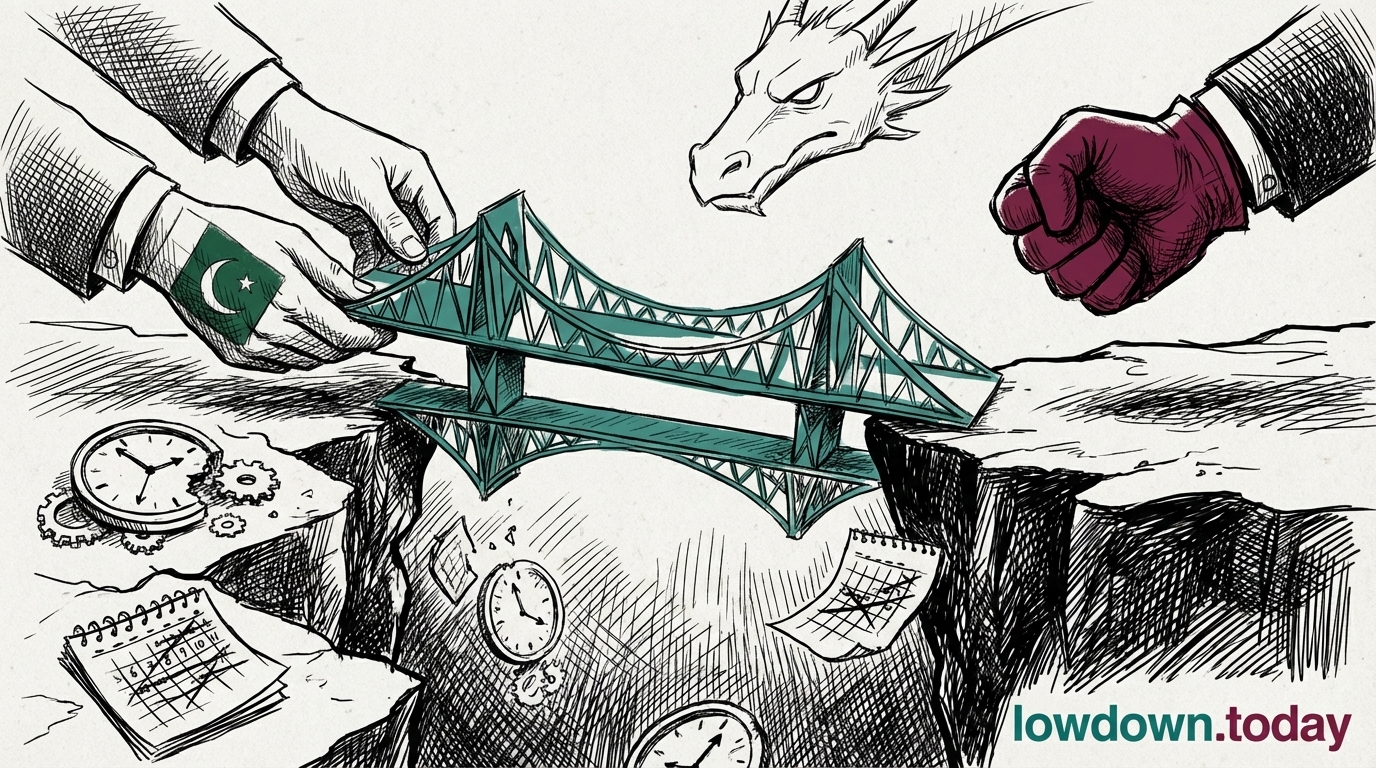
Update #60 · Pakistan's Ceasefire Plan Fills the Vacuum

Al Jazeera· 6 Apr 2026
Read original
Causes and effects
This Event
Hezbollah Fires Cruise Missile at Israeli Warship
This represents a qualitative capability escalation. Hezbollah's previous record was 600 projectiles in 24 hours, a mass-volume approach. A cruise missile targeting a specific naval vessel at 126 kilometres demonstrates precision guidance and anti-ship capability that changes the threat calculus for Israeli naval operations in the eastern Mediterranean.
Different Perspectives
Turkey (Shakarab consideration)
Ankara serves as one of two Western-adjacent Iran back-channels while Turkish national Gholamreza Khani Shakarab faces imminent execution on espionage charges in Iran. President Erdogan cannot deflect the domestic political crisis that a Turkish execution would trigger, which would force suspension of the mediating role.
Germany (Bundestag gap)
Belgium, Germany, Australia, and France committed Hormuz coalition hardware on 18 May. Germany's Bundestag authorisation for the coalition deployment remains pending, creating a constitutional gap between the commitment announced and the parliamentary mandate required to operationalise it.
IEA and oil market analysts
The IEA's $106 May Brent projection met the market in one session on 20 May as Brent fell 5.16% on diplomatic optimism. Goldman Sachs and Morgan Stanley's two-layer premium framework holds: the kinetic component compressed; the structural insurance component tied to Lloyd's ROE remains unresolved.
Hengaw
Hengaw
Documented the dual Kurdish execution at Naqadeh on 21 May, the two Iraqi-national espionage executions on 20 May, and Gholamreza Khani Shakarab's imminent execution risk. The 24-hour cluster covers two executions at one facility, the first foreign-national espionage executions, and a Turkish national whose death would suspend Ankara's mediation.
Lloyd's of London
Lloyd's of London
Hull rates stand at 110-125% of vessel value on the secondary market; the Joint War Committee has conditioned cover reopening on written ROE from the coalition or PGSA. The Majlis rial bill makes any compliant ROE structurally impossible to draft while the PGSA's yuan portal remains its operational mechanism.
United Kingdom and France (Northwood coalition)
The 26-nation coalition paper requires Lloyd's to see written rules of engagement before Hormuz war-risk cover reopens. The Majlis rial bill adds a second governance incompatibility on top of the unpublished PGSA fee schedule; coalition ROE cannot mention rial without conceding Iranian sovereignty over the strait.