Skip to content
You can now search across every topic, entity and event.What's new
Iran Conflict 2026
4APR

Kuwait invokes Article 51 after strike

3 min read
09:24UTC

Kuwait made the first formal self-defence claim by a Gulf state in the war after Iran struck Ali Al Salem Air Base on 28 May; CENTCOM struck back near Bandar Abbas and denied a fresh Iranian downing claim.

ConflictDeveloping
Key takeaway

Kuwait made the first Gulf self-defence claim of the war, short of invoking its US pact.

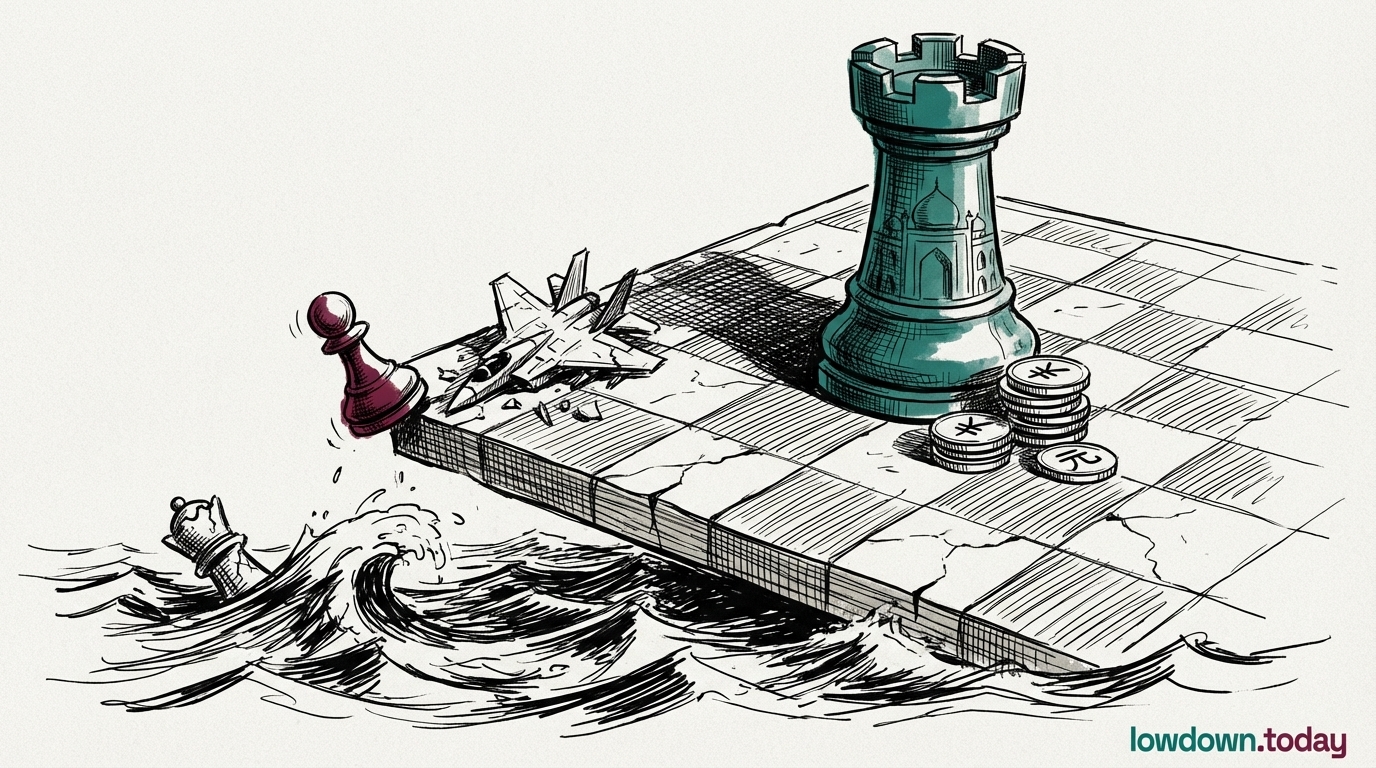
Kuwait invoked Article 51 of the UN Charter, the individual right of self-defence, after Iran struck Ali Al Salem Air Base on 28 May, the first formal legal self-defence claim by a Gulf state in the war. 1 Article 51 is the Charter clause preserving a state's right to defend itself against an armed attack, and it is the doorway to collective defence: the provision Kuwait would cite to ask allies, including the United States, to act on its behalf. The strike was heavier than the single ballistic missile first reported . One aggregated account describes multiple ballistic and cruise missiles and drones aimed at the US-used base; 2 US Central Command, CENTCOM, the US military command for the Middle East, put the count lower, at one intercepted missile with two shrapnel injuries. 3 The true scale sits between those claims and is not yet settled.

Whether Kuwait has the standing to invoke Article 51 against a state that denies responsibility is contested, and it has not yet triggered its bilateral US defence pact. CENTCOM struck a drone-control station near Bandar Abbas in response, the same complex it had hit days earlier , and on 29 May denied Iran's claim to have downed a US aircraft near Qeshm, calling it a repeat of the false MQ-9 Reaper claim from earlier in the week . 4

The legal claim raises the ceiling for allied involvement without compelling it. The real escalation trigger is a second strike, which Article 51 now pre-justifies a response to. Iran's posture compounds the risk: claiming a downed US jet while disputing the missile scale, it is banking propaganda victories its own footage cannot support, which erodes the credibility it needs when it makes a claim that is true.


Deep Analysis

In plain English

Ali Al Salem Air Base in Kuwait is used by both Kuwait and the United States. On 28 May Iran fired at least one ballistic missile at the base; Kuwait's air defences shot it down, with two people lightly wounded. Kuwait then formally invoked Article 51 of the UN Charter, which is the provision that lets countries say 'we have the right to defend ourselves' in front of the world. Article 51 matters because it opens the door to asking allies for help. If Kuwait were to formally request US military action under its 1994 defence pact, Article 51 would be the legal foundation. The US military (CENTCOM) hit a drone-control site at the Iranian port city of Bandar Abbas in response and denied Iran's claim to have shot down a US aircraft nearby.

Deep Analysis
Root Causes

Iran's decision to strike Ali Al Salem Air Base, a US-used Kuwaiti facility, rather than a purely US-flagged target reflects a shift in IRGC target logic since the Decentralised Mosaic Defence devolved launch authority to 31 provincial units. A Gulf Arab base hosting US forces presents a target that complicates US response: striking back risks appearing to defend a Gulf monarchy rather than US personnel, which has distinct domestic US political costs that a strike on a US Navy vessel would not.

The false claim of downing a US aircraft near Qeshm on 29 May, the second such false claim after the Reaper-drone downing claim, reflects a separate IRGC information-operations logic: the IRGC gains domestic propaganda credit for alleged victories without requiring the technical capability to produce them.

CENTCOM's denials confirm the falsity but also amplify the claims, creating a cycle where each false claim requires a CENTCOM response that itself provides Iranian state media with coverage.

What could happen next?
  • Precedent

    Kuwait's individual Article 51 invocation goes beyond the collective GCC statement of 6 April, creating a state-specific legal record that directly enables a future bilateral defence-pact activation against Iran.

  • Risk

    IRGC's repeated false-downing claims, each denied by CENTCOM, create an information cycle that boosts domestic Iranian morale without requiring actual capability, potentially lowering the political cost of further strikes.

First Reported In

Update #112 · Treasury opens a second Iran sanctions front

GlobalSecurity.org· 30 May 2026
Read original
Causes and effects
This Event
Kuwait invokes Article 51 after strike
Article 51 is the legal doorway to collective defence, raising the ceiling for allied involvement without yet compelling it.
Different Perspectives
Oil traders
Oil traders
Sent Brent down 2.29 per cent to $98.38 a barrel on reports that mediation was reviving, moving the price on CENTCOM's quiet night rather than on Trump's same-day promise of a bigger operation with no deadline attached.
Iran
Iran
An Iranian official called the same mediation account completely misleading, denying it received any US proposal via Baghdad on the same day Iraq denied delivering one, leaving neither denial able to settle what actually passed between the two capitals.
Iraq
Iraq
Called groundless the New York Times account that its prime minister carried a US ceasefire proposal to Tehran, a denial that also protects Baghdad's effort to avoid becoming a party to a war fought by aircraft it does not control.
OHCHR
OHCHR
Recorded 17 civilian seafarer deaths since the war began, a population neither the Pentagon nor Iran's Health Ministry counts in its own tally, and called for urgent action on 6,000 crew stranded across roughly 400 vessels in the Strait of Hormuz.
Houthis
Houthis
Enforced the blockade on Saudi-linked shipping it declared on 20 July by hitting the NCC Masa and then an Aramco facility at Jazan, moving from radio warnings to strikes on land after four days without a confirmed hit.
Saudi Arabia
Saudi Arabia
Struck Houthi military sites near Hodeidah the same day the NCC Masa was hit, while its coalition spokesman insisted Hodeidah, Ras Issa and Salif all remain open to navigation. The distinction protects the ports Yemen's population depends on for food and fuel even while punishing the group behind the tanker strike.



